Recent analysis

Programs

The Global Energy Center develops and promotes pragmatic and nonpartisan policy solutions designed to advance global energy security, enhance economic opportunity, and accelerate pathways to net-zero emissions.

Events
Global Energy Forum

Jan 9, 2020

International grid integration: Efficiencies, vulnerabilities, and strategic implications in Asia

By Phillip Cornell

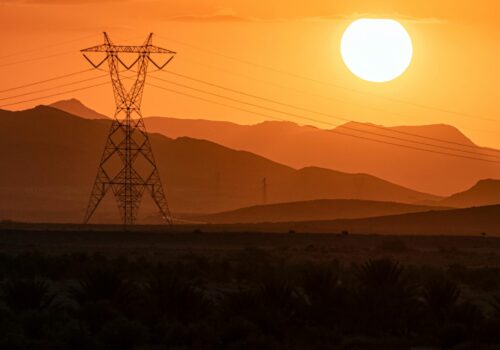
In order to meet growing global demand for electricity, and in response to an increase in renewables, power networks and markets are evolving and becoming increasingly interconnected. South and Southeast Asia have already had some success with interconnections, and China’s vision and Belt and Road Initiative loom large in the region, but there are geopolitical concerns to contend with. Could a US model manage these concerns? What is the state of regional power markets in Asia and investment in regional grid infrastructure, and what responses are we already seeing to emerging trends?

Climate Change & Climate Action Energy Markets & Governance

Global Energy Forum

Jan 9, 2020

Energy sector diversification: Meeting demographic challenges in the MENA region

By Bina Hussein

The Middle East and North Africa (MENA) region is projected to experience significant demographic growth by 2050, growth which will have to be met with commensurate economic expansion and job opportunities, or the region will risk an increase in political instability. To meet this challenge, countries in the region must diversify their economies beyond the energy sector and expand their energy sector beyond hydrocarbons. What are the key trends that MENA countries will have to contend with, what is already being done, and what further steps should be taken?

Energy Markets & Governance Energy Transitions

Issue Brief

Jan 9, 2020

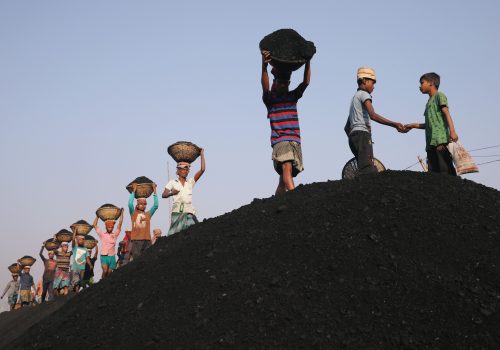
Transforming the power sector in developing countries: Geopolitics, poverty, and climate change in Bangladesh

By Robert F. Ichord, Jr.

As the South and Southeast Asian region faces increasing energy demand due to both population and economic growth, countries like Bangladesh must meet that demand while facing and overcoming critical environmental and energy security challenges. How is Bangladesh seeking to diversify its energy mix and establish more local and decarbonized power systems, and what are key opportunities for future government and foreign investment?

Bangladesh Climate Change & Climate Action

Content

EnergySource

Apr 30, 2026

Breaking with OPEC, the UAE is now a free agent. What this means for markets and regional unity

By Ellen Wald

The UAE's departure from OPEC will both impact oil markets and mark a significant historic shift for the region.

Energy & Environment Energy Markets & Governance

Fast Thinking

Apr 28, 2026

Why is the UAE leaving OPEC? 

By Atlantic Council experts

Our experts unpack the geopolitical and energy market impacts of the UAE's just-announced departure.

Energy & Environment Energy Markets & Governance

Global Energy Agenda

Apr 28, 2026

The 2026 Global Energy Agenda

By Landon Derentz, Christine Suh, and Paul Kielstra

The Atlantic Council is pleased to present its sixth Global Energy Agenda that shares new insights from thought leaders and our annual survey of experts from around the world. 

Energy & Environment Energy Markets & Governance

Report

Apr 22, 2026

Redefining power systems: Turkish electric-sector engagement in Africa

By Shaheer Hussam

The report examines how Turkey has become a $100B energy infrastructure player across Africa—and what that means for North American and European firms.

Africa Climate Change & Climate Action

Issue Brief

Apr 10, 2026

A US strategy for energy competition with China in emerging markets

By Steven Burns

The US has an opportunity to position itself as a favorable partner in emerging markets that will help them develop modern, secure energy systems.

China Energy & Environment

EnergySource

Apr 3, 2026

How the Iran war could shift energy policies around the world

By Atlantic Council Experts

The Strait of Hormuz closure has sparked fuel shortages and soaring energy costs, but also new opportunities for energy producers. How different regions respond to these disruptions could reshape the future of energy markets and security.

Africa Energy & Environment

Dispatches

Mar 27, 2026

The Eastern Mediterranean won’t replace Russian or Gulf gas—but it can be Europe’s energy shock absorber

By Hany Ghanem and Chrissy Bishai

Eastern Mediterranean gas will not eliminate Europe’s exposure to global volatility, but it can help reinforce the continent’s resilience on the margins.

Energy & Environment Energy Markets & Governance

EnergySource

Mar 25, 2026

How the US can turn an energy emergency into an opportunity for resilience

By Troy Warshel

To ensure energy for the grid, data centers, the military, policymakers, and the Pentagon should work together on an innovative energy strategy.

Energy & Environment Energy Markets & Governance

Dispatches

Mar 20, 2026

Oil waivers risk sustaining Russia’s war effort amid the Iran war

By Linas Kojala, Vytautas Leškevičius

Relieving US sanctions on Russian oil would give Moscow a reprieve just as financial pressure was beginning to constrain its room for maneuver in its war against Ukraine.

Energy & Environment Energy Markets & Governance

Fast Thinking

Mar 19, 2026

Why the Iran war energy shock is different 

By Atlantic Council

Our experts explain the factors that make the oil crisis resulting from the Iran war distinct from those caused by past conflicts.

Conflict Energy Markets & Governance

Experts

Events