
Financial Sanctions and Economic Coercion

Financial sanctions and other forms of economic coercion have become policy tools of choice for the US government to deter illegal activity by international actors or to pressure governments into reversing actions that harm US interests. Yet these instruments and their potential pitfalls are often misunderstood. Restrictive economic measures such as financial sanctions, export controls, tariffs, and investment screening can play an important role in advancing certain policy objectives, but they risk being ineffective if misapplied or poorly implemented. Policymakers must also recognize the impact of economic statecraft on the private sector, which bears many of the compliance burdens and operational costs associated with these measures.

Energy Sanctions Dashboard

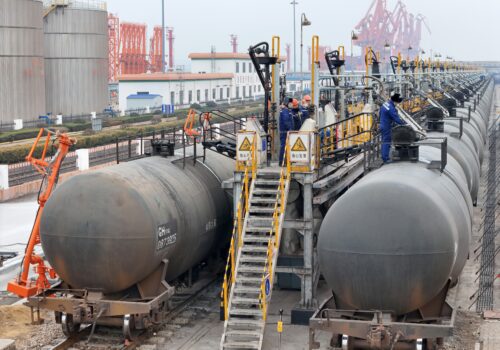
This dashboard focuses on US sanctions and restrictive measures placed on crude oil from Russia, Iran, and Venezuela—including the unintended consequences and the lessons learned.

Econographics

Apr 17, 2025

Russia Sanctions Database

By Kimberly Donovan, Maia Nikoladze, Lize de Kruijf

The Atlantic Council’s Russia Sanctions Database tracks the level of coordination among Western allies in sanctioning Russian entities, individuals, vessels, and aircraft, and shows where gaps still remain.

Eastern Europe Economy & Business

Recent analysis

Programs

At the intersection of economics, finance, and foreign policy, the GeoEconomics Center is a translation hub with the goal of helping shape a better global economic future.

Content

UkraineAlert

Oct 21, 2025

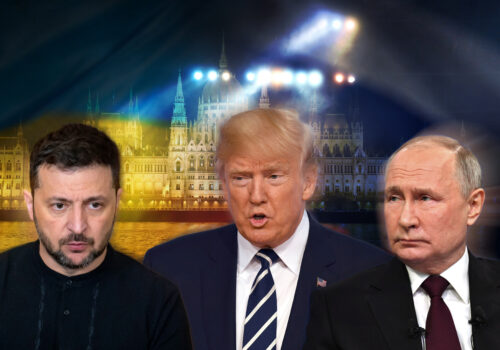
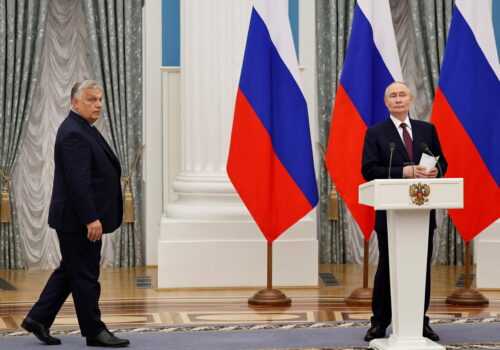
Budapest summit postponed as Putin rejects Trump’s ceasefire proposal

By Peter Dickinson

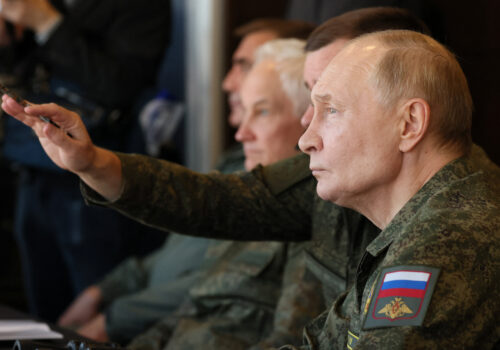
Just days after US President Donald Trump announced plans for a new summit with Russian counterpart Vladimir Putin, their proposed Budapest meeting has been thrown into doubt by Russia's rejection of a ceasefire in Ukraine, writes Peter Dickinson.

Conflict European Union

UkraineAlert

Oct 21, 2025

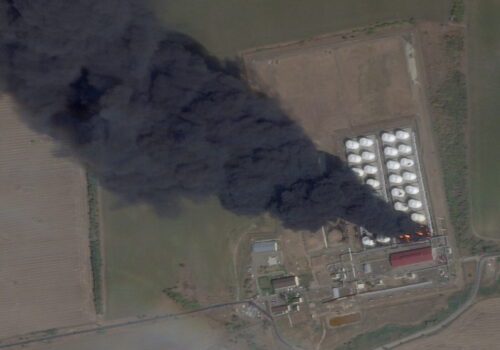
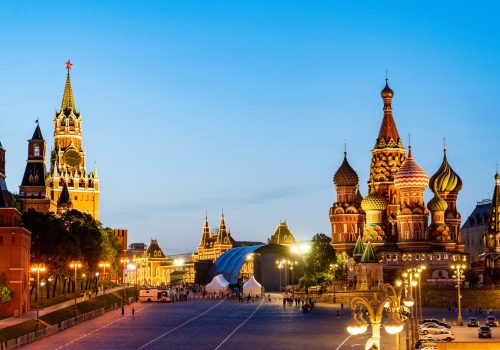
Vladimir Putin’s war machine may finally be running out of fuel

By Vladyslav Davydov

Ukraine’s deep strikes on Russia's energy industry have exposed Putin’s Achilles heel and helped demonstrate that the Russian economy is far more fragile than many in Moscow would like us to believe, writes Vladyslav Davydov .

Conflict Drones

UkraineAlert

Oct 16, 2025

Ukraine’s drone sanctions are working but don’t expect a Russian revolt

By Christopher Isajiw

Ukraine's long-range drone strike campaign has brought Putin's invasion home to Russia but mounting domestic problems are unlikely to spark a rebellion against the Kremlin dictatorship, writes Christopher Isajiw.

Conflict Drones

UkraineAlert

Sep 30, 2025

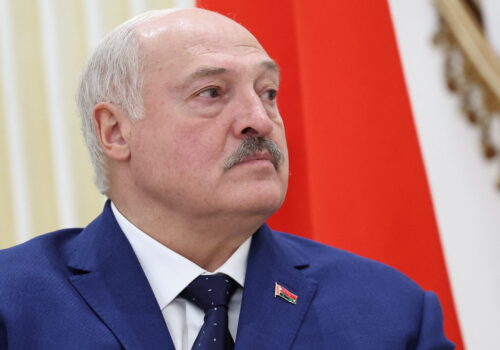
Belarus dictator must not be rewarded for releasing his own prisoners

By Hanna Liubakova

Belarusian dictator Alyaksandr Lukashenka is attempting to repair relations with the West by trading political prisoners for concessions. If this hostage diplomacy proves successful, it will strengthen Lukashenka’s grip on power, writes Hanna Liubakova.

Belarus Conflict

Transcript

Sep 30, 2025

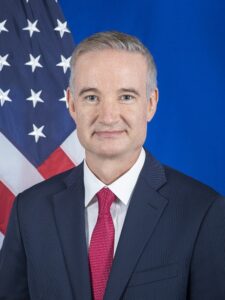
US Ambassador to NATO Matthew Whitaker’s message to allies ‘dragging their feet’ on defense spending

By Atlantic Council

At the 2025 Transatlantic Forum on GeoEconomics, Whitaker called upon each ally to "start spending money on their defense and stop buying Russian energy."

Europe & Eurasia Financial Sanctions and Economic Coercion

Issue Brief

Sep 22, 2025

Expanding Syria’s multilateral development bank engagement

By Basil Kiwan

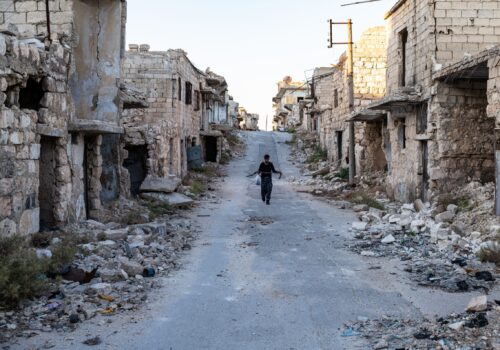
Estimates of Syria’s post-civil war cost of rebuilding range from $250 billion to $400 billion. To help finance reconstruction and development, Syria’s transitional government should expand its partnerships with international financial institutions (IFIs) and multilateral development banks (MDBs), as these institutions can play a key role in mobilizing global capital.

Economy & Business Financial Sanctions and Economic Coercion

New Atlanticist

Sep 19, 2025

The EU won’t tariff China and India to please Trump. But it is working on a counteroffer.

By Charles Lichfield

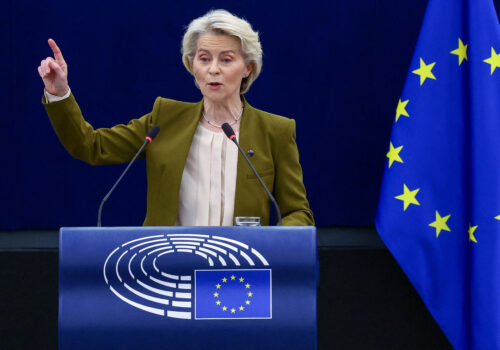
European Commission President Ursula von der Leyen announced a nineteenth package of sanctions against Russia on September 19.

Conflict European Union

MENASource

Sep 19, 2025

Snapback sanctions threaten to further derail Iran nuclear deal hopes

By Rob Macaire

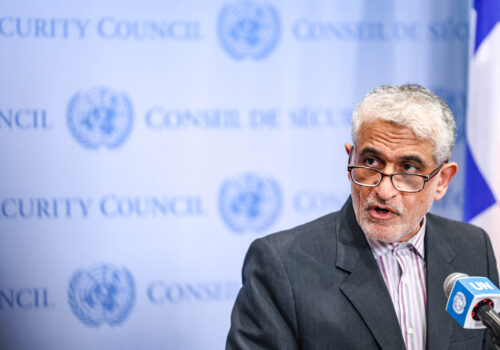
Now would be the best time for the West to negotiate a deal with Iran—but snapback sanctions threaten a derailing into further confrontation.

Financial Sanctions and Economic Coercion Iran

UkraineAlert

Sep 18, 2025

Putin’s Polish probe demands decisive response to restore NATO deterrence

By Zahar Hryniv

Putin’s recent drone escalation in the skies over Poland is an unmistakable signal that NATO’s credibility is under threat. Western leaders must now respond decisively to deter further Russian aggression, writes Zahar Hryniv.

Conflict Drones

UkraineAlert

Sep 2, 2025

Hungary has alternative energy options but chooses to rely on Russia

By Aura Sabadus

Ukraine’s recent strikes on the Kremlin's Druzhba oil pipeline are not only an attack on Russia’s war economy. They are also a wake-up call for Hungarians highlighting the role being played by their country in the funding of Russia’s invasion, writes Aura Sabadus.

Conflict Financial Sanctions and Economic Coercion

Experts