
Financial Sanctions and Economic Coercion

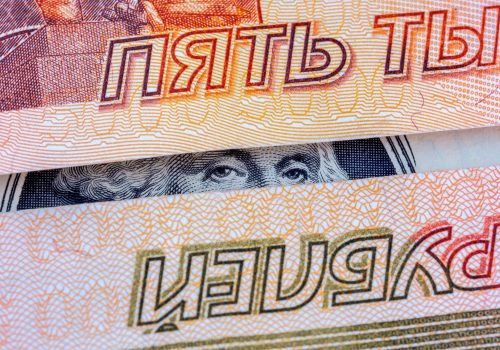
Financial sanctions and other forms of economic coercion have become policy tools of choice for the US government to deter illegal activity by international actors or to pressure governments into reversing actions that harm US interests. Yet these instruments and their potential pitfalls are often misunderstood. Restrictive economic measures such as financial sanctions, export controls, tariffs, and investment screening can play an important role in advancing certain policy objectives, but they risk being ineffective if misapplied or poorly implemented. Policymakers must also recognize the impact of economic statecraft on the private sector, which bears many of the compliance burdens and operational costs associated with these measures.

Energy Sanctions Dashboard

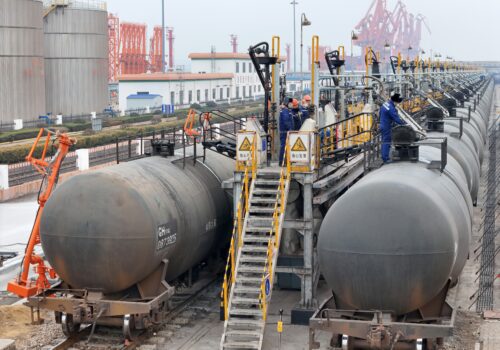
This dashboard focuses on US sanctions and restrictive measures placed on crude oil from Russia, Iran, and Venezuela—including the unintended consequences and the lessons learned.

Econographics

Apr 17, 2025

Russia Sanctions Database

By Kimberly Donovan, Maia Nikoladze, Lize de Kruijf

The Atlantic Council’s Russia Sanctions Database tracks the level of coordination among Western allies in sanctioning Russian entities, individuals, vessels, and aircraft, and shows where gaps still remain.

Eastern Europe Economy & Business

Recent analysis

Programs

At the intersection of economics, finance, and foreign policy, the GeoEconomics Center is a translation hub with the goal of helping shape a better global economic future.

Content

Report

Feb 8, 2022

Global Strategy 2022: Thwarting Kremlin aggression today for constructive relations tomorrow

By John E. Herbst, Anders Åslund, David J. Kramer, Alexander Vershbow, and Brian Whitmore

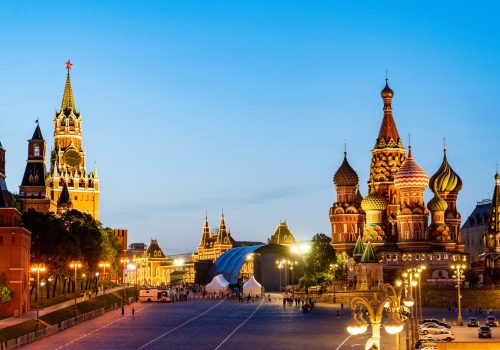
How can the United States and its partners counter the Kremlin’s aggressive policies abroad while laying the groundwork for what could one day be a mutually beneficial relationship with a Russia that respects the rule of law and international norms?

Disinformation Eastern Europe

UkraineAlert

Feb 7, 2022

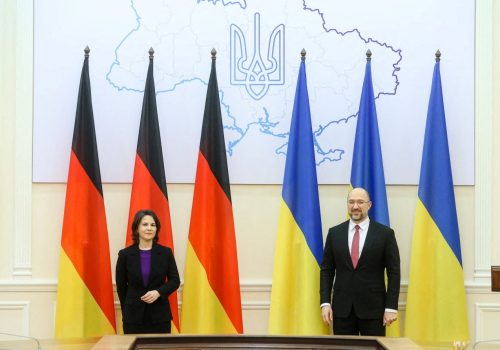
Still not too late for Germany to honor its commitment to Ukraine

By Eugene Czolij

Germany says a sense of "historical responsibility" over Nazi crimes prevents Berlin from adopting a firmer stand against Russia. Many in Ukraine ask why this logic does not also apply to the millions of Ukrainian WWII victims.

Conflict Financial Sanctions and Economic Coercion

In the News

Feb 6, 2022

Global Sanctions Dashboard data visualization on “who sanctions Russia, and why” reproduced in Axios

Read the full article here.

Economy & Business Financial Regulation

EconoGraphics

Feb 6, 2022

Global Sanctions Dashboard: Groundhog edition

By Julia Friedlander, Michael Albanese, Maia Nikoladze and Castellum.AI

Who sanctions Russia and why, Colombia’s narcotics trafficking, Iran’s balancing act, and Chinese military sanctions.

Belarus China

In the News

Feb 5, 2022

Slavin quoted in Nigeria News on Iran sanctions and ongoing nuclear talks

By Atlantic Council

Financial Sanctions and Economic Coercion Iran

In the News

Feb 4, 2022

Friedlander quoted by the Washington Post on how Russian oligarchs benefit from London’s loose financial regulation

Read the full article here.

Economy & Business Financial Regulation

In the News

Feb 4, 2022

Friedlander interviewed on CNN Connect the World discussing Russian illicit financial flows

Watch the interview here.

Economy & Business Financial Sanctions and Economic Coercion

In the News

Feb 4, 2022

O’Toole featured in NPR The World discussing SWIFT and sanctioning Russia

Listen to the podcast here.

Economy & Business Financial Regulation

In the News

Feb 4, 2022

Slavin quoted in Al Jazeera on U.S easing sanctions on Iran

By Atlantic Council

Financial Sanctions and Economic Coercion Iran

In the News

Feb 4, 2022

O’Toole and Fried featured in the Washington Post on the impact of US sanctions on Russia

Read the full article here.

China Economy & Business

Experts