
Recent analysis

Programs

The Global Energy Center develops and promotes pragmatic and nonpartisan policy solutions designed to advance global energy security, enhance economic opportunity, and accelerate pathways to net-zero emissions.

Events

Report

Jan 9, 2020

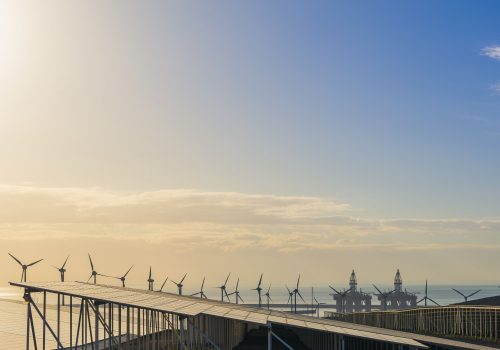
The role of oil and gas companies in the energy transition

By Robert (“RJ”) Johnston, Reed Blakemore, and Randolph Bell

Many oil and gas companies have recognized the need to decarbonize the energy system to avoid the impacts of climate change. Initial industry efforts to play a role in the energy transition show sincerity and promise. Yet the urgent need for more oil and gas production for the foreseeable future suggests that a comprehensive framework for the oil and gas industry to support a low-carbon future while simultaneously ensuring the world has enough energy to meet development and economic growth goals has yet to be fully developed. What role can the oil and gas industry play lead the way to an energy-rich, globally prosperous, low-carbon future?

Energy Transitions Oil and Gas

Issue Brief

Jan 9, 2020

European energy diversification: How alternative sources, routes, and clean technologies can bolster energy security and decarbonization

By Richard L. Morningstar, András Simonyi, Olga Khakova, Irina Markina

The European Union’s efforts to achieve a carbon-neutral economy present a unique and timely opportunity to strengthen European energy security. What is the EU currently doing to meet its decarbonization goals, address the role of natural gas in Europe’s low-carbon future, and explain the potential for new gas sources, alternative gas routes, and clean energy technologies to reduce carbon emissions? And how can this be done while simultaneously increasing European energy security and opportunities for transatlantic cooperation?

Energy Markets & Governance Energy Transitions
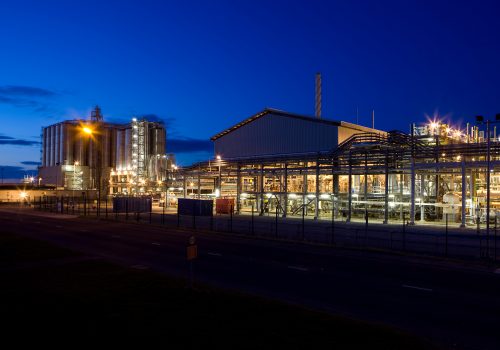
Manufacturing facility

Issue Brief

Jan 9, 2020

The Saudi Aramco-SABIC merger: How acquiring SABIC fits into Aramco’s long-term diversification strategy

By Private: Jean-François Seznec

Throughout 2019, financial markets have watched the planned Saudi Aramco initial public offering (IPO), which was finally launched in December. A quieter, but no less significant, story was the Saudi oil company’s acquisition of SABIC. Saudi Aramco strove to have a successful IPO, especially through increased transparency and diversification, and the SABIC acquisition was a key element of Saudi oil company's diversification strategy. Going forward, what does the merger mean for both companies, what is the new relationship between Saudi Aramco and SABIC, and what are the merger’s implications for the intricate relationship between the various bureaucracies and leadership in Saudi Arabia?

Energy Markets & Governance Energy Transitions

Content

Issue Brief

Sep 24, 2026

The Saudi economy can hold out through year’s end—even if oil exports drop to zero

By Khalid Azim

First the Strait of Hormuz closed, so Saudi Arabia started sending more oil over land through its East-West Pipeline. Then drone strikes damaged the pipeline, and the Iran-backed Houthis fired missiles near the pipeline’s Red Sea terminus. Does Saudi Arabia need to plan for a near term without meaningful oil exports?

Economy & Business Energy & Environment

UkraineAlert

Sep 23, 2026

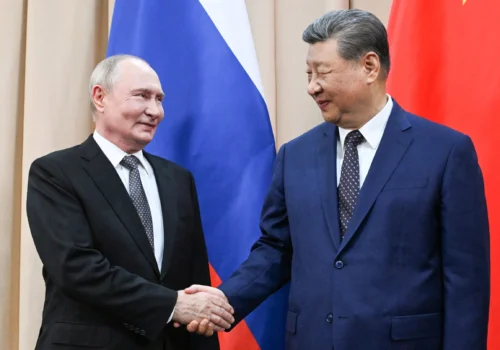
Putin’s Ukraine invasion has made Russia China’s junior partner

By Zahar Hryniv

Putin’s evident inability to secure Beijing’s backing for the Power of Siberia-2 pipeline is strengthening international perceptions that the invasion of Ukraine has reduced Russia to the status of China’s junior partner, writes Zahar Hryniv.

China Conflict

Dispatches

Sep 22, 2026

A diesel export ban could disrupt US supply chains

By Joseph Webster, Reid I’Anson, Theo Aldrighi, and Priscila Putzulu

There are second- and third-order consequences of a ban to consider, including what it would mean for Latin American countries.

Energy & Environment Oil and Gas

MENASource

Sep 15, 2026

Can oil deals reset US-Iraqi relations? 

By Yesar Al-Maleki

Iraq has a short window of time to rein in its militias and create favorable commercial conditions to improve ties with the US.

Energy & Environment Iraq

EnergySource

Sep 9, 2026

No quick fixes for the squeeze on refined products

By Ben Cahill

US prices for refined products such as gasoline and diesel are soaring, underscoring the need for long-term planning mechanisms and safeguards to ensure reliable supply.

Energy & Environment Energy Markets & Governance

UkraineAlert

Sep 8, 2026

Ukrainian drone strikes are disarming Russia’s energy weapon

By Ana Lejava

For years, Russia wielded its energy capacity as a weapon against its neighbors to manipulate, coerce, and control. Ukraine’s strategic bombing campaign is now turning this energy weapon against Moscow itself, writes Ana Lejava.

Central Asia Conflict

EnergySource

Sep 2, 2026

The diesel shock is here. Which US states will be hit the hardest?

By Joseph Webster and Theo Aldrighi

Learn how the Strait of Hormuz closure is affecting states' supply and price of distillate fuel oil.

Energy & Environment Geopolitics & Energy Security

EnergySource

Sep 1, 2026

Four questions on the US-Venezuelan oil deal

By David L. Goldwyn, Andrea Clabough

The impact of the "historic" oil deal between the US and Venezuela will remain uncertain until several unresolved issues are addressed.

Energy & Environment Energy Markets & Governance

MENASource

Aug 20, 2026

With war in the region, Egypt must recalibrate its energy policy

By Nour Taha

Egypt needs a two-track strategy, accelerating its green energy buildout while managing its natural gas reserves for sustained output.

Crisis Management Egypt

Dispatches

Aug 20, 2026

Why Iran has not folded yet

By Andrew L. Peek, Jonathan Panikoff

Formed by the brutal Iran-Iraq War, the men who now lead the Iranian regime will fight back before giving in. But time is not on their side.

Conflict Iran

Experts