



The Atlantic Council Technology Programs comprises five existing efforts—the Digital Forensic Research Lab (DFRLab), the GeoTech Center, the Cyber Statecraft Initiative, the Democracy + Tech Initiative, and the Capacity Building Initiative. These operations work together to address the geopolitical implications of technology and provide policymakers and global stakeholders necessary research, insights, and convenings to address challenges around global technology and ensure its responsible advancement.


Content

Dispatches

Nov 24, 2026

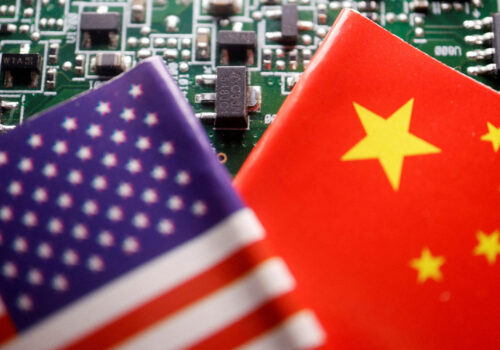
Huang is back at Nvidia. But the fight over who controls chip exports is just beginning.

By Lize de Kruijf

The scandal has already prompted calls from Congress for a tougher crackdown on chip exports to China.

Artificial Intelligence China

Dispatches

Nov 24, 2026

The Coast Guard offers a model for defending US critical infrastructure against cyberattacks

By Peter Gautier, Charlotte Bertrand

When it comes to cybersecurity, maritime transportation is arguably the most comprehensively governed of all US critical infrastructure sectors.

Cybersecurity Maritime Security

UkraineAlert

Nov 24, 2026

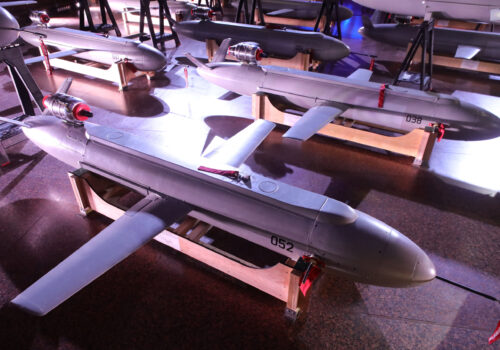
Ukraine is now a drone superpower at sea, on land, and in the air

By Peter Dickinson

The recent sinking of a Russian warship by Ukrainian naval drones in the Mediterranean has underlined Ukraine's status as a world leader in drone warfare, writes Peter Dickinson.

Conflict Defense Industry

GeoTech Cues

Nov 24, 2026

To compete with China on technology, the United States must address data and trust deficits

By Greg Francis, Trevor Rudolph

Washington can't compete on price and performance alone. A more data-driven approach to technology financing could help the United States regain its edge.

Artificial Intelligence China

GeoTech Cues

Nov 19, 2026

Lessons from Brazil and Peru on how to build AI-ready institutions across Latin America

By Olivia Torres, Angel Ortega

Brazil and Peru offer early blueprints for AI regulation in Latin America: one for building regulatory institutions before legislation is in place, and another for turning AI laws into effective governance.

Artificial Intelligence Digital Policy

UkraineAlert

Nov 19, 2026

Kyiv’s partners should prioritize Ukraine’s domestic drone production

By Leonid Baratz

Ukrainian long-range drone strikes have reduced Russian oil refining output by around 45 percent in the past few weeks, Reuters reports. Kyiv's partners should build on this success and prioritize funding for Ukraine's domestic drone industry, writes Leonid Baratz.

Conflict Defense Industry

Podcast

Nov 19, 2026

Mercenaries, apps, and crypto: Russia’s hybrid war on Europe

By Alia Brahimi

Alia Brahimi and Alexander Kolyandr discuss the “one-shot” mercenaries Russia employs for its shadow war in Europe.

Cybersecurity Defense Technologies

UkraineAlert

Nov 17, 2026

Russia’s colossal losses in Ukraine will not push Putin toward peace

By David Kirichenko

Russia's heavy losses in Ukraine may hamper Putin’s invasion, but they will not push the Kremlin dictator toward the negotiating table, writes David Kirichenko.

Conflict Defense Policy

UkraineAlert

Nov 17, 2026

Ukraine’s Crimean Bridge attack is a very personal humiliation for Putin

By Peter Dickinson

Ukraine hit and partially destroyed the Crimean Bridge on November 17 with an unprecedented drone and missile strike that highlighted Russia's vulnerabilities and served as a very personal humiliation for Vladimir Putin, writes Peter Dickinson.

China Conflict

Dispatches

Nov 16, 2026

AI agents promise a life free from friction. The cost could be human judgment.

By Trisha Ray

Artificial intelligence can create a false sense of certainty for users by delivering fluent answers without noting uncertainty or the reasoning behind responses.

Artificial Intelligence United States and Canada

Experts