
Content

NATOSource

Jul 1, 2013

Alliances and American Power in the 21st Century

By Joseph S. Nye Jr., Washington Post

From Joseph S. Nye Jr., Washington Post:   [G]iven our energy resources, the U.S. economy will be less vulnerable than the Chinese economy to external shocks.

China Europe & Eurasia

New Atlanticist

Jun 13, 2013

Beijing and Washington Share Indeterminate Future

By Robert Manning

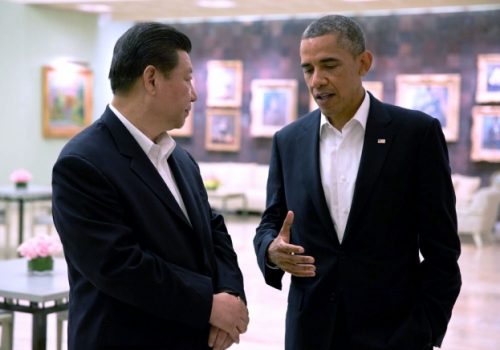
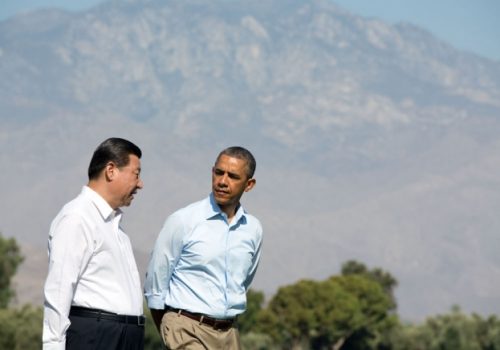
Now what? The ostensible goal of the Obama-Xi “shirtsleeves summit” was to head off the trajectory of a volatile U.S.-Chinese relationship that appeared to be sliding toward confrontation—and define a new cooperative direction, new understandings and a new framework. In this respect, it was a potentially important but modest beginning.

China Missile Defense

New Atlanticist

Jun 11, 2013

US and China Explore New Relationship

By Robert Manning

It will be some time before the full consequences of the California summit meeting between US President Barack Obama and China’s new leader, Xi Jinping, are revealed. Nixon-Mao it was not. Nevertheless, the well-timed and much-needed unscripted discussion focused on fundamental questions about the US-China relationship which has reached a new level of tension because […]

China Cybersecurity

New Atlanticist

Jun 6, 2013

EU Foreign Policy Needs a Reset

By Ulrich Speck

EU foreign policy chief Catherine Ashton is a skilled negotiator; the recent Serbia-Kosovo breakthrough will probably secure her a place in the history books. It is rather unlikely, though, that 2009 – the year EU leaders chose Ashton as High Representative of the Union for Foreign Affairs and Security Policy – will be remembered by […]

China European Union

New Atlanticist

Jun 4, 2013

How Shinzo Abe Could Win the Nobel Peace Prize

By James Clad and Robert A. Manning

Shinzo Abe has summoned the ghosts of nationalism in the Pacific. Neighbouring countries are worried by the Japanese prime minister’s revisionism concerning the historical behaviour of his country. The impact of this on Sino-Japanese relations tends to receive most attention in the western media. But there is also an increasingly fractious relationship between Japan and […]

China Japan

New Atlanticist

May 30, 2013

The Digital Iron Curtain

By Andrew Ellis

While international hacking episodes linked to the governments of Iran, Syria, North Korea, and China have received widespread attention, media outlets often underreport government use of these tools against their own citizens.

China Cybersecurity

Event Recap

May 15, 2013

East Asia’s Future: Nationalism or Integration?

By Jason Harmala

In the second event of the Cross-Strait Series, Ambassador Julia Chang-Bloch moderated a panel discussion on the growing nationalism in northeast Asia and the implications of this trend for the integration of the region and the notion of an Asia-Pacific community.

East Asia

New Atlanticist

May 13, 2013

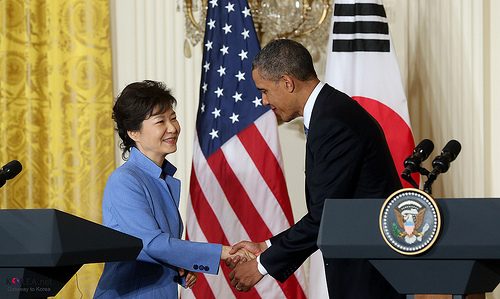
Park-Obama Summit Bolsters US-ROK Alliance, Impacts Northeast Asia

By Robert Manning

Successful summits tend to be more about symbolism than substance.  South Korean President Park Geun-hye’s summit with US President Barack Obama certainly had its share of symbolism: the first foreign trip of the ROK’s new first woman President, 60th anniversary of the US-ROK alliance, and US-ROK messages to North Korea, to Japan and China. But Ms. […]

East Asia Korea

New Atlanticist

May 7, 2013

Will Chinese Nationalism Lead to War with Japan and the United States?

By Banning Garrett

Will Chinese assertiveness and nationalism lead to war with Japan and the United States, trumping the impact of globalization and growing interdependence? A recent Financial Times commentary by John Plender recently raised this prospect, a familiar theme in much of the Western media and among Washington foreign policy pundits.

China East Asia

New Atlanticist

Apr 18, 2013

Chinese Cyber Espionage: US Must Shout but Also Listen

By Jason Healey

After years of silence, the United States has finally had enough of Chinese cyber-theft of trade secrets. American officials have repeatedly raised the issue with their Chinese counterparts in language that is increasingly frank.

China Cybersecurity

Experts