Content

MENASource

Jan 21, 2020

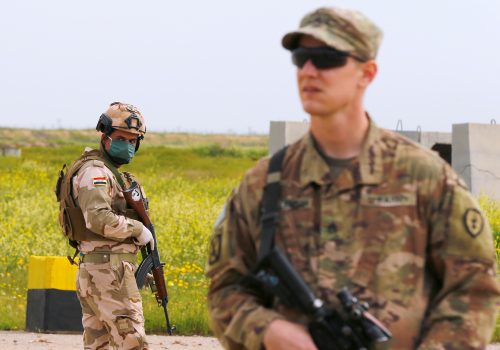
Repairing Iraq’s relations with the United States

By David Mack

Partners for mutual or overlapping national security objectives, like the governments in Baghdad and Washington, need a sustained dialogue.

Iraq Middle East

In the News

Jan 19, 2020

Ellinas in Cyprus Mail: Time for new initiatives in growing East Med energy crisis

By Atlantic Council

Energy & Environment Libya

New Atlanticist

Jan 17, 2020

Berlin conference: The end of the game?

By Karim Mezran

The upcoming conference could result in the acceptance by all of Haftar’s future role in Libya and the legitimization of his attack against Tripoli. The Berlin conference could be a trap for the GNA, the courageous fighters of Tripoli, and the population of western Libya.

Conflict Libya

New Atlanticist

Jan 17, 2020

Khamenei’s rare sermon shows Tehran’s continued defiance

By Atlantic Council

Khameinei's January 17 speech shows that "those placing hopes in recent protests in Iran to shake—or even overturn—the system underestimate its power and ruthlessness," Barbara Slavin explains.

Conflict Iran

In the News

Jan 17, 2020

Slavin joins Alhurra (Arabic) to discuss Iran policy

By Atlantic Council

Arabic Iran

IranSource

Jan 17, 2020

To help the Iranian people, reverse tech sanctions ASAP

By Azin Mohajerin

US sanctions were a gift to the Iranian government. As a result of the sanctions, the Iranian government was able to build its national intranet despite massive public disapproval.

Iran Technology & Innovation

In the News

Jan 17, 2020

Herbst quoted in RFE/RL on downed Ukrainian airline

By Atlantic Council

Iran Politics & Diplomacy

In the News

Jan 16, 2020

Slavin joins CBS to discuss consequences of the death of Soleimani

By Atlantic Council

Iran Middle East

MENASource

Jan 16, 2020

Consequences of Iraq’s vote to end Coalition troop presence

By Rend Al-Rahim

The parliament’s vote on January 5 was driven by emotional rhetoric of sovereignty and patriotism that left no space for dissent and implicitly accused anyone going against the current of betraying Iraq’s sovereignty. The vote displayed majoritarian rule at its worst with the underlying premise that the Shia religious groups can and will determine the interests of Iraq and determine its future, to the exclusion of other communities. The views of Kurds and Sunnis, and indeed of more secular Shia groups, were ignored, with the implication that their patriotism is suspect.

Conflict Iraq

Press Release

Jan 16, 2020

Carmiel Arbit, previously director for strategic engagement at AIPAC, joins Atlantic Council as nonresident senior fellow

By Atlantic Council

Washington, DC—The Atlantic Council’s Middle East Programs today announced the addition of Carmiel Arbit as a nonresident senior fellow. During her fellowship, Carmiel will focus on US-Israel relations, the peace process, and Israeli and Palestinian politics. “Carmiel brings to the Atlantic Council her unique blend of deep expertise in Israel and the wider Middle East,” […]

Israel Middle East

Experts

Events