Atlantic Council blogs

Atlantic Council blogs provide short-form analyses from Council experts and a wider community of global voices on the world’s most important news stories.
View all
of our blogs
Subscribe to our
newsletters

Latest from across our blogs

New Atlanticist

May 6, 2013

America’s Most Tolerated Dangers

By Harlan Ullman

If asked, most Americans would agree that economic and financial chaos or a stunning terrorist attack by foreign jihadis possibly with nuclear and other weapons of mass destruction constitute among the gravest threats to the United States. But the United States faces other more immediate, yet tolerated, dangers that have done and are doing irreparable […]

National Security Security & Defense

NATOSource

May 6, 2013

NATO Secretary General: ‘European nations still don’t have enough’ key defense capabilities

By Anders Fogh Rasmussen, NATO

From Anders Fogh Rasmussen, NATO:  Today, I would like to talk not just about NATO, but about NATO and the European Union.

European Union International Organizations

NATOSource

May 6, 2013

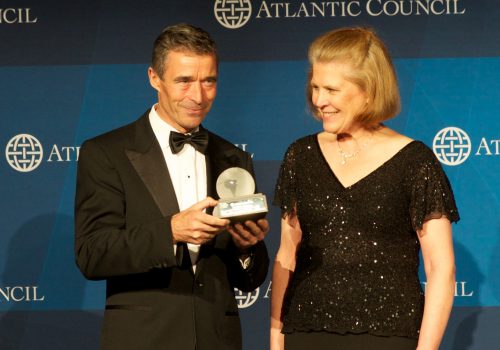
NATO Secretary General receives prestigious US Atlantic Council award

By NATO

From NATO:  Anders Fogh Rasmussen received a Distinguished International Leadership Award from the Atlantic Council of the United States for his service both as NATO Secretary General and as Prime Minister of Denmark

Cybersecurity Security & Defense

NATOSource

May 3, 2013

Hammond: NATO split on whether main threat coming from Russia or MENA?

By Philip Hammond, E-Ring

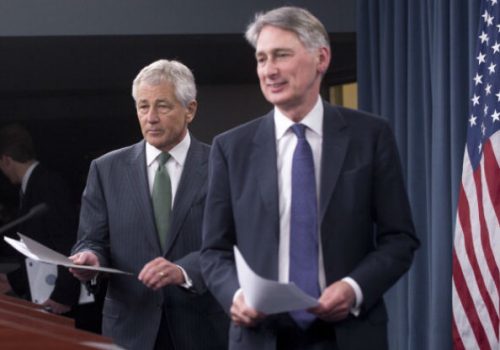
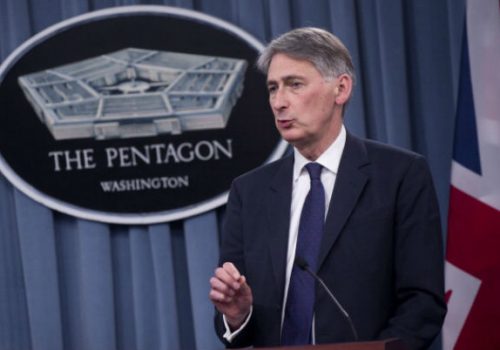
From Philip Hammond, E-Ring:  The further east you go, the more of the concern remains that we should be prepared for a — maybe not full-blown state-on-state conflict — but we need to be prepared to protect the borders of NATO

United Kingdom

NATOSource

May 3, 2013

Britain: European defense budget too small, yet ‘vast amounts of it are wasted’

By Philip Hammond, E-Ring

From Philip Hammond, E-Ring:  It’s the NATO planning process and looking at the overall capability that European NATO needs to be able to field and making sure that in the next planning framework horizon we get the capabilities we need

United Kingdom

New Atlanticist

May 3, 2013

A Turning Point in Malaysia’s Politics

By HuiHui Ooi

On Sunday, more than thirteen million will vote in what is likely to be the closest election in the history of Malaysia.  About 2.5 million of these voters are believed to be under the age of 30 and pro-opposition, a wildcard that Anwar Ibrahim’s People’s Alliance (PR) is counting on to bring Prime Minister Najib […]

Elections Indo-Pacific

Libya Working Group

May 3, 2013

Libyan Stability at Risk

By Jason Pack and Karim Mezran

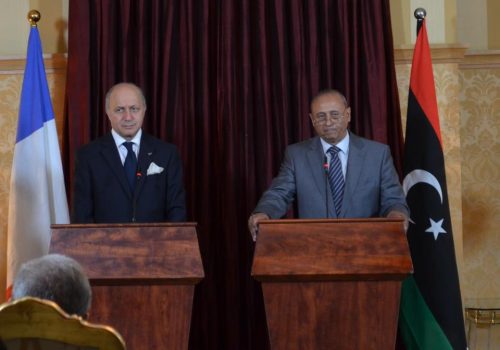
Last week’s attack on the French Embassy in Tripoli was the first significant terrorist attack against foreign interests in the Libyan capital since the fall of Muammar al-Qaddafi. More crucially, it marks an escalation in the covert war being waged to determine the future orientation, institutions, constitution, and very soul of the new Libya. At […]

Libya

New Atlanticist

May 3, 2013

What Was Obama Thinking?

By Barry Pavel

What was President Obama thinking in August 2012 when he declared that Bashar al-Assad’s use of chemical weapons in Syria would alter his calculus and cross a red line, triggering U.S. intervention?

Security & Defense Syria

MENASource

May 3, 2013

A Popular Campaign to Stop the NGO Law

By Amr Hamzawy

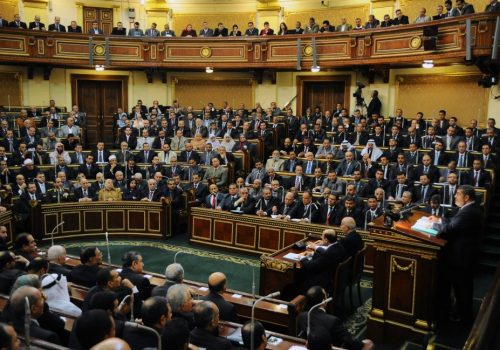
During the short period in which the People’s Assembly was operational in 2012, we at the Human Rights Committee created a comprehensive and consensual draft of a new law for non-governmental organizations (NGOs). The goal was to ensure a free civil society, and to guarantee the freedom to organize, beyond governmental restrictions and security interference. […]

MENASource

May 3, 2013

Off the Egyptian Press: An Eye on Egypt’s Foreign Affairs

By Andrew Ver Steegh

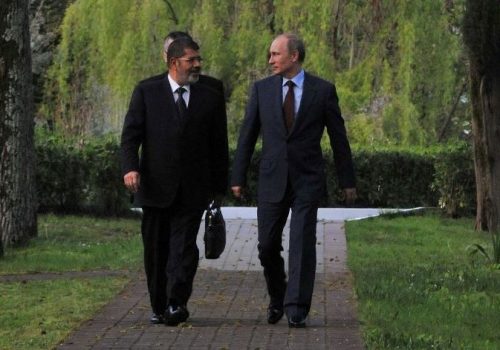
Developments in the realm of Egypt’s foreign affairs have attracted attention in the opinion sections of the local media over the past week.  President Morsi’s trip to Russia and the evolving nature of the Egyptian-Iranian relationship have been particular points of departure that writers have used to consider Egypt’s international direction more broadly.