Atlantic Council blogs

Atlantic Council blogs provide short-form analyses from Council experts and a wider community of global voices on the world’s most important news stories.
View all
of our blogs
Subscribe to our
newsletters

Latest from across our blogs

New Atlanticist

Dec 15, 2020

Which hacker group is most like your astrological sign?

By Safa Shahwan Edwards and June Lee

Which cyber Advanced Persistent Threat (APT) is most like your astrological sign? After all, behind every cyber operation is a human, led by his or her values and decisions, which can be shaped by one’s astrological sign. These APT-sign pairings provide a guide to some of the most dangerous cyber threat actors and perhaps even a forecast of their prospects for success.

Cybersecurity Internet

Fast Thinking

Dec 15, 2020

FAST THINKING: Why the new Russian hacks are a game-changer

By Atlantic Council

The bad news keeps coming about the scope of a suspected Russian hack: The US Department of Homeland Security was compromised, in addition to the State, Treasury, and Commerce Departments and parts of the Pentagon. What's going on?

Cybersecurity Russia

IranSource

Dec 15, 2020

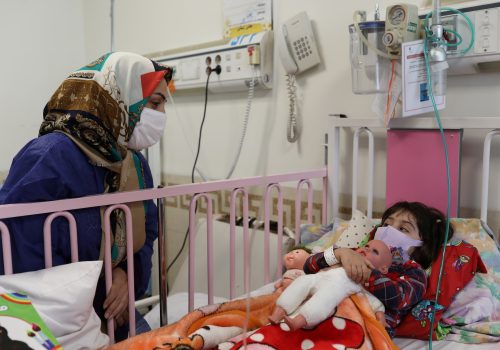
Under sanctions, Iran’s black market for medicine grows

By Saumaun Heiat

For the traffickers, each day is a new opportunity to make more money off Iranians trying to weather the storm of COVID-19 and sanctions.

GeoTech Cues

Dec 14, 2020

Vaccine hesitancy part 1: Using connections to drive human-centered approaches for health

By Tiffany Vora

Dr. Tiffany Vora shares insights from a recent peer-reviewed investigation of online interactions about vaccination and integrates these insights with an orthogonal approach to understanding vaccine hesitancy.

Coronavirus Disinformation

AfricaSource

Dec 14, 2020

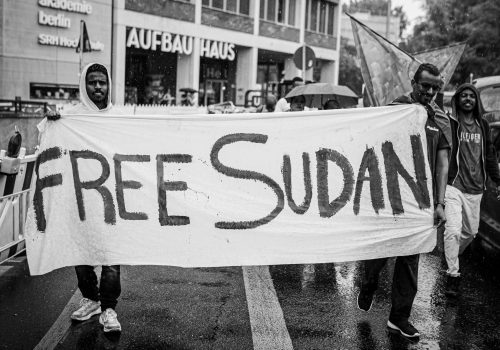
What Sudan’s terror delisting really means

By Cameron Hudson

The announcement today that the forty-five day notification period to Congress had elapsed and Sudan was finally off the US State Sponsors of Terrorism list is historic. It validates the new direction of the country, which it was set upon nearly two years ago by nationwide, peaceful street protests. More importantly, it represents a definitive break with Sudan’s troubled past—the true end of the Bashir era, which began more than thirty years ago—and holds out the hope for a more prosperous future for all Sudanese. The weight of the moment cannot be understated.

Africa Democratic Transitions

UkraineAlert

Dec 14, 2020

The issue Ukraine’s first lady should champion vocally

By Laryssa Horodysky and Melinda Haring

A recent report by Amnesty International has highlighted the growing domestic violence crisis in war-torn eastern Ukraine. Coronavirus lockdown conditions are expected to add to the problem.

Coronavirus Human Rights

MENASource

Dec 14, 2020

Russian aid in Syria: An underestimated instrument of soft power

By Jonathan Robinson

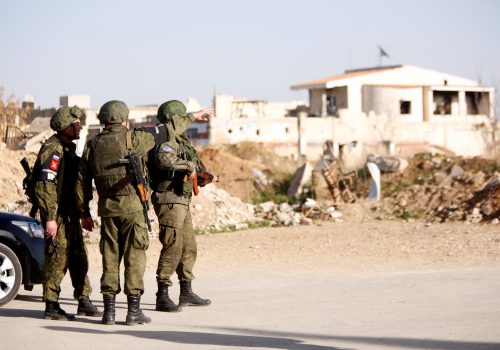
Free from needing outside help by the international community, Russia’s self-sufficient aid ecosystem undermines, devalues, and rivals UN-led efforts in Syria, threatens to erode trust in the wider aid system, and provides a dangerous alternative narrative about the humanitarian environment in Syria for the Bashar al-Assad regime.

Middle East Politics & Diplomacy

GeoTech Cues

Dec 14, 2020

Why quantum technologies represent a new paradigm of trust

By Borja Prado

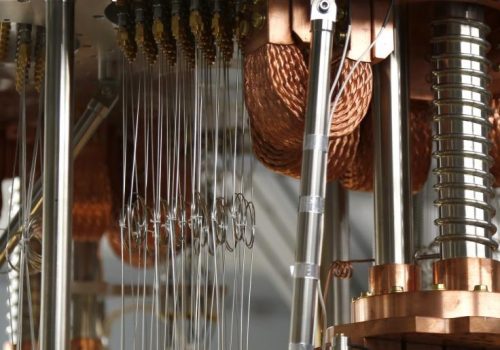
The development of quantum technology (and the ongoing global race to build the most powerful supercomputer) has inestimable potential effects on our livelihoods, from message encryption to quantum teleportation. How do we encourage trust and more knowledge-based collaborations?

Conflict Resilience & Society

UkraineAlert

Dec 14, 2020

Reloading Ukraine’s privatization process

By Dmytro Sennychenko

The Ukrainian parliament is scheduled to consider a new bill in late December 2020 that aims to continue a radical reload of the country's privatization process begun in 2019.

Corruption Economy & Business

MENASource

Dec 14, 2020

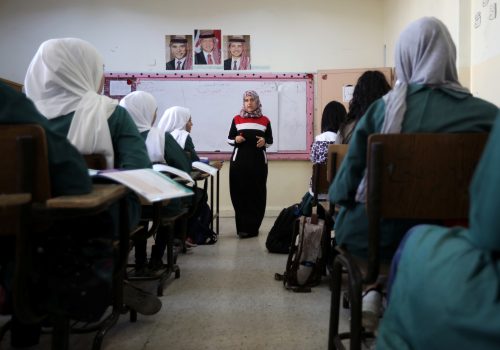
Is Jordan’s workforce ready for emerging opportunities in digital entrepreneurship?

By Nicole Goldin

By tapping into its large, tech-savvy youth population, which makes up more than half of its citizens, and its markedly underutilized female labor force, Jordan can position itself for dynamic post-COVID economic expansion.

Middle East Politics & Diplomacy