The US and Mexico need stronger financial cooperation to disrupt illicit financial flows
When the United States imposed sweeping tariffs on Mexico last year (in a move since struck down by the Supreme Court), the US administration justified the decision by citing the fentanyl crisis. The White House argued that the inflow of the synthetic opioid into the country constituted a “national emergency” and claimed that Mexican drug trafficking organizations had “an intolerable alliance with the government of Mexico.”
Irrespective of the merits of this inflammatory justification—which many experts have questioned—it brought renewed attention to the illicit flow of drugs and money across the US-Mexico border and prompted both governments to intensify efforts to combat organized crime through financial measures. These efforts were punctuated in dramatic fashion by the February 22 killing of Jalisco New Generation Drug Cartel leader Nemesio “El Mencho” Oseguera Cervantes, carried out by the Mexican government with the assistance of US intelligence.
While moments like El Mencho’s killing generate newspaper headlines and are important in their own right, momentum in combating drug trafficking organizations will only translate into durable reductions in illicit drug flows if the United States and Mexico strengthen their cooperation in targeting the financial flows that sustain cartel activities. Achieving this will require targeted reforms and more effective communication between financial institutions and authorities.
Targeting the money behind the drugs
Illicit financial flows between the two countries are driven in large part by criminal organizations seeking to repatriate proceeds from drug trafficking. To do so, they rely not only on bulk cash smuggling but also on traditional financial channels and virtual currencies. Because access to financial resources is critical to sustaining these operations, disrupting such access has proven to be one of the most effective strategies for weakening organized crime. Targeting these illicit financial flows, however, requires close collaboration between the financial intelligence authorities of the United States and Mexico.
Recent leadership changes within Mexico’s financial authorities have generated new momentum for strengthening collaboration with US counterparts. On January 12, Mexico’s Financial Intelligence Unit (UIF) co-hosted the first meeting of a new Transnational Organized Crime Working Group with the US Financial Crimes Enforcement Network (FinCEN) and other foreign partners. This marks a notable departure from UIF’s previous reluctance to engage in international cooperation on transnational security challenges. Coupled with a leadership change at the national banking and securities regulator, the Comisión Nacional Bancaria y de Valores (CNBV), these developments point to a broader shift in Mexico’s approach to combating cross-border illicit finance.
The changes come at an opportune time, as the promise of the country’s security agenda will be limited without modern financial crime-fighting tools.
Mexico’s financial authorities need the tools to fight crime
While this renewed engagement is welcome, the Mexican government can take concrete steps to convert its new posture into more effective policy. The easiest challenge to identify—if not to fix—is the lack of resources at the institutions mentioned above. Mexico’s financial regulators were not spared by former President López Obrador’s austerity policies, and a tight budgetary environment, driven by the government’s fiscal priorities, continues to constrain them. Ideally, financial authorities would receive robust funding in future budgets to reverse years of disinvestment.
Even if the broader fiscal outlook remains unchanged, Mexico still has options to address resource constraints. For example, during the next budget process, the administration can take steps to empower CNBV. In some other G20 countries, including the United States, regulators charge fees to regulated entities and use the revenue to fund their budgets. While CNBV does charge those fees, it currently transfers the revenue to the national treasury before receiving a budget like any other agency. Thus, the source of funding and the mechanism for collection already exists, and Mexico can take the next step by granting CNBV greater budgetary autonomy in the next budget process.
Meanwhile, the UIF does not have enough resources to fully analyze the financial intelligence it receives. Then again, no financial intelligence unit in the world does. But there are ways to address this bottleneck. In the United States, law enforcement agencies have access to the suspicious activity reports FinCEN collects and can use the information to build cases. In Mexico, too much of the burden falls on the UIF. Mexico should design a system, tailored to its national context, to distribute responsibilities more effectively.
Some changes require significant capital; others demand significant political will. But talk is cheap. Both the Mexican government and the US administration can improve the effectiveness of anti–money laundering and countering the financing of terrorism (AML/CFT) efforts by improving communication with the private sector. In Mexico’s case, authorities could provide more actionable information to regulated entities. The most classic type of feedback would be a financial advisory, which outlines forms of illicit financial behavior—or “typologies” of interest—to the government. Another approach involves governments convening banks for closed-door discussions, sometimes with “safe harbor” protections to shield participants from the risks of sharing potentially derogatory information. Initial roundtables may be stiff and scripted. As relationships develop, however, information flows more freely. Both forms of feedback can create a virtuous circle of information-sharing that improves the quality of financial intelligence available to law enforcement.
US guidance can strengthen cross-border enforcement
Financial institutions on both sides of the border could also benefit from clearer signals from the United States. When the US government takes an enforcement action against a domestic or Mexican institution, other institutions—unsurprisingly—pay close attention. Information published alongside such enforcement actions can double as industry guidance—a “what not to do” message. This could include accompanying advisories with customer or transaction red-flag indicators, as well as details that give the public a clearer sense of the scale of negligence at penalized institutions and explain process failures. Public speeches and public-private dialogues could further reinforce these efforts.
In general, the more communication that accompanies a policy tool, the more effective that tool becomes. While most regulated entities benefit from clear guidance, in some sectors a more basic level of feedback may suffice. This is not the case in AML/CFT compliance, given the sheer volume and technical complexity of the data involved—and the fact that incomplete information is often dispersed across multiple actors. A malfunctioning information ecosystem can undermine policy goals. Generalized anxiety in the Mexican financial sector, combined with a scarcity of authoritative guidance, could raise banking costs without delivering the corresponding benefits from more precise targeting of illicit finance risks.
Mexico already has low financial penetration, with total loans and credit equal to just over 30 percent of gross domestic product in 2024—well below the average for a country of its level of development. While compliance costs are not remotely the primary cause of shallow financial depth, inefficient use of regulatory resources creates additional headwinds to financial sector deepening. This, in turn, could incentivize continued reliance on cash and informal financial channels, impeding efforts to monitor and combat illicit finance. The risk of backfire is real—but well-designed and clearly communicated reforms can help the financial sector become a more effective partner in addressing cross-border security challenges.
Phil Lovegren is a contributor to the Atlantic Council’s Economic Statecraft Initiative within the GeoEconomics Center and a former US Treasury attaché to Mexico and Central America.
Housed within the GeoEconomics Center, the Economic Statecraft Initiative (ESI) publishes leading-edge research and analysis on sanctions and the use of economic power to achieve foreign policy objectives and protect national security interests.
Further reading
Fri, Jan 31, 2025
Mexican cartels as foreign terrorist organizations: Impact on US businesses
Econographics By Samantha Sultoon
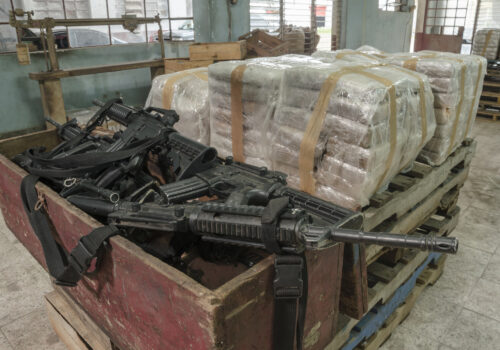
Should the Trump administration choose to use the FTO designation on major Mexican cartels, it may have impacts that have not been fully evaluated.

Tue, Jun 17, 2025
Anonymous shell companies pose a threat to US national security. Here is how to address it.
Econographics By
On March 26, the Department of the Treasury scrapped critical federal rules that would have made most anonymous shell companies illegal. The rules would also have prevented them from being abused by drug cartels, human traffickers, foreign adversaries like Iran and China, terrorist groups, and other bad actors.

Tue, Nov 25, 2025
How Venezuela uses crypto to sell oil—and what the US should do about it
New Atlanticist By Maia Nikoladze
As US sanctions on Venezuela have intensified, the Maduro regime has grown increasingly interested in leveraging digital assets to facilitate oil transactions.
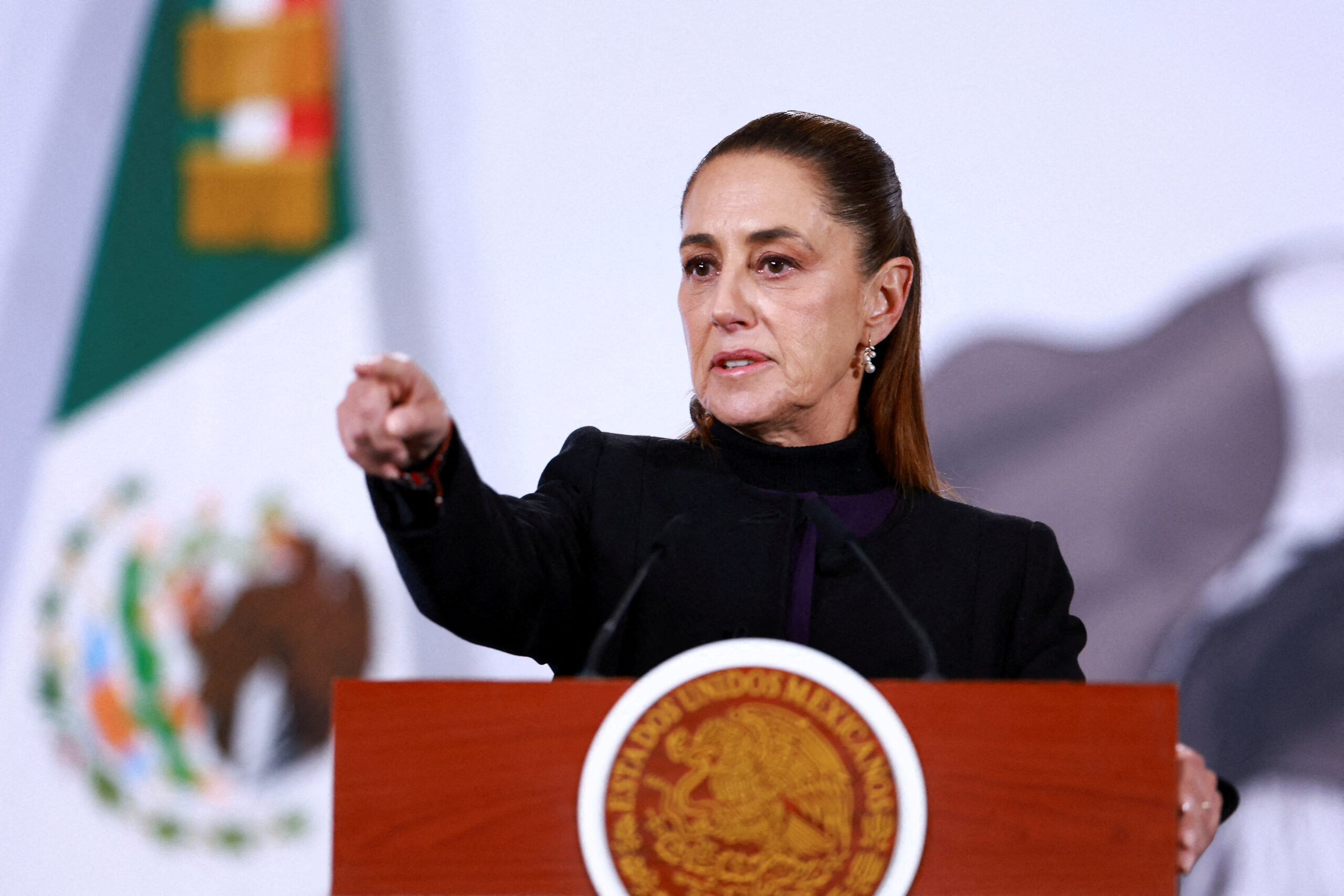
Image: Mexico’s President Claudia Sheinbaum speaks during a press conference in Mexico City following the killing of Mexican drug lord Nemesio Oseguera, known as “El Mencho,” in a military operation. Photo by Raquel Cunha via Reuters.