Stay updated

Subscribe to our daily newsletter to receive the best expert intelligence on world-changing events

Explore our unique analysis

Content

New Atlanticist

Feb 5, 2020

Kenyan president says global leaders must see Africa as “the world’s biggest opportunity”

By David A. Wemer

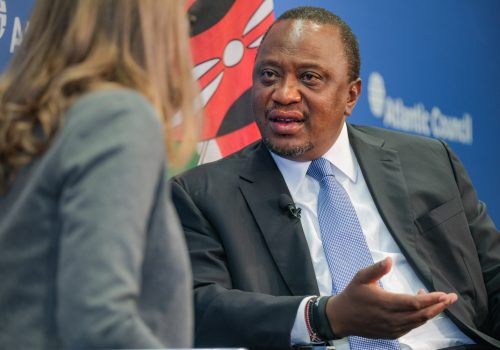
Kenyan President Uhuru Kenyatta implored an Atlantic Council audience on February 5 to see Africa as “more than just a continent producing security threats or unregulated migration that must be contained,” but rather as a region that has “immense strategic importance to the security and prosperity of the transatlantic alliance.”

Africa
Democratic Transitions

Event Recap

Feb 5, 2020

Prime minister promises “Sudan will never be the same again”

By David A. Wemer

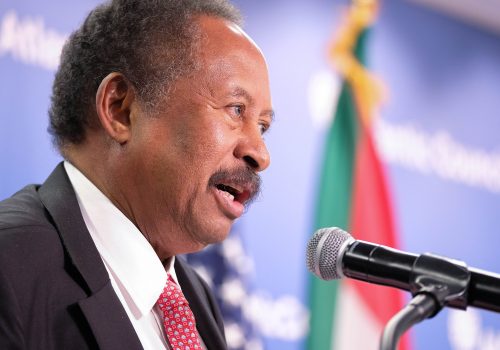
Sudanese Prime Minister Abdalla Hamdok became the first Sudanese leader to travel to Washington, DC in more than thirty years, seeking to win more international support for his transitional government as it tries to guide Sudan towards democracy. “There is a success story that is emerging” in Sudan, Hamdok told an audience at the Atlantic Council on December 5. In a “region full of crises and riddled with conflicts, Sudan provides hope,” Hamdok declared.

New Atlanticist

Feb 5, 2020

The case for extending New START

By Alexander Vershbow

US and global security would be greatly enhanced by extending New START for another five years. Extension would preserve the last effective and verifiable agreement that limits the strategic arms competition between the United States and Russia and make it easier to maintain deterrence and strategic stability by allowing both sides an assured second-strike capability.

Arms Control
Nuclear Deterrence

New Atlanticist

Feb 4, 2020

What Trump’s State of the Union means for US foreign policy

By David A. Wemer

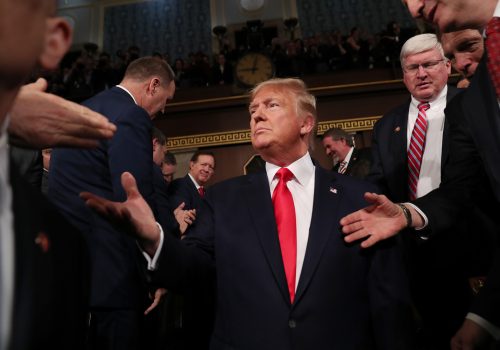
US President Donald J. Trump used his third State of the Union address to argue that his administration has “launched the great American comeback” through its economic policies and tough international stances. In a speech that focused heavily on domestic issues, his discussion of foreign policy mainly highlighted what he believed to be his major foreign policy successes, rather than announcements of new plans.

China
Energy & Environment

New Atlanticist

Feb 3, 2020

After Brexit: The road ahead

By David A. Wemer

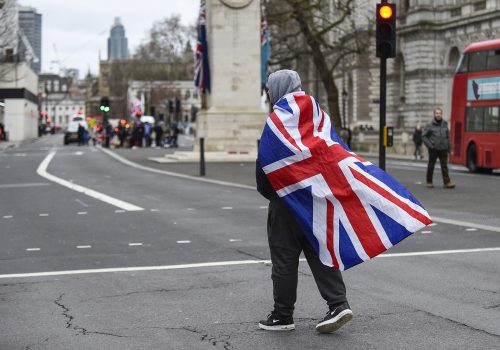
With Brexit now technically achieved, the remaining questions about the future UK-EU relationship will continue to dominate both sides in the years to come. Atlantic Council experts offered their response to the formal exit of the United Kingdom from the European Union and what lies ahead for both the UK and Europe.

European Union
Politics & Diplomacy

New Atlanticist

Feb 3, 2020

Can Iraq’s new prime minister nominee navigate Baghdad’s political chaos?

By Atlantic Council

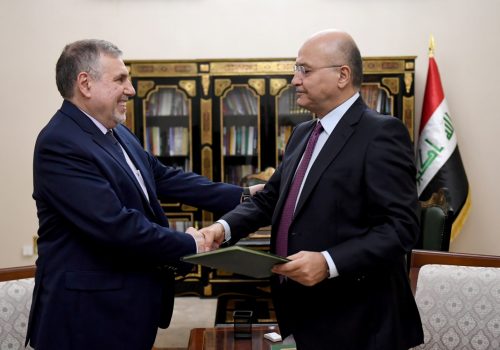
The next task for Allawi is to win the consent from two mutually exclusive spheres of influence inside Iraq: the protesters who forced the resignation of the current government at a high cost with nearly a thousand lives lost and more than twenty thousand wounded and the entrenched political actors who are still unwilling to give up all or part of their extraordinary privileges and take steps to curb corruption.

Iraq
Politics & Diplomacy

New Atlanticist

Feb 3, 2020

What will Brexit mean for energy markets?

By Global Energy Center

“Initial indications are that post-Brexit Britain will pay less attention to issues concerning climate change despite the fact that it is to hold COP 26 in Glasgow in November," John Roberts says.

Climate Change & Climate Action
Energy Markets & Governance

New Atlanticist

Feb 3, 2020

US targets al-Qaeda leader: What it means for Yemen and the US counterterrorism mission

By Masoud Mostajabi

"When the United States is able to identify a terrorist abroad who threatens Americans, in the vast majority of cases the solution is relatively simple," William Wechsler says. "Simply reach out through law enforcement or intelligence channels and ask the local government to arrest them. Unfortunately, there remain a few places in the world in which the host governments have no practical ability to do so—indeed, in some of these places legitimate government authorities face a high risk of being killed if they tried. Yemen is one of these places."

Conflict
Terrorism

New Atlanticist

Jan 31, 2020

The Russian threat is scaring Sweden

By Anders Åslund

After Russia’s aggression against Ukraine in February 2014, the Swedish thinking about its defense has changed remarkably. Like most of Europe, Sweden had steadily disarmed for a quarter of a century after the end of the Cold War, and its military expenditure had sunk to 1 percent of gross domestic product (GDP). Russia’s actions against Ukraine woke Sweden up. Swedes got upset, while the Finns were worried. Together with Poland and the three Baltic states, Sweden has been among the European Union countries most committed to sanctions against Russia over Ukraine.

Defense Policy
Northern Europe

New Atlanticist

Jan 29, 2020

The United States must end its contradictory Pakistan policy

By Harris Samad

Washington has a long history of tacitly supporting the Pakistan Army’s unrivaled political power while publicly espousing the ideals of democracy and political pluralism. Such doublespeak only enables corrupt and unaccountable segments of the political and security establishments in Pakistan. It also impedes the United States from achieving its regional goals of democracy promotion and counterterrorism.

Democratic Transitions
Pakistan