Our programs and centers deliver in-depth, highly relevant issue briefs and reports that break new ground, shift opinions, and set agendas on public policy, with a focus on advancing debates by integrating foundational research and analysis with concrete policy solutions.
When major global news breaks, the Atlantic Council’s experts have you covered—delivering their sharpest rapid insight and forward-looking analysis direct to your inbox.
Reports from the front lines of global policy—by the experts shaping it.
A weekly column by Atlantic Council President and CEO Frederick Kempe, Inflection Points focuses on the global challenges facing the United States and how to best address them.
UkraineAlert is a comprehensive online publication that provides regular news and analysis on developments in Ukraine’s politics, economy, civil society, and culture. UkraineAlert sources analysis and commentary from a wide-array of thought-leaders, politicians, experts, and activists from Ukraine and the global community.
MENASource offers the latest news from across the Middle East, combined with commentary by contributors, interviews with emerging players, multi-media content, and independent analysis from fellows and staff.
Econographics provides an in-depth look at trends in the global economy utilizing state-of-the-art data visualization tools.
Translate this site
Translate the page or open accessibility tools from the same menu.
Choose a language for this page.
No matching languages found.
Current language: English
Adjust text size, contrast, link visibility, and motion from the same menu.
Accessibility tools are set to default.
SouthAsiaSource is the Atlantic Council’s premier publication for South Asian affairs, covering areas such as economics and trade, governance, education, climate and environmental issues, politics and diplomacy, migration, security, and other areas.
SouthAsiaSource Mar 31, 2023
By Shuja Nawaz and other experts
Terrorism is reemerging in Pakistan. To understand how it should respond to this heightened threat, Distinguished Fellow Shuja Nawaz moderated a series of conversations with experts about fighting terrorism and militancy.
SouthAsiaSource Nov 16, 2022
By South Asia Center experts
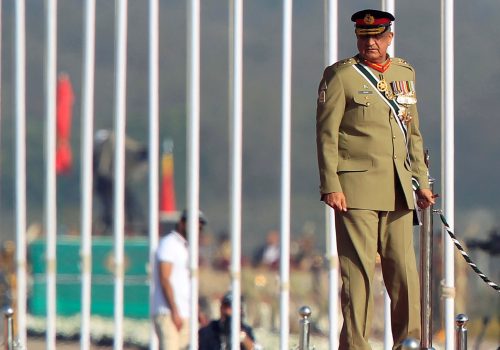
With Chief of Army Staff General Qamar Javed Bajwa set to retire on November 29, 2022, the appointment of a new army chief prompts a new set of challenges. South Asia Center experts provide their analyses of the situation.
SouthAsiaSource Nov 7, 2022
By Ali Hasanain
As the China-Pakistan Economic Corridor enters its second phase, each side needs to review how they can improve the program’s effectiveness for mutual benefit.
SouthAsiaSource
By Omar Sadr
The prospect of a political settlement with the Taliban is testing Afghanistan’s nascent democracy more than ever before in the last eighteen years. Indeed, the country’s hard-won republican system, which the Taliban opposes in favor of a narrow Islamic Emirate, is currently facing an existential threat. It must be protected and strengthened at all costs.
By Yelena Biberman
The time is ripe for Kashmir peace talks, and the Biden administration, with Secretary Blinken at the helm of foreign affairs, can play a constructive role in bringing India to the table. Why should the United States promote the Kashmir peace process? What could it realistically do?
By Safiya Ghori-Ahmad and Kyle Gardner
South Asia offers the Biden administration opportunities to elevate US diplomacy and strengthen partnerships in capitals from Delhi to Dhaka. But doing so will require navigating five dynamics at play across this important region.
By Tamim Asey
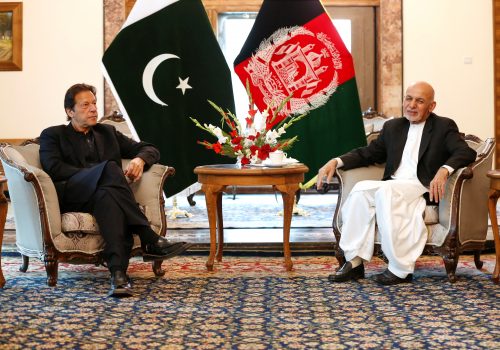
Afghanistan is once again at a cross-roads facing an uncertain future. The United States, intent on ending its longest war, is hoping to withdraw its troops from Afghanistan with a timeline based on the US-Taliban agreement, now under review by the new Biden administration. Afghanistan’s neighbors, hedging their bets and securing their borders, are expecting that the ensuing chaos will help to ensure that their geopolitical interests are served via proxies or at least a friendly government in Kabul.
By Rudabeh Shahid, Kaveri Sarkar, and Azeem Khan
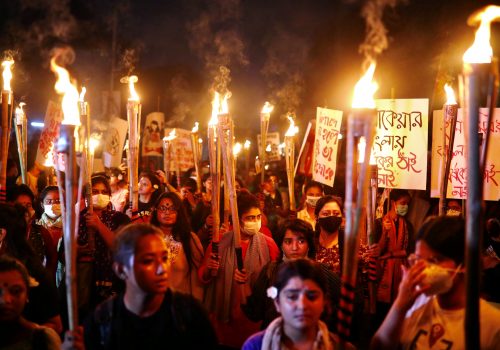
Countless examples of gender-based violence (GBV) in South Asia from last year raise significant concerns about so-called “progress” made in improving women’s standing and fighting rape culture in the region. Political discourse in India, Pakistan, and Bangladesh is deeply misguided regarding such issues, often leading to systematic victim-blaming which—knowingly or unknowingly—helps the perpetrators.
By Imrul Islam
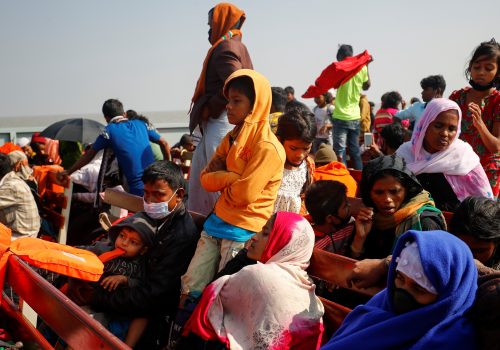
On December 4, 2020, Dhaka followed through on its promise to move refugees from Cox’s Bazar to Bhasan Char, starting a new, unpredictable chapter in the Rohingya crisis. However, Bhasan Char does not solve these problems as much as it relocates them. Separating some refugees from others does not address the underlying drivers of crime within the refugee camps. If anything, relocation splinters aid response, and further attenuates humanitarian space.
By Jawed Ludin and Janan Mosazai
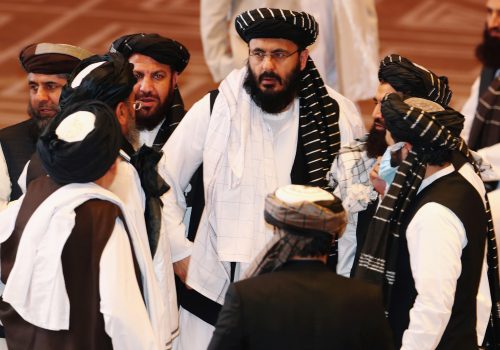
The Afghan negotiations in Doha represent a pivotal moment for war-weary Afghanistan, the region that surrounds it, and the US-led international military alliance that has been engaged in the country for the past two decades. However, without regional and international support and guarantee, any peace agreement between the Afghan government and the Taliban will be in danger of falling apart as soon as it reaches the implementation phase.
Event Recap
By Atlantic Council
On Thursday January 7, 2021, the Atlantic Council’s South Asia Center partnered with the U.S.-Afghan Women’s Council (USAWC) and the American Council on Women, Peace and Security (WPS) to host an event on women’s gains in Afghanistan, the critical role of Afghan women in Afghanistan’s peace and security, and the role of US actors in partnering with and empowering Afghan women.
With negotiations between the Afghan government and the Taliban under way, many in the West and Afghanistan are banking on the fact that the Taliban movement has changed and that, having failed to defeat them militarily, it is time to embrace them. Although the latter is indeed true - that we have failed to defeat the Taliban militarily - the former deserves more scrutiny.
Past events
On December 15, 2020, the Atlantic Council’s South Asia Center in partnership with the American Pakistan Foundation hosted a book talk with author and journalist Declan Walsh on his new book, The Nine Lives of Pakistan: Dispatches from a Divided Nation. The event was moderated by South Asia Center distinguished fellow Shuja Nawaz.
If refreshing the page doesn't resolve the issue you could try clearing the sites browser cache.