Gulf Security

Content

New Atlanticist

Mar 31, 2020

Gulf partners could give Iran and the US a way out of their collision course

By Kirsten Fontenrose

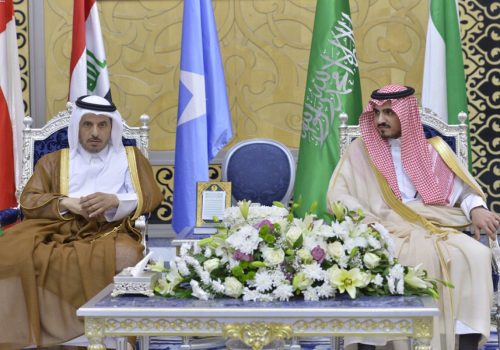
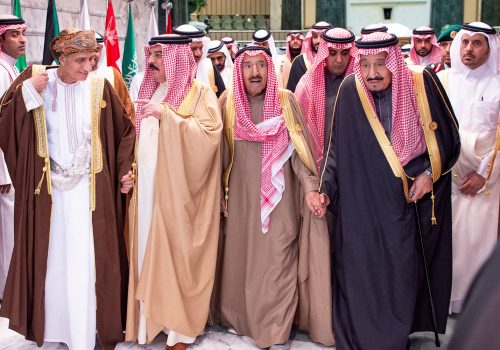
With interests on both sides of the conflict and much to lose if it worsens, the Gulf Cooperation Council (GCC) is the one organization that could be a hero here, kickstarting a chain reaction that arrives at de-escalation without any party losing face.

Conflict Iran

In the News

Feb 24, 2020

Frandrup quoted in the National on naval operations in the Gulf area

By Atlantic Council

Maritime Security Security & Defense

New Atlanticist

Feb 3, 2020

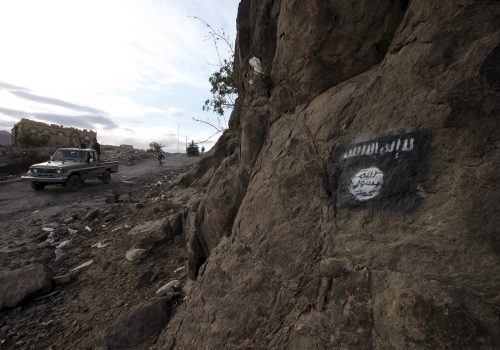
US targets al-Qaeda leader: What it means for Yemen and the US counterterrorism mission

By Masoud Mostajabi

"When the United States is able to identify a terrorist abroad who threatens Americans, in the vast majority of cases the solution is relatively simple," William Wechsler says. "Simply reach out through law enforcement or intelligence channels and ask the local government to arrest them. Unfortunately, there remain a few places in the world in which the host governments have no practical ability to do so—indeed, in some of these places legitimate government authorities face a high risk of being killed if they tried. Yemen is one of these places."

Conflict Terrorism

In the News

Jan 31, 2020

Fontenrose joins VOA (Farsi) to talk about the deployment of additional US troops and aircraft to the Gulf

By Atlantic Council

Middle East Persian

Inflection Points

Jan 11, 2020

Abu Dhabi dispatch: The Soleimani earthquake and coming aftershocks

By Frederick Kempe

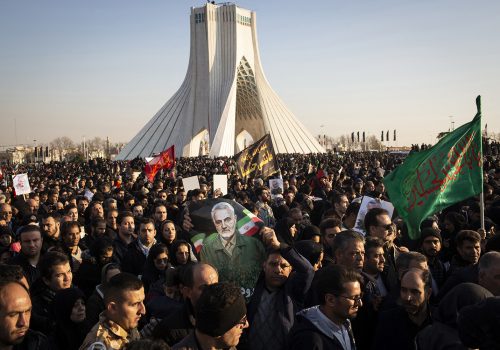
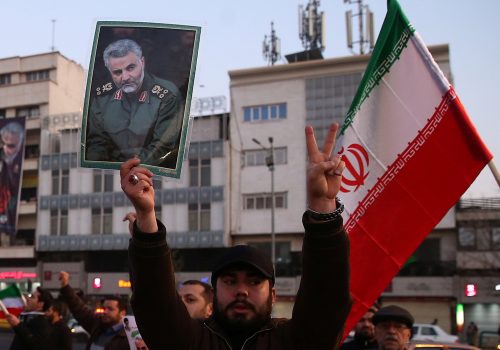
The conventional wisdom – underpinned by visuals from Iran – is that the US drone strike reinforced hardliners and shifted the internal Iranian dynamics from protests against the regime to angry demonstrations against the United States. Far harder to measure is the longer-term impact of Soleimani’s absence on the country’s revolutionary effectiveness and structure.

Conflict Iran

New Atlanticist

Jan 8, 2020

Iran’s missiles may have avoided the worst outcome

By Thomas S. Warrick

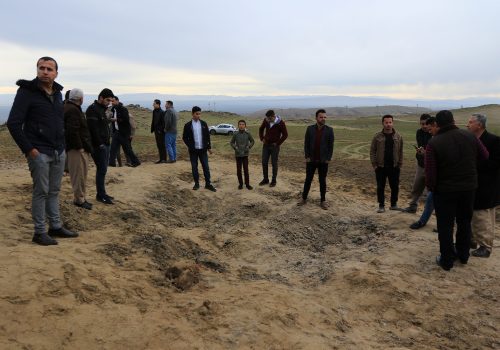
If there had been significant US casualties, the world would have awoken to the dawn of a regional war, because the Trump administration would have been compelled to attack the launch sites in Iran—and probably other targets in Iran, also. If the present news holds, the situation is slightly less dangerous, if still perilous.
Conflict Geopolitics & Energy Security

New Atlanticist

Jan 8, 2020

Washington and Tehran can step back – if they want to

By William F. Wechsler

After the January 8 Iranian missile attacks on Iraq, a successful tactical de-escalation requires both that the Iranian leadership intends for its military actions not to be escalatory and that the Trump administration perceives those actions as they were intended. In the absence of direct communications between the United States and Iran, however, the potential for misunderstanding and thus the risk of miscalculation remains high.

Conflict Geopolitics & Energy Security

New Atlanticist

Dec 6, 2019

Détente in the Gulf?

By Kirsten Fontenrose

The National Security Council’s policy process aimed at designating the Muslim Brotherhood a terrorist organization may accidentally contribute to a resolution of the Gulf rift.

Politics & Diplomacy Terrorism

IranSource

Dec 5, 2019

Assessing US policy toward Iran

By Kenneth Katzman

The effectiveness of any US policy needs to be measured against the primary objective it is seeking to accomplish. A policy might be changing some conditions in a target country, but not others. The conditions that are being changed by US policy might be material to US interests, or they might not. The key question […]

Financial Sanctions and Economic Coercion Iran

In the News

Nov 26, 2019

Khoury quoted in Al-Monitor on the possibility of US-Saudi negotiations with Houthis

By Atlantic Council

Security & Defense The Gulf