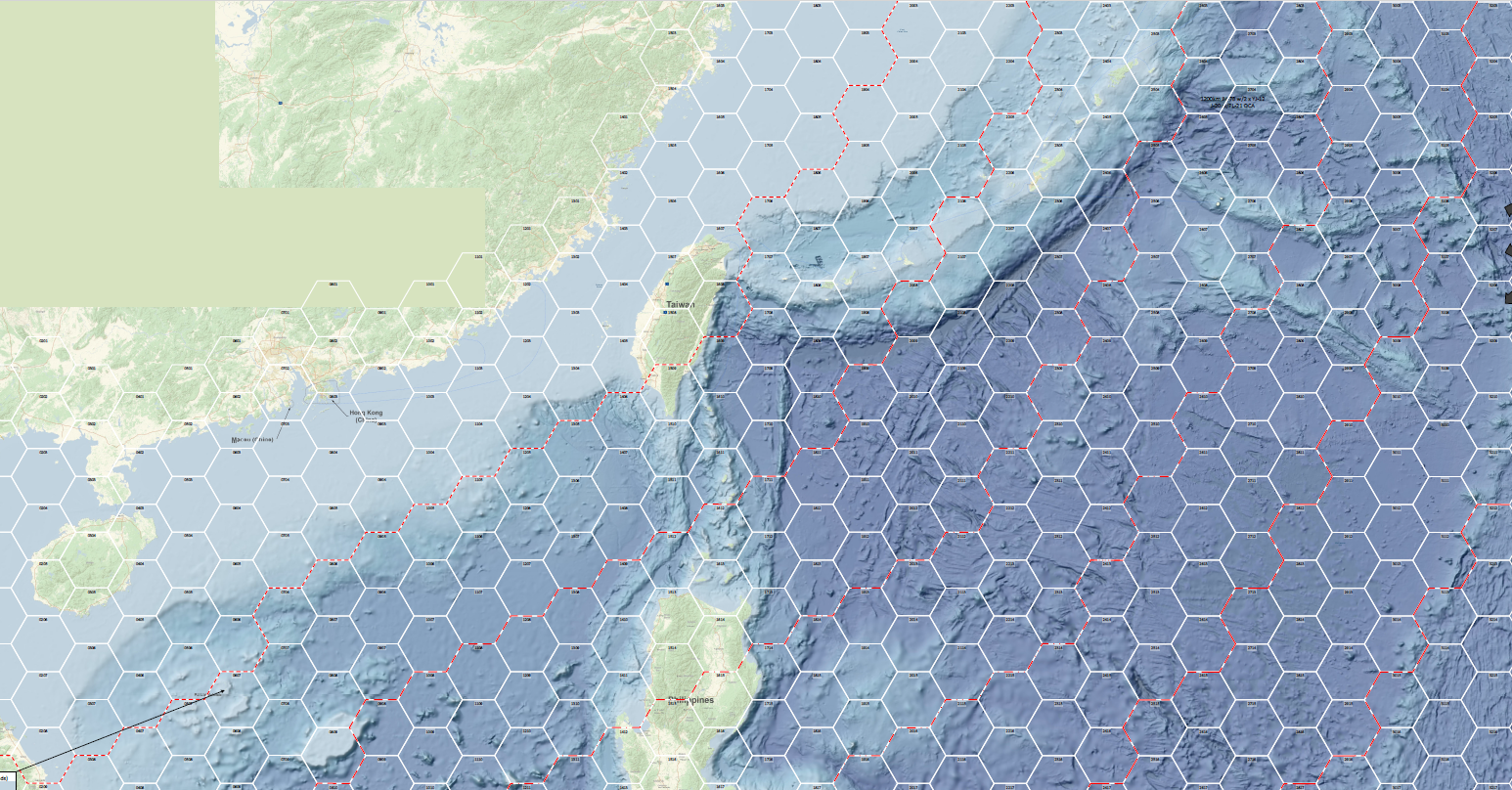
Aquatic Tiger: How long-range submarine drones could play a role in a Taiwan conflict
Bottom lines up front
- The Aquatic Tiger wargame explored how long-range autonomous underwater vehicles (LRAUVs) could help the US deter or counter Chinese military action against Taiwan.
- LRAUVs showed promise for pre-conflict surveillance, mine countermeasures, and swarming attacks in chokepoints, but showed vulnerabilities in the shallow, constricted waters of the Taiwan Strait.
- LRAUVs would be useful contributors—not decisive—if deployed in large numbers, with advance planning, and integrated into broader US and allied military operations.

Introduction
According to the Pentagon, “[China’s military] continues to refine multiple military options to force Taiwan unification by brute force. Those options include, most dangerously, an amphibious invasion, firepower strike, and possibly a maritime blockade.”
To address this threat, the new National Security Strategy unveiled in late 2025 declares that “deterring a conflict over Taiwan, ideally by preserving military overmatch, is a priority” and emphasizes, to this end, “reinforcing U.S. and allies’ capacity to deny any attempt to seize Taiwan. The new National Defense Strategy of January 2026 further reinforces the goal to establish a “strong denial defense along the First Island Chain” and the need to “supercharge the defense industrial base.”
For this approach to succeed, the United States and its allies must rapidly field new military systems to counterbalance China’s military buildup. To offset China’s tremendous rate of military production, US defense thinkers and policymakers are increasingly focused on unmanned systems—particularly those far cheaper and faster to produce than the most advanced manned warships and aircraft. Such low-priced unmanned systems would be a key element of accelerating a buildup of US military capability to deter or defeat Chinese aggression against Taiwan at a feasible cost.
As Admiral Samuel Paparo, commander of the US Indo-Pacific Command, told the Washington Post: “I want to turn the Taiwan Strait into an unmanned hellscape using a number of classified capabilities so I can make their lives utterly miserable for a month, which buys me the time for the rest of everything.”
Thanks to both sides’ mass use of unmanned aircraft in Russia’s war against Ukraine, this quote might bring to mind swarms of flying drones dropping munitions or ramming into targets. But Ukraine is largely a land war, and a fight to control Taiwan would be a different kind of warfare. Undersea drones could play a critical role in defending Taiwan, particularly if they could be produced relatively cheaply and paired with AI that would allow them to operate autonomously while submerged and maintain communications silence to preserve their stealth. Given the long distances involved in the Indo-Pacific region and the distance of US bases from Taiwan, such drones could be particularly useful for the US military in a Taiwan conflict if they had a range of over 1000 kilometers. This led to the Atlantic Council’s Indo-Pacific Security Initiative (IPSI)’s interest in exploring, through wargaming and analysis, the potential of US LRAUVs in a Taiwan contingency. This issue brief is the result of Aquatic Tiger, an initial two-day wargame and post-wargame analytic effort conducted by IPSI, using the expertise of former US military, intelligence, and defense officials, along with non-government scholars and industry experts. This wargame, conducted over two days in November 2025, was the first of its kind with publicly available results, and is summarized below from the perspectives of a range of participants.
Aquatic Tiger’s initial results suggest that additional analysis, wargaming, modeling, technical experimentation, live exercises, and simulation on key issues related to such LRAUVs are warranted, including: how units of such drones would be best organized and employed by the United States, Taiwan, and US allies in such a contingency; whether such LRAUVs could be produced at a low enough cost and in sufficient scale to be effective; what tactical-level synergies these LRAUVs would have operating in concert with other manned and unmanned platforms; and the potential efficacy of various Chinese countermeasures.
LRAUV capabilities: A submariner’s perspective
The LRAUVs employed in Aquatic Tiger are systems still in development that have not been fielded in large numbers or used in combat. For the purposes of Aquatic Tiger, we made assumptions about the capabilities they would have in the next few years. The LRAUVs for Aquatic Tiger were uncrewed, extended-duration, multi-mission submersible platforms controlled by AI. Due to communications limitations imposed by the need to remain submerged and minimize the risk of detection when approaching their targets, they relied heavily on mission planning, programmed autonomous action, and post-mission data recovery. They were modular and configurable to various mission roles such as intelligence, surveillance, and reconnaissance (ISR), seabed survey, mine countermeasures (MCM), electronic warfare (EW), and maritime kinetic effects (high-explosive warhead) delivery. For the purposes of Aquatic Tiger, we also assumed that they would have an austere deployment capability, meaning they could be launched directly from the back of a truck or dropped from a ship or aircraft.
LRAUVs reduce personnel risk and are low cost, expendable, and less attributable than crewed submersibles. However, they lack the speed, endurance, mission versatility, stealth and survivability, payload, and real-time situational awareness and decision-making capability of crewed platforms like US attack submarines.
Compared to unmanned aerial systems (UAS), LRAUVs benefit from longer range and time on station, underwater concealment, and reduced exposure to the adversary’s anti-access/area denial (A2/AD) capabilities, particularly sensors and missiles. However, LRAUVs are also much slower, lacking the rapid deployment and potential wide-area coverage of UAVs, while their limited communication capabilities preclude the same level of immediate dynamic tasking and constant sharing of situational awareness with other platforms.
Wargame director’s overview of Aquatic Tiger
To explore LRAUVs’ potential in a near-future Taiwan scenario, we conducted the two-day Aquatic Tiger wargame with three teams including former US military, intelligence, and defense officials, along with non-government scholars and industry experts. The Blue Team representing the US military, including notional LRAUV capabilities, was led by a former US Defense Department senior executive with extensive experience with East Asian issues. The Red Team, representing China, was led by a former senior defense intelligence analyst whose career focused on China’s military. The control team planned and ran the wargame, adjudicated the results of player actions, and addressed the roles of countries other than the United States and China as needed. It consisted of former US government and military leaders with experience running wargames and tabletop exercises—including one retired US Navy officer with extensive experience directing wargames on undersea warfare—and a distinguished scholar bringing academic rigor to the analytic methodology.
Road to crisis and first turn: Chinese pressure on Taiwan building
To provide a starting point for the scenario, we began with a notional crisis, set a few years from now, in which China’s military placed unprecedented military pressure on Taiwan to convince its people to seek reconciliation with Beijing and oppose further defense budget increases. As tensions rose, a Chinese military aircraft crashed after a collision with a drone from Taiwan. Chinese Communist Party (CCP)-controlled media claimed several members of the aircrew were killed, and Chinese fighter jets soon shot down three more drones. CCP leadership threatened further escalation, warning that a “wrong decision” would trigger “decisive military action.” For its part, Washington announced stiff new economic punishments against China, warning they would remain in place until Beijing agreed to “maintain peace and to renounce aggression.” With that, the scene was set for a confrontation.
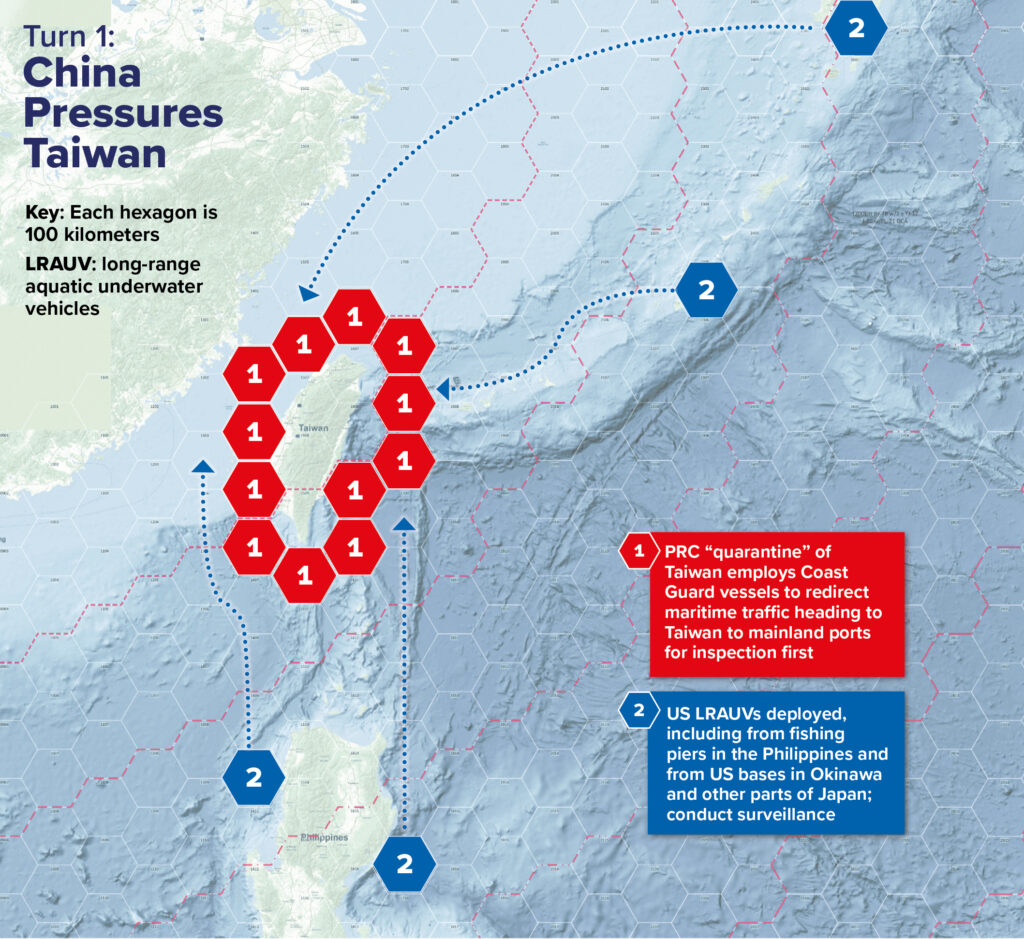
Figure 1: Turn one of the Aquatic Tiger wargame
The Red Team, simulating China, initiated the wargame planning to keep the Taiwan situation “an internal matter,” using an air and sea quarantine to pressure Taiwan while keeping out the US military and preparing for a potential armed conflict. China’s priorities included
- enforcing a quarantine of Taiwan framed by the CCP as a domestic law-enforcement action (attempting to force all air and sea cargo to Taiwan to be routed via air and seaports on China’s mainland for inspection);
- enhancing defensive military posture, including surveillance assets to detect potential US military intervention; and
- conducting a messaging campaign targeting the populations of Taiwan, the United States, and the international community, along with diplomatic actions around the world to underscore that the goal is a peaceful resolution.
The Blue Team’s overall concept at the outset was to “flood the zone” to signal resolve and deter escalation. Its priorities included: surging ISR assets, including LRAUVs, into the area around Taiwan; increasing military posture, including with LRAUVs; and engaging allies and partners for support.
During the first turn of the wargame, US military-operated LRAUVs, along with small numbers operated deniably by the US government and others operated by non-government research entities and private contractors, successfully deployed into key areas to conduct surveillance and support public release of information on Chinese activities—though non-LRAUV assets proved to be more effective collectors of images compelling for public release. Beijing’s calculus and plans were ultimately unaffected. The information campaign built some international support and sympathy, but China leaned into its narrative and US key allies and partners ultimately remained hesitant due to risks and costs.
Second turn: China escalates and the United States responds
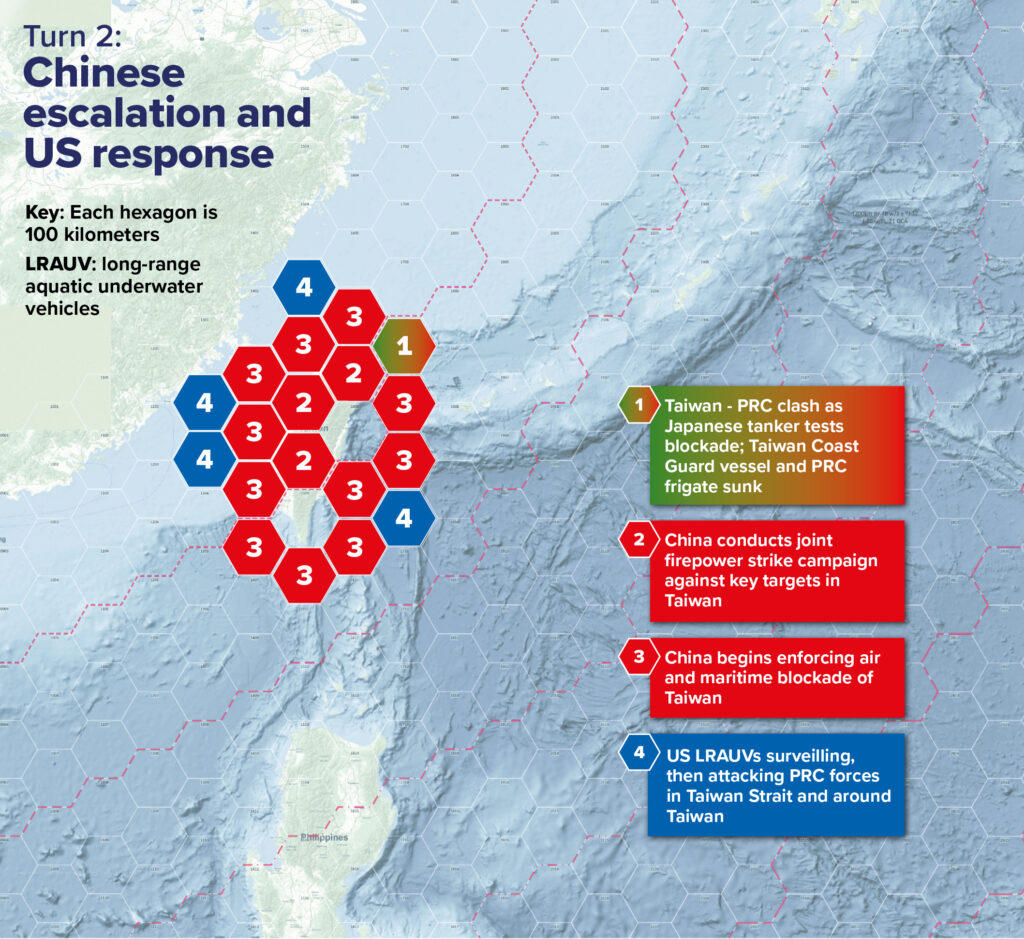
Figure 2: Turn two of the Aquatic Tiger wargame
In the second turn of the wargame, the situation rapidly escalated as Chinese coast guard vessels attempted to enforce the quarantine and Taiwanese coast guard vessels moved to escort incoming ships. Chinese military vessels intervened, with a People’s Republic of China (PRC) frigate sinking one of Taiwan’s coast guard vessels. A short time later, this frigate exploded and sank quickly, apparently hit by a torpedo or unmanned underwater vehicle.
The Red Team escalated under the premise that China would “prepare to achieve a resolution to the Taiwan question.” China declared a full blockade of Taiwan and, shortly thereafter, conducted limited joint firepower strikes on Taiwan bases. To stifle international opposition and justify its position, Beijing simultaneously conducted a strategic messaging campaign targeting the international community.
The Red Team’s pivot from pressuring Taiwan to use of force was a major and rapid escalation and a reaction to perceived US direct intervention. China was trying to impose costs to compel the United States to back off, not hesitating to destroy LRAUVs and other “interference” in the Taiwan Strait, while assuming US involvement in LRAUV operations and the sinking of the frigate. The Blue Team’s posture adjusted to provide broader military options and complicate PRC efforts beyond the vicinity of Taiwan, while leveraging allies and partners. LRAUVs were augmenting, but not replacing, a wide range of other surveillance assets and saw some limited use for counter-mine operations.
Third turn: Military conflict to control access to Taiwan
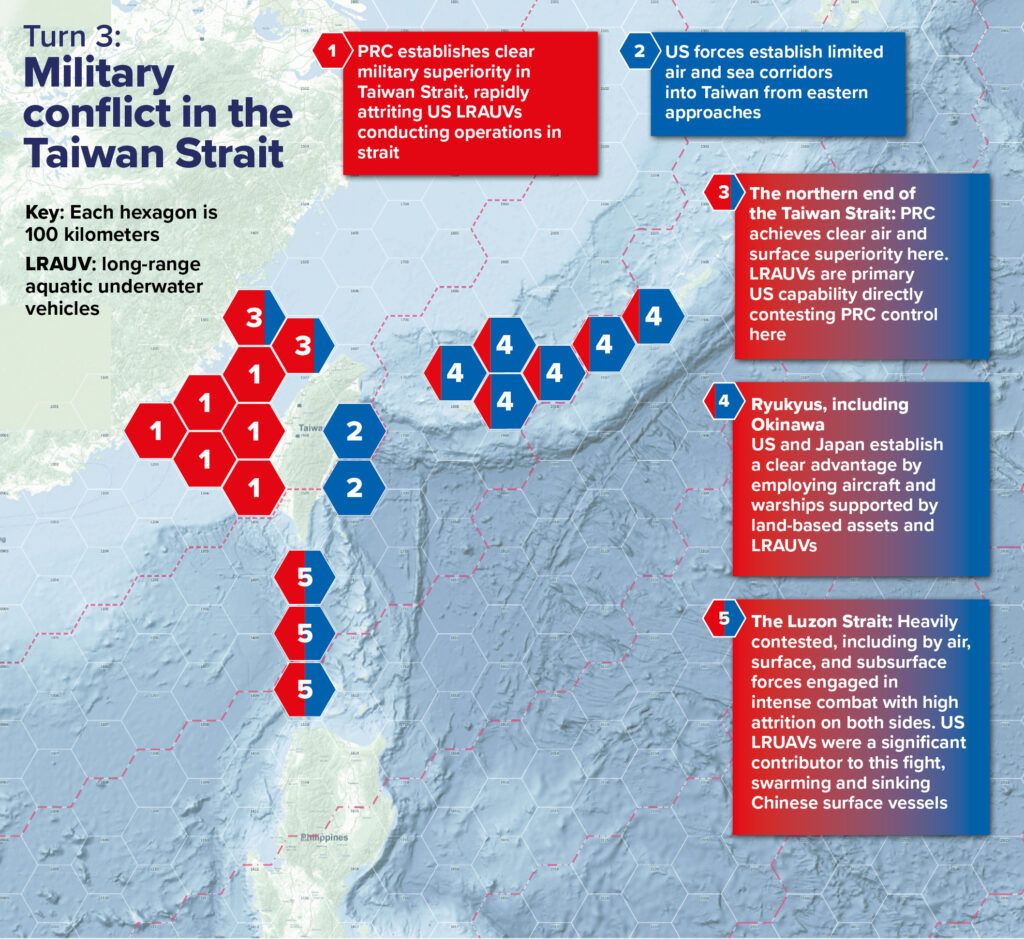
Figure 3: Turn three of the Aquatic Tiger wargame
At the start of the third turn, the Red Team continued wanting to convince the Taiwan government to come to the negotiating table. But it shifted to primarily focus on defeating (but not destroying) US military operations supporting Taiwan, while still attempting to avoid an all-out war with the United States and its allies. The PRC approach included three main elements.
- Prevent US/allied military interference and support to Taiwan: Conduct A2/AD focused on chokepoints south and northeast of Taiwan in order to keep the US military at bay and impose costs on Washington, while warning the United States that China has deployed portions of its nuclear triad.
- Defeat Taiwan’s forces with standoff attacks: Conduct joint firepower strikes on Taiwan’s military and infrastructure targets in order to damage logistics, disrupt command and control, and reduce Taiwan’s ability to resist.
- Control the Taiwan Strait: Reinforce China’s control of the Taiwan Strait in order to deny US support and unity of action, and to enable cross-strait access for an amphibious assault, if needed.
The Blue Team’s overall concept, meanwhile, was to “throw Taiwan a lifeline” by securing access corridors east of Taiwan while countering and complicating PRC military efforts to threaten Taiwan. This included three main elements.
- Stop the blockade: Attrit Chinese forces in the Taiwan Strait, continue mine countermeasures, and degrade Chinese blockading forces.
- Increase US posture: Neutralize Chinese control of the South China Sea and demonstrate counter-invasion capabilities and rehearsals south and east of Taiwan.
- Support Taiwan: Resupply and reinforce Taiwan, prioritizing mine countermeasures, anti-ship weapons, and beach defenses.
China successfully established clear maritime superiority in the Taiwan Strait despite some US LRAUVs entering. The control team, based on analysis of China’s countermeasures, adjudicated that China was able to take advantage of the geographic constriction and relatively shallow waters of the strait to detect, disable, and destroy the LRAUVs through various means faster than replacement LRAUVs could enter the strait through the passages at its north and south ends. China was also able to disrupt and interdict much of the air and maritime traffic coming into Taiwan from the east, particularly given the limited east coast port capacity.
The conflict began to coalesce around four key geographic areas prioritized by Blue Team forces.
- The northern end of the Taiwan Strait: China achieved clear air and surface superiority in this area. LRAUVs were the primary US capability directly contesting Chinese control of this area, due to the Blue Team’s unwillingness to risk losing any of its relatively small number of high-value attack submarines.
- Ryukyus, including Okinawa: In this area, the United States and Japan established a clear advantage by employing aircraft and warships supported by land-based assets and LRAUVs. China did not attempt to contest US control of this area but was content to block movement toward Taiwan by US and Japanese forces in this area.
- The Luzon Strait: This area was heavily contested, including by air, surface, and subsurface forces engaged in intense combat with high attrition on both sides. US LRAUVs were a significant contributor to this fight, swarming and sinking Chinese surface vessels as they attempted to move through the strait.
- South China Sea: The United States kept its carrier strike groups in this area well protected and away from the Chinese mainland, which limited China’s ability to find and strike them. There was little role for US LRAUVs in this area.
The wargame concluded with the conflict escalating and no end in sight, with all three teams having learned some important lessons. Observations from key members of the Red Team, Blue Team, and Control Team follow.
Red (China) Team leader’s perspective
For Beijing, managing the Taiwan issue in this type of scenario encompasses three principal components. The first is to convince Taiwanese authorities that actions opposing Beijing’s desires will be punished. China does this by demonstrating the capacity to ratchet up military or paramilitary pressure at points around the island. The second is to convince Taiwanese authorities that they have no realistic hope of decisive support from outside powers. These efforts primarily leverage the suite of US-focused A2/AD capabilities the People’s Liberation Army (PLA) has been developing for more than two decades. The third is to ensure that China retains a credible capacity to take control of the island by force.
LRAUVs present some, albeit limited, opportunity to impact each of these components.
The platform presents some utility to provide enhanced warning of PRC pressure operations or intent to use violence to impose Beijing’s will. China has been posturing kinetic assets for a short-notice use of force against Taiwan for decades. There has been a marked increase in their coercive posture around Taiwan in recent years. A transition to violent resolution could begin within days, or even hours, of receiving an order from Beijing. With the ability to loiter in place (unlike low-earth-orbit satellites or aircraft), LRAUV swarms in surveillance positions in the Taiwan Strait and off PRC marshalling points could augment national technical means to help differentiate between ambiguous and unambiguous warning.
The platform has the potential to shape PLA operations but not to deter them. The decision whether to use armed force to compel Taiwan to submit to CCP control will be a political decision, with relative military postures being only one of several considerations. Once the decision is made to place military force in the leading role, the PLA will calculate optimized campaign operations designed to mitigate the effect of Taiwanese or US resistance, including the already anticipated presence of LRAUV platforms. Platforms with counter-mine payloads could complicate blockade operations that include mining Taiwan’s ports. Swarming attacks by LRAUV platforms against PRC support vessels or capital ships could complicate PRC countermeasures. Thus, LRAUV platforms might have effect at shaping, but not deterring, PRC military operations.
LRAUVs’ contributions to defeating PRC blockade operations or an invasion will be a function of numbers of platforms, payload types, and their integration into larger US or Taiwanese systems of systems. PLA War Control theory and Systems Warfare doctrine emphasize warfare that is highly intense but also highly focused on carefully defined objectives. The result is a hybrid of maneuver and position warfare fought in a resource-intensive, and therefore potentially highly attritive, manner. PRC emphasis on optimization of military operations includes the ability to adapt to unforeseen battlefield developments. For these reasons, the impact of LRAUV platforms on PRC operations will be closely linked to volume and flexibility.
Strategic level
PRC military and paramilitary elements play a supporting role at the strategic level. Beijing’s objective at this level is to shape political thinking, primarily in Taipei and Washington. This is true even in more extreme strategies such as quarantines or blockades. Military coercion is more central in these strategies, but the objective remains to shape political thinking.
The utility of LRAUVs at the strategic level is less straightforward than at the operational level. It will probably be limited to shaping the choice and execution of China’s military operations to implement its strategy.
LRAUV platforms will likely be ineffective at providing enhanced strategic warning. A PRC decision to turn to armed force to resolve the Taiwan issue will almost certainly be rooted in CCP leaders’ political assessments that peaceful (albeit coerced) unification is no longer possible. LRAUVs are not positioned to monitor political decisions—only their operational manifestations.
These platforms will also likely be ineffective at deterring PRC strategic action. Although LRAUVs, in concert with other systems, have the potential to impose costs on China for military action, PRC leaders will almost certainly calculate that these platforms will be unable to deny them the achievement of key political objectives.
LRAUV platforms will not prove decisive in defeating a PRC strategy to resolve the Taiwan issue by use of military force—but they could play a role in shaping the course of the conflict. The CCP uses military force to drive political outcomes. The theory of victory underlying a blockade or invasion of Taiwan will be based on shaping political dynamics, not strictly military outcomes. By complicating certain types of operations, such as minefield components of blockade operations, LRAUV platforms could—in concert with other systems—help shape PRC military strategies so that Chinese leaders seek offramps from conflict rather than pursue complete domination of Taiwan.
Contextual limitations and political considerations
China has developed a wide range of military tools to deal with a Taiwan conflict scenario. Only those tools that operate in the maritime domain appear to be susceptible to LRAUV influence. This leaves significant elements of China’s toolkit unaffected. Notably, these include the mainland-based ballistic missiles, long-range artillery, and aircraft that would constitute the major part of a joint firepower strike designed to put logistical, communications, psychological, and political pressure on Taiwan’s leadership. Similarly, the majority of the A2/AD tools China has developed to hold potential US or third-party intervention at risk also operate predominately from PRC territory and are therefore beyond the influence of LRAUVs.
It is worth noting that the ways in which LRAUV kinetic payloads shape PRC operations will probably vary significantly depending on which party employs them. LRAUVs or shorter-ranged underwater platforms employed by Taiwan will almost certainly generate a different response than those employed by US forces. China will likely see Taiwan’s use as staying within the confines of a domestic conflict. Under its Active Defense doctrine, China might seek to avoid striking US targets—which would likely draw the United States into the conflict as a direct combatant—unless the United States has already struck PRC targets. Kinetic employment by US forces against PRC targets would likely escalate to a larger exchange of fires between the two sides. Depending on the scope and scale of escalation, this could increase PRC perceptions of the need to project larger amounts of military force across the Taiwan Strait earlier in the conflict, in an effort to compel resolution before the United States could posture forces for open-ended conflict.
Blue (US) Team leader’s perspective
From a US Blue Team perspective, Aquatic Tiger highlighted both the potential value and the inherent limitations of LRAUVs in a plausible China-Taiwan conflict. For Blue Team planners, the appeal of LRAUVs rested less in their ability to deliver decisive military effects than in their capacity to operate persistently and at scale, with comparatively low political and operational risk, in highly contested maritime environments. The wargame demonstrated that LRAUVs could support Blue Team objectives during selected phases of a crisis, while also revealing how quickly their utility narrowed as conflict escalated and China accepted higher levels of military risk.
Blue Team objectives and strategic logic
Across the turns of the wargame, the Blue Team pursued three consistent objectives: deterring further PRC escalation, maintaining access to the Western Pacific—particularly east of Taiwan—and preserving alliance cohesion while managing escalation risks with a nuclear-armed peer competitor. Blue Team decision-making was shaped by concerns related to attribution, proportionality, and alliance politics, which constrained both the timing and visibility of military actions.
Within this framework, Blue Team force posture prior to hostilities served two distinct purposes. The first was signaling—demonstrating resolve to deter PRC aggression, reassure allies and partners, and support diplomacy and strategic messaging with third parties. The second was positioning—quietly placing forces to gain an operational advantage should conflict occur. Aquatic Tiger demonstrated that LRAUVs were far better suited to the latter than the former.
Pre-hostilities posture and strategic messaging
LRAUVs’ low detectability, while operationally advantageous, limited their utility as signaling tools. Unlike air or surface platforms that can be employed deliberately for visible demonstrations of presence, LRAUVs operate largely outside public view. As a result, they contributed little to strategic messaging with allies, partners, or the broader international community.
During the wargame, strategic messaging and diplomatic efforts were more effectively supported by other assets, particularly those capable of generating clear, shareable imagery and data. Although contractor-operated concepts were discussed as a means of increasing volume, LRAUVs remained ill-suited to strategic messaging due to their limited fields of view and constrained sensor outputs. In short, their primary value before hostilities lay in positioning rather than persuasion.
ISR: Tactical value and strategic limits
LRAUVs contributed to intelligence, surveillance, and reconnaissance during the wargame, but Aquatic Tiger underscored clear limits to their ISR utility from a Blue Team perspective. These systems did not provide the strategic or operational indications and warning that Blue Team decision-makers would prioritize in a Taiwan contingency, such as detecting large-scale mobilization of PRC amphibious forces, munitions, or logistics.
Instead, LRAUV ISR proved most relevant at the tactical level, supporting localized awareness for operators already engaged in contested environments. In this role, LRAUVs complemented rather than substituted for airborne, space-based, and other ISR platforms, which proved more effective for broad-area coverage and early warning. The wargame reinforced that LRAUVs should not be viewed as primary ISR platforms for strategic or operational warning, but as contributors to tactical awareness once hostilities were imminent or under way.
Employment across escalation phrases
As the scenario progressed into the second turn and China declared a blockade, Blue Team objectives shifted from deterrence toward complicating PRC operations and imposing costs. LRAUVs were employed to augment ISR, support counter-blockade efforts, and contribute to mine countermeasures and maritime awareness. These contributions were incremental rather than decisive. LRAUVs enhanced the Blue Team’s ability to contest the blockade at the margins but did not alter the underlying balance of forces in the Taiwan Strait.
By the third turn, once China adopted a more explicit A2/AD posture along the First Island Chain, the constraints on LRAUV utility became more pronounced. Attrition increased rapidly as PRC forces demonstrated a willingness to destroy autonomous systems with limited concern for escalation. In the Taiwan Strait itself, LRAUVs were lost faster than they could be replaced, reinforcing the conclusion that constricted waters close to the mainland favored PRC countermeasures, including unconventional approaches.
In contrast, LRAUVs proved more effective in geographically differentiated areas such as the lower Ryukyus and portions of the Luzon Strait, where Blue Team and allied forces enjoyed greater standoff advantages, and where LRAUVs could complement land-based and maritime capabilities.
Blue Team leader perspectives on LRAUV capabilities in the Aquatic Tiger wargame
Within the wargame, the LRAUV system capabilities in the Blue Team’s inventory resonated with Blue Team planners because they reflected attributes aligned with their team’s operational needs—including long endurance, modular payloads, and forward deployability—without placing personnel at risk. These characteristics made such systems suitable for early deployment and for missions emphasizing persistence and access in contested environments.
At the same time, the LRAUV systems employed by the Blue Team during Aquatic Tiger proved not to be decisive platforms. Limited payload size and maneuverability constrained individual kinetic effects, while relatively slow transit speeds required advance planning and careful positioning. Once PRC decision-makers assumed Blue Team ownership of LRAUV operations, the political advantages of ambiguity diminished and kinetic employment risked escalation.
Kinetic employment and the access problem
During the wargame, the Control Team expressed skepticism regarding the kinetic utility of the LRAUVs in the Blue Team’s inventory, particularly against high-value targets such as large surface combatants or invasion force transports. Concerns focused on warhead size and maneuverability, leading to an adjudication that kinetic effects of individual LRAUVs would be limited.
Subsequent reflection suggests that this assessment might have undervalued the role LRAUVs could play in addressing one of the central challenges of a Taiwan contingency: gaining kinetic access inside heavily defended, shallow-water environments dominated by PRC A2/AD systems. In such environments, the principal constraint on Blue Team operations was often the ability to deliver kinetic effects at scale, rather than targeting information.
Viewed through this lens, the limitations appear less constraining than initially assumed. Employment as a form of point defense or a limited, mobile minefield aligns with the operational reality that adversary forces—particularly invasion and transport elements—must move through predictable maritime approaches. While individual warheads might be insufficient against large platforms, employment at scale could generate meaningful aggregate effects, consume PRC decision-maker bandwidth at multiple echelons, complicate PRC operations, and impose costs in areas otherwise inaccessible to Blue Team kinetic forces.
Constraints and integration challenges
Several clear constraints emerged from a Blue Team perspective. First, scale mattered. Individual LRAUVs had limited impact and were mission constrained by their pre-planned payloads. Only through numbers and pre-positioning could they influence PRC operations, and even then primarily at the tactical level. Second, command-and-control and integration challenges limited effectiveness. In this first iteration of wargaming, LRAUVs were considered largely as a standalone capability, fully leveraging neither the operational benefits of collaboration between and among LRAUVs at scale nor of teaming LRAUVs with other manned and unmanned systems.
Third, geography was decisive. LRAUVs were most useful in areas where PRC land-based sensors, aircraft, and missile forces constrained Blue Team air and surface operations, but least effective in narrow waters where maritime militia and other countermeasures could be employed. Attrition, while expected, raised questions regarding sustainment and replacement under combat conditions.
Strategic implications for the Blue Team
From a Blue Team perspective, Aquatic Tiger suggests that LRAUVs should be regarded as enabling capabilities rather than decisive instruments of deterrence or warfighting. Their greatest value lies in pre-hostilities and early crisis phases, where they can support positioning, access, and selected tactical effects at relatively low risk to personnel. As conflict escalates, their role narrows and must be integrated carefully with broader joint and allied operations.
The wargame also underscored the importance of allied and partner considerations. LRAUVs’ employment by third parties, including Taiwan and regional allies, could complicate PRC political and military calculations in ways distinct from their employment exclusively by Blue Team forces, particularly given Beijing’s sensitivity to legitimacy and escalation dynamics.
Bottom line for Blue Team planners
The Blue Team perspective emerging from Aquatic Tiger indicates that LRAUVs could occupy an important, but bounded, role in a Taiwan contingency. When employed with disciplined expectations and integrated into a broader operational framework, they can improve access, complicate adversary planning, consume adversary decision-maker bandwidth, and reduce risk to personnel. They cannot substitute for robust force posture, alliance coordination, or timely Blue Team strategic decision-making. Their value lies not in decisiveness, but in enabling options in environments where other capabilities face prohibitive risk.
Technical and tactical limitations
A number of technical and tactical considerations arose during the wargame that are relevant to consider in terms of potential challenges to the effectiveness of the small, autonomous, expendable LRAUVs employed in Aquatic Tiger, including limitations on intelligence collection, difficulties in attacking moving targets, and potential countermeasures.
ISR limitations
The collection of optical, electromagnetic, and sonar data by sensors on a small LRAUV is limited by the size of sonar carried and the low height of optics and collection antennas. The high density of maritime traffic along the Chinese coast—particularly of military vessels during a crisis—creates an extremely cluttered environment in which acoustic sensors with limited range and aperture, and lacking accurate positional information, offer limited insight. Small, lightweight, electromagnetic spectrum sensors and limited on-vehicle processing capability offer similarly limited capability to provide intelligence-quality electromagnetic spectrum data. Wide-area collection of limited-quality data can be leveraged to contribute to maritime domain awareness in general, but is more applicable to tracking commercial vessels of interest or sanctions enforcement than supporting military operations. A mast height of about one meter offers limited visibility in open ocean environments, where swells of 1–2 meters are common, offering significant periods of obstructed observation and difficulty ascertaining range, target angle, and vessel identification at more than a few nautical miles.
Target detection, classification, identification, localization, tracking, engagement, and assessment
Many of the challenges to intelligence collection are also relevant to completing a “detect to engagement sequence” or “kill chain” for an LRAUV to attack a target with its onboard warhead. Acoustic sensors for individual vehicles offer limited directional discrimination and require robust communications among swarms to reduce errors by taking directional readings from multiple vehicles. Detecting a potential target in a likely target-rich environment is not necessarily difficult, but the other steps to determine how effectively a target can be engaged pose different challenges depending on whether they are based on acoustic, optical, or electromagnetic sensing. The difficulty ascertaining range makes a decision to start a “run in” especially problematic because LRAUVs have only a limited amount of battery power to make a high-speed run to a target. They must also be close to have reasonable potential to intercept a fast-moving target, or even to chase down a slower target from behind.
The wargame did not explore the specifics of how decisions to authorize individual autonomous lethal attacks would be made. The decision to conduct a kinetic attack autonomously also could add considerable complexity to the planning aspect of the mission. Current US Department of Defense restrictions on autonomous lethal engagement might be difficult to satisfy without communications between a weapon release authority and the LRAUV. The workaround of having a contractor operate the vehicle might not eliminate this complication. These policy restrictions could also affect the viability of foreign military sales. Assuming policy issues can be worked out, aspects of international law (e.g., The Hague Convention on mines) require restrictions on location of use and notification of third parties that complicate planning and operational employment of “indiscriminate attack” by lethal autonomous systems.
Potential countermeasures
A number of potential counters to small LRAUVs were raised in Aquatic Tiger, ranging from broad sweeping using modified minesweeping or fishing gear, localized use of such sweeps to “clear limiting lines of approach,” the use of obstructions (nets, modified oil containment equipment), intervening lower-cost vessels to guard flanks of transit lanes, use of “hunter-killer” unmanned underwater vehicles (UUVs), and UAVs alone or in conjunction with the above (vulnerability while snorkeling/surfacing might be exploitable). Defensive barrier modifications and active defense systems on ships themselves are possible in analogous fashion to those on tanks for aerial drones. Double-hulled vessels are fairly resilient to contact explosions and are used to sweep areas as attractors. Reviving the historical use of torpedo nets in various configurations could prove effective. The development of torpedoes that ran at depth and exploded under the keel rendered such nets ineffective, but they could effectively counter UUVs impacting the hull at slow relative speed, particularly against ships at anchor or in port.
Recommendations for Congress
Autonomous systems broadly provide US and foreign forces the benefit of ambiguity of attribution and deployed intent. LRAUVs can particularly shine, given their potential oceanographic and environmental use, which might obfuscate the purpose, to be deployed at or before the first sign of indicators or warnings at the strategic level. However, to be effective, the systems must be better resourced and included in existing Foreign Military Sales (FMS) programs or through more creative export means such as encouraging co-production or direct commercial sales.
- Oversight and acquisition follow-through: Congress should consider how LRAUVs can be used across theaters. Due to technical requirements, LRAUVs perform best in calmer waters, including in littorals and inland seas such as the Black Sea. Congress has already recognized the importance of such systems and included them in the Fiscal Year 2025 National Defense Authorization Act (FY 2025 NDAA), Section 1032, which defines LRAUVs as systems that exceed one thousand nautical miles in range and are capable of operating completely submerged at sea with modular payloads. Section 1032 further requires competitive demonstrations of these systems for the services. Congress, however, has not yet passed follow-up legislation on these competitive demonstrations or on the acquisition of LRAUVs. In the medium term, Congress should follow up on the required competitive demonstrations outlined in Section 1032 of the FY 2025 NDAA and solicit immediate feedback from the services on next steps for LRAUV development.
- Export controls and dual-use framing: Congress should consider leveraging the oceanographic and environmental uses of LRAUVs with modular capacity to reclassify such systems for export from the more-restrictive ITAR (International Traffic in Arms Regulations) list to the less-restrictive EAR (Export Administration Regulations) category. By encouraging the sale of the LRAUVs separate from specific advanced kinetic and electronic effects, the United States can enhance the credibility of such systems for environmental and oceanographic use and encourage further indigenous modular innovations. To support such efforts, Congress should direct the Department of Commerce to consider additional support for the export of US LRAUVs to countries of interest. It should also consider a pilot program for a special license exemption for select countries purchasing such systems for environmental purposes.
- Further analysis of LRAUVs’ impact: Congress should encourage more research and wargaming on the utility of LRAUVs as the technology develops. While this report posits that the strategic and operational effects of these systems are presently limited, continued technological development and the integration of LRAUVs into larger frameworks—such as regional maritime surveillance and interdiction—might yield higher-tier effects. Providing further encouragement—and, importantly, appropriations—toward analysis of LRAUVs is essential to maintaining a qualitative edge in this frontier technology and realizing its potential as a contributor to deterrence and war preparedness.
Key findings
The Aquatic Tiger Wargame and follow-on analysis led the authors to a set of key findings.
- These types of LRAUVs are uniquely suited to forward deployment into sensitive areas during a crisis prior to hostilities, when US senior leadership is likely seeking to minimize escalation risks and conserve resources for a potential conflict. The lack of personnel placed at risk, along with LRAUVs’ low cost and low signature, could allow these platforms to conduct surveillance for extended periods to provide situational awareness and warning of impending attack. Their long-range capability could also equate to a long dwell time in a target area during an extended, open-ended period of crisis, meaning they offer a lower risk of burnout than other types of surveillance platforms. Their deniable, unclear national origin is also an advantage in terms of limiting the risk of crisis escalation. However, this lower risk profile, deniability, and ambiguity also mean that China could attack or interdict US LRAUVs prior to the outbreak of hostilities (including with unconventional means like fishing nets) with a relatively low fear of uncontrolled escalation.
- Geography is a key consideration for LRAUV employment, and chokepoints can be a double-edged sword. US LRAUVs could be deployed into areas—including into constricted areas north and south of Taiwan—where PRC land-based sensors, surface-to-air missiles, aircraft, surface ships, and missile strike forces and sensors make air and surface operations high risk and high cost. Though constricted waters advantage Chinese countermeasures against LRAUVs moving through such areas, maritime chokepoints can also be excellent places for LRAUVs to loiter and detect vessels, as well as a good location to mass large numbers of LRAUVs to conduct swarming ambushes against surface vessels moving through the area. For sustained combat operations in the Taiwan Strait itself, the wargame’s results suggested it would be far preferable to have autonomous underwater vehicles deployed directly from Taiwan’s west coast into the strait rather than attempt to sustain a presence of LRAUVs in the strait by moving them via chokepoints where they could be more easily interdicted.
- Sufficient numbers of platforms and sufficient advance planning are key factors for successful LRAUV employment. The limited payload size and relatively slower speed of LRAUVs require advance planning to ensure the right mix of payload capabilities is in the right place at the right time. Swarming capability and multiple types of LRAUV payloads could provide synergy, particularly to better position for attacks against fast-moving military vessels. Though attrition of LRAUVs will likely be high, large numbers of LRAUVs sustained over time could have a great impact.
- Alternative uses for LRAUVs discussed in the wargame after-action discussions could dramatically increase their cost efficiency in a conflict if the United States is willing to operate them across an area much broader than the vicinity of Taiwan, particularly against slower, non-military vessels. Use against military targets and in constricted areas close to China could be effective, but this is probably not the most efficient use of such LRAUVs. They could instead be used, for example, to shadow high-value Chinese merchant and transport ships moving through the region to support China’s war effort—selectively signaling the US ability to put these ships at risk to influence Beijing’s calculus and then disabling or sinking them to hamper China’s war sustainment effort. LRAUVs could also be used to block access in and out of China’s mainland ports from a distance, as a sort of maneuverable minefield. LRAUVs could also be used in a conflict to bog down Chinese naval, paramilitary, and commercial vessels in areas north and south of Taiwan as part of a maritime insurgency approach.
- The results of this initial Aquatic Tiger wargame suggest that additional analysis, wargaming, modeling, technical experimentation, live exercises, and simulation on key issues related to such LRAUVs are warranted. Subjects to consider include: how units of such drones would be best organized and employed by the United States, Taiwan, and US allies in such a contingency; whether such LRAUVs could be produced at a low enough cost and in sufficient scale to be effective; what tactical-level synergies these LRAUVs would have operating in concert with other manned and unmanned platforms; the potential efficacy of various Chinese countermeasures; and China’s potential employment of its own LRAUVs.

About the authors
Markus Garlauskas is the director of the Indo-Pacific Security Initiative of the Atlantic Council’s Scowcroft Center for Strategy and Security and was the wargame director for the Aquatic Tiger wargame.
Nicholas Takeuchi is a retired US Navy submarine officer and was a Blue (US) Team participant in the Aquatic Tiger wargame.
Drew Holliday is a former US deputy defense intelligence officer for China and was the Red (China) Team leader for the Aquatic Tiger wargame.
Paul Vebber is a retired US Navy and former assistant director for wargaming and future warfare research at the Naval Undersea Warfare Center. He was a part of the Control Team in the Aquatic Tiger wargame.
Adam Kozloski is a nonresident senior fellow with the Indo-Pacific Security Initiative and former congressional staffer. He was a Blue (US) Team participant in the Aquatic Tiger wargame.
Acknowledgements and disclaimer
The Aquatic Tiger wargame and this associated issue brief were made possible by a financial grant and technical input from Albacore Inc., a developer of autonomous underwater vehicles, but Albacore personnel did not participate in developing the issue brief and the brief does not represent Albacore’s views. The Atlantic Council maintains strict intellectual independence for all of its projects and publications. The Council requires all donors to agree to the Council maintaining independent control of the content and conclusions of any products resulting from sponsored projects.
The authors are especially grateful to Colonel Gittipong “Eddie” Paruchabutr, IPSI nonresident senior fellow (US Army, retired) for his generosity in donating his time and support as wargame coordinator. The authors are also thankful to David Helvey for his time, expertise, and support in the project. Thanks also go to IPSI nonresident fellow Andrew Brown for his contributions to this project, and to IPSI program assistant Audrey Roh for her support.
The views expressed in this publication are those of the individual authors of each section.
Related content
Explore the program

The Indo-Pacific Security Initiative (IPSI) informs and shapes the strategies, plans, and policies of the United States and its allies and partners to address the most important rising security challenges in the Indo-Pacific, including China’s growing threat to the international order and North Korea’s destabilizing nuclear weapons advancements. IPSI produces innovative analysis, conducts tabletop exercises, hosts public and private convenings, and engages with US, allied, and partner governments, militaries, media, other key private and public-sector stakeholders, and publics.