In-depth research and reports

Our programs and centers deliver relevant, policy-focused research that matters to inform debate and action. Our focus is always on moving debate forward, integrating analysis with active, relevant conclusions throughout our published work.

Report

Mar 17, 2022

Unearthing potential: The value of geothermal energy to US decarbonization

By Zachary Strauss

Achieving US climate goals requires the development and widespread deployment of all available clean energy solutions. Geothermal energy, while currently only a marginal component of the US energy economy, can contribute significantly to the climate action effort.

Energy & Environment Energy Transitions

Report

Mar 16, 2022

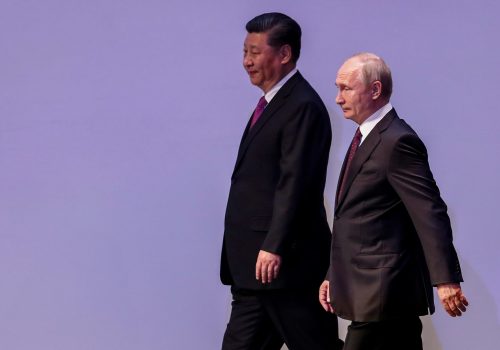
Great power projection in the Middle East: The China-Russia relationship as a force multiplier

By Jonathan Fulton and Li-Chen Sim

The conflict is also likely to provide states in the MENA region, especially oil producing states, with greater leverage over the US and Western allies. The US designation of Qatar as a major non-NATO ally in January 2022 could be seen from this perspective

China Economy & Business

In-Depth Research & Reports

Mar 14, 2022

Targeting Ukraine through Washington: Russian election interference, Ukraine, and the 2024 US election 

By Gavin Wilde and Justin Sherman

US officials should recognize that Ukraine’s trajectory has always been a centerpiece of Russian interference in US elections. Doing so should guide US policymakers’ observations of what is happening now in Ukraine—and their preparations for what promises to be a climactic 2024 US election cycle.

Cybersecurity Disinformation

Report

Mar 11, 2022

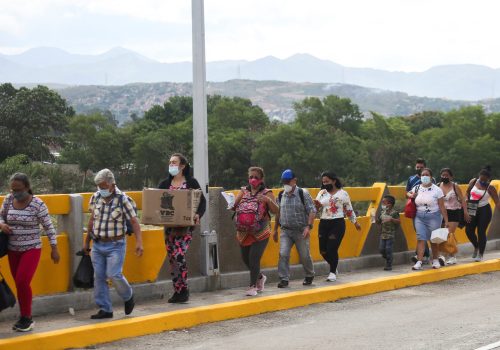
Exploring humanitarian frameworks for Venezuela

By A report by the Atlantic Council’s Venezuela Working Group

Policy brief led by the Atlantic Council’s Venezuela Working Group (VWG) that seeks to analyze the two existing oil-funded humanitarian proposals on Venezuela, and provide recommendations for future humanitarian proposals’ governance structure, financing mechanisms, transparency controls, political agreements, legal requirements, and multilateral participation to achieve the most optimal possible outcome for the Venezuelan people.

Economy & Business Financial Sanctions and Economic Coercion

Issue Brief

Mar 9, 2022

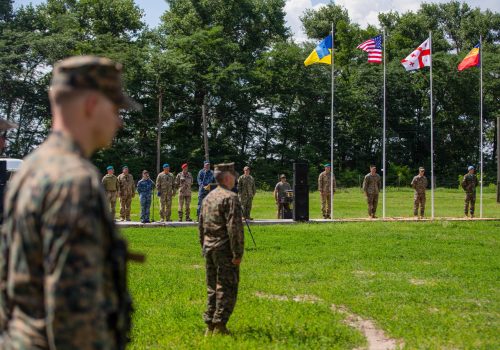
Defending every inch of NATO territory: Force posture options for strengthening deterrence in Europe

By The Scowcroft Center Task Force on Deterrence and Force Posture

Deterrence in Europe can be enhanced through a range of US and NATO force posture enhancements.

Conflict Defense Policy

Report

Mar 7, 2022

Quel avenir pour le Sahel?

By Richard Cincotta and Stephen Smith

Le Sahel est dans une impasse démographique. S’ils veulent sortir de l’impasse actuelle, les gouvernements sahéliens devront réorienter une partie importante de leurs efforts de développement et moyens financiers vers des politiques et programmes visant à améliorer la condition féminine : en prévenant les mariages et grossesses précoces chez les adolescentes, en promouvant l’éducation des filles et en garantissant la pleine participation des femmes dans tous les secteurs publics et privés, à commencer par les lieux de travail.

Africa Energy & Environment

Issue Brief

Mar 4, 2022

Techno-geopolitics and the Turkish way of drone warfare

By Dr. Can Kasapoğlu

Turkish Defense expert Can Kasapoglu analyzes the implications of Turkey's military dronization and evolution of drone warfare. Turkish drones have already proven to be capable assets in a variety of conflict zones across the region, with Ukraine being the last example.

Conflict Defense Industry
Finland and NATO

Issue Brief

Mar 4, 2022

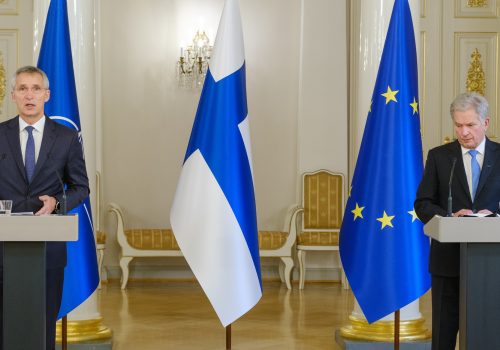
Europe’s security architecture, transformed: Why Finland is now on a path to join NATO

By Rasmus Hindrén

Finland is now on a prudent approach to NATO membership that is likely to build on its post-Cold War approach of continuity yet also to adapt to a new European security environment.

Europe & Eurasia NATO

Report

Mar 1, 2022

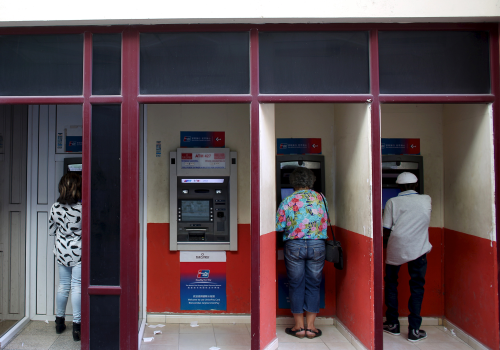
Financial de-risking in the Caribbean: The US implications and what needs to be done

By Jason Marczak, Wazim Mowla

This report identifies how the withdrawal of correspondent banking relations, otherwise known as de-risking, affects Caribbean economies, people, and US-Caribbean relations.

Americas Caribbean
The next National Defense Strategy must get Russia right

Issue Brief

Feb 24, 2022

The next National Defense Strategy must get Russia right

By Clementine G. Starling-Daniels, Christian Trotti, Tyson Wetzel

The rapidly developing 2022 Russo-Ukrainian crisis raises a key question for US defense policy makers as they finalize the next National Defense Strategy (NDS): How can the NDS get Russia "right"? This issue brief seeks to answer this question by developing a US defense strategy for deterring and managing the Russian threat in Europe and beyond, building upon the authors' 2021 report, "Seizing the Advantage: A Vision for the Next US National Defense Strategy."

Conflict Crisis Management

Report

Feb 23, 2022

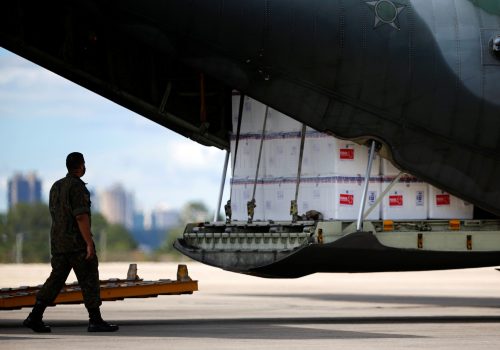
US-China vaccine diplomacy: Lessons from Latin America and the Caribbean

By María Eugenia Brizuela de Ávila, Bosco Marti, Riyad Insanally and Claudia Trevisan

The implications of diverging COVID-19 responses, notably at the onset of the pandemic’s rise in the region, will reverberate beyond the health sector. What might the differing US and China pandemic approaches portend for future influence in the region? 

Caribbean China

Report

Feb 16, 2022

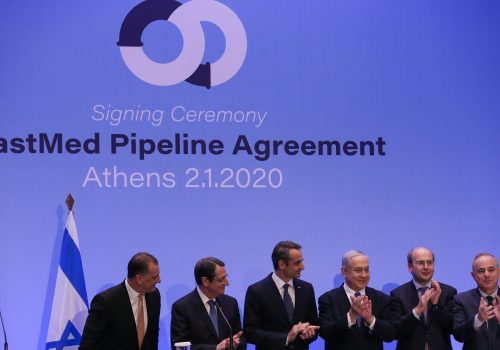
Energy and geopolitics in the Eastern Mediterranean

By Charles Ellinas

Fossil fuel development in the Eastern Mediterranean is both laden with promise and fraught with tension. Member states of the East Mediterranean Gas Forum (EMGF) have established joint ventures for exploration and drilling, pipeline building, and LNG export across the region, creating an international web of proposed infrastructure to tap its abundant reserves. But Turkey […]

Energy & Environment Energy Markets & Governance
Financing & Genocide: Development Finance and the Crisis in the Uyghur Region

Report

Feb 16, 2022

Financing & genocide: Development finance and the crisis in the Uyghur Region

By Laura T. Murphy, Kendyl Salcito, Nyrola Elimä

A joint report that reveals how the World Bank’s International Finance Corporation (IFC) has significant investments in China’s Xinjiang Uyghur Autonomous Region, where indigenous peoples have been subjected to what international legislators, legal scholars, and advocates have determined to be a genocide.

China International Financial Institutions

In-Depth Research & Reports

Feb 15, 2022

Realizing the promise and potential of “Web3” for Pakistan

By Uzair Younus

This paper is an initial attempt to frame debate about the Web3 ecosystem in Pakistan – which is a $100+ billion opportunity – and make recommendations on how policymakers should approach regulating this sector.

Digital Currencies Digital Policy

Report

Feb 15, 2022

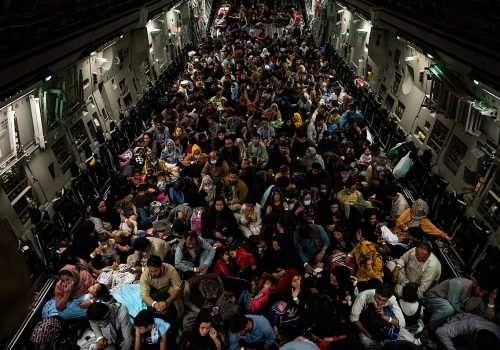
The Afghan refugee crisis: How to resurrect the global refugee resettlement coalition

By Rory Stewart

Six months after the fall of Kabul, the humanitarian situation in Afghanistan has deteriorated at an alarming rate. The threat of famine and economic collapse looms over the entire country. Consequently, many Afghans are fleeing both these appalling conditions and the oppressive Taliban that now control the country.

Afghanistan Europe & Eurasia

Report

Feb 11, 2022

Sahel: Moving beyond military containment policy report

By Pierre Englebert, Rida Lyammouri

Over the last ten years, violence and political instability have spread across the West African Sahel. Multiple foreign interventions and local governments have proved unable to stem the crisis.  This report analyses the multiple failures at the root of the crisis and makes innovative policy recommendations.

Africa Energy Markets & Governance

Report

Feb 8, 2022

Global Strategy 2022: Thwarting Kremlin aggression today for constructive relations tomorrow

By John E. Herbst, Anders Åslund, David J. Kramer, Alexander Vershbow, and Brian Whitmore

How can the United States and its partners counter the Kremlin’s aggressive policies abroad while laying the groundwork for what could one day be a mutually beneficial relationship with a Russia that respects the rule of law and international norms?

Disinformation Eastern Europe
The effective employment of biometric data at US entry points has the potential to cut down on travel times and enhance border security.

Issue Brief

Jan 31, 2022

Biometrics at the border: Balancing security, convenience, and civil liberties

By Seth Stodder, Thomas S. Warrick

Forward Defense nonresident senior fellows Seth Stodder and Tom Warrick consider how US Customs and Border Protection can employ biometrics for safer, more efficient border operations.

Defense Policy Defense Technologies

Issue Brief

Jan 31, 2022

What do we know about cyber operations during militarized crises?

By Michael Fischerkeller

This essay focuses on how cyber operations employed during militarized crises are likely to impact escalation management. Cyber operations intended as offramps in a crisis could have an outcome opposite than that intended. Given the absence of direct experience, policymakers must critically examine assumptions and claims that cyber operations can serve as de-escalatory crisis offramps.

Cybersecurity

Issue Brief

Jan 31, 2022

China Pathfinder: Q4 2021 Update

By GeoEconomics Center and Rhodium Group

Over the past ten months, teams from the Atlantic Council and Rhodium Group have taken a dive into China’s economy to address a fundamental question: Is China becoming more or less like other open-market economies? 

China Fiscal and Structural Reform