In-depth research and reports

Our programs and centers deliver relevant, policy-focused research that matters to inform debate and action. Our focus is always on moving debate forward, integrating analysis with active, relevant conclusions throughout our published work.

Report

Jul 14, 2016

Oil & gas in Brazil: A new silver lining?

By Décio Oddone

Transformations in Brazil's energy sector could be critical to rebooting the broader economy. Today, with state-owned Petrobras still reeling from political scandal, one development welcomed by investors is a bill gaining steam in Congress to open offshore oil discoveries to greater private investment. Is this the beginning of more changes to come?

Americas Brazil

Issue Brief

Jul 14, 2016

Bahrain’s inconvenient truths

By Bilal Y. Saab

Bahrain has been in the political doghouse in Washington ever since its government crushed Arab Spring-inspired popular protests in February 2011, leading to a political crisis between the government and the opposition that has deepened over the past few weeks. So, it was not surprising when the Bahraini government justified its latest crackdown against Al […]

The Gulf

Issue Brief

Jul 6, 2016

The Future of Brazilian Politics: Where We Place Our Bets

By Ricardo Sennes and Andrea Murta

In the midst of Brazil’s current political earthquake, projecting the future of power and politics in the country is an uncertain endeavor. But the Adrienne Arsht Latin America Center is taking that chance. The Center has engaged one of Brazil’s top thinkers, our nonresident senior Brazil fellow and economist Ricardo Sennes, to analyze what current […]

Brazil

Issue Brief

Jul 5, 2016

Updating NATO’s maritime strategy

By STEVEN HORRELL, MAGNUS NORDENMAN, WALTER B. SLOCOMBE

On the eve of the 2016 Warsaw Summit, NATO faces a new and challenging security environment dominated by a revanchist Russia increasingly willing to challenge the West and turbulence and violence across the Mediterranean’s southern rim. In this new security environment, the maritime domains around Europe are potential friction zones and where these challenges increasingly […]

Europe & Eurasia Maritime Security

Report

Jun 27, 2016

Frozen Conflicts: A Tool Kit for US Policymakers

By Agnia Grigas

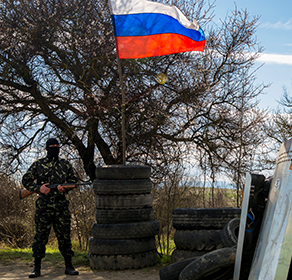
“Since the 1990s, a number of separatist movements and conflicts have challenged the borders of the states of the former Soviet Union and created quasi-independent territories under Russian influence and control,” states Agnia Grigas, a senior nonresident fellow at the Atlantic Council’s Dinu Patriciu Eurasia Center, in the opening of her new report, Frozen Conflicts: A […]

Conflict Crisis Management

Report

Jun 23, 2016

A foundational proposal for the next administration

By Chester A. Crocker, Daniel Levin, David C. Miller, Jr. and Thomas R. Pickering with Foreword by Brent Scowcroft and Jason T. Kirby, Chief of Staff

This foundational report serves as a point of departure for the next administration. It contains the essential elements for building the most effective national security structure in the small window between today and the first hundred days of the next administration.

Security & Defense United States and Canada

Atlantic Council Strategy Paper Series

Jun 17, 2016

Toward a new national security space strategy: time for a strategic rebalancing

By Theresa Hitchens and Joan Johnson-Freese

There are growing risks and threats to US satellites, civilian and military alike, and challenges to stated US goals in space. The question for the new administration, however, is whether hegemonic means to address those challenges are likely to achieve US goals.

Space Space Security

Report

Jun 16, 2016

Restoring the power and purpose of the NATO alliance

By Ambassador (Ret.) R. Nicholas Burns and General James L. Jones, Jr., USMC (Ret.)

As NATO leaders prepare to meet in Warsaw this July, the Alliance faces the greatest threats to peace and security in Europe since the end of the Cold War. The most pressing, fundamental challenges include a revanchist Russia, eroding stability in the greater Middle East, a weakened European Union, and uncertain American and European leadership. […]

Bremain vs Brexit

Jun 15, 2016

Brexit: What’s at stake for US security interests?

By WALTER B. SLOCOMBE

On June 23, 2016, a referendum will decide whether Britain will leave the European Union (EU) or remain a member. Britain’s departure from the EU would affect the rest of the world, because it would have implications for a broad spectrum of international concerns–very importantly, international security. For the United States, Britain remains among the […]

NATO Security & Defense

Report

Jun 14, 2016

The economic decline of Egypt after the 2011 uprising

By Mohsin Khan and Elissa Miller

Five years after the 2011 revolution, Egypt’s economy is floundering and remains far from recovery. Successive Egyptian governments have struggled to develop a vision for a new economic model for Egypt, while simultaneously implementing populist policies to appease the immediate demand of the public. In “The Economic Decline of Egypt after the 2011 Uprising,” authors […]

Economy & Business North Africa

Report

Jun 10, 2016

Spotlight Peru: Pedro Pablo Kuczynski’s First One Hundred Days

By Carmen Muñoz

After a historic neck and neck race, the final results are now in: Peruvians have elected 77-year-old economist Pedro Pablo Kuczynski (PPK) as president. In office, PPK will have to cope with the fact that Fuerza Popular, his opponent Keiko Fujimori’s party, won an absolute majority in Congress, putting into question his ability to easily […]

Bremain vs Brexit

Jun 6, 2016

To Brexit or to Bremain? That is the Question

By Nauro Ferreira Campos and Fabrizio Coricelli

With the impending Brexit referendum on June 23, economists must anticipate the ramifications of the United Kingdom (UK) leaving the European Union (EU). This is the first time the voluntary integration of the EU has been threatened, and creates a distressing existential question: is EU membership valuable enough? In the brief, “To Brexit or Bremain? […]

Economy & Business Elections

Issue Brief

Jun 3, 2016

A US strategy for building defense and deterrence in the Baltic states

By DAMON WILSON AND MAGNUS NORDENMAN

Since the start of the Ukraine crisis, the Baltic States have come into sharp focus as a key friction zone between a much more assertive Russia on the one hand, and the United States, NATO, and the broader transatlantic community on the other. NATO and the United States have made promising first steps to better […]

NATO Northern Europe

Issue Brief

Jun 3, 2016

Countering Russian aggression in Eastern Europe

By JONATHAN P. DUNNE

The past decade has witnessed a marked increase in Russian aggression and assertiveness. Many Eastern European nations, the Baltic States in particular, have recognized this disturbing and fundamental change in the European security environment and are responding both nationally and multilaterally. In “Countering Russian Aggression in Eastern Europe,” Jonathan P. Dunne, the Scowcroft Center’s US […]

Eastern Europe NATO

Atlantic Council Strategy Paper Series

Jun 2, 2016

Shape, steer, and sustain: a US strategy for the new global economic order

By Robert D. Hormats

Ten years ago, most observers predicted a period of smooth sailing for the world economy. Today, the world looks very different. To better deal with this new global economic environment, the United States requires a new strategy for the twenty-first century. That strategy should enable the country to shape, steer, and sustain a new global economic order that accomplishes several key objectives underpinning prosperity and stability for greater numbers of Americans.

China Economy & Business

Report

Jun 1, 2016

A transatlantic strategy for a democratic Tunisia

By Frances G. Burwell, Amy Hawthorne, Karim Mezran, and Elissa Miller

Five years after Tunisia’s revolution, which ousted longtime authoritarian ruler Zine El Abidine Ben Ali and put the country on the path towards nascent democracy, democratic and economic reforms have stalled. Following the revolution, the United States, the European Union (EU), and EU member states—namely France, Germany, and the United Kingdom—substantially boosted assistance to Tunisia. […]

Democratic Transitions North Africa

Issue Brief

May 26, 2016

Cyber, extended deterrence, and NATO

By Franklin D. Kramer, Robert J. Butler, and Catherine Lotrionte

Cyber is relevant in conflict as well as in lesser circumstances such as espionage and crime. This paper focuses on a conflict, both conventional and hybrid, with an adversary, such as Russia, that has advanced cyber capabilities (Tier V/VI as designated by the Defense Science Board) and includes a conflict with an improving, but less capable nation-state such as Iran.

Cybersecurity Europe & Eurasia

Report

May 25, 2016

Pacific Alliance 2.0: Next Steps in Integration

By Jason Marczak and Samuel George, with María Fernanda Pérez Argüello, Andrea Saldarriaga Jiménez

The Pacific Alliance–an innovative pact among Chile, Colombia, Mexico, and Peru–has unprecedented opportunity to capitalize on political changes in Brazil and Argentina and move the region into a new era of regional integration. A new publication by the Atlantic Council’s Adrienne Arsht Latin America Center and the Bertelsmann Foundation, released just weeks ahead of the […]

Mexico

Issue Brief

May 11, 2016

Will Iran’s Human Rights Record Improve?

By Barbara Slavin

Read the Publication (PDF) In the aftermath of the Joint Comprehensive Plan of Action (JCPOA), a major question has been whether the landmark nuclear deal would have any impact on Iran’s other policies, including its record on human rights. While US President Barack Obama’s administration stressed that in negotiating the JCPOA its focus was on […]

Issue Brief

May 11, 2016

Congo blues: Scoring Kabila’s rule

By Pierre Englebert

Across Africa, leaders are tinkering with term limits and prolonging their tenures. In an increasingly unstable Central African region, Joseph Kabila, President of the Democratic Republic of the Congo (DRC), appears poised to be the next African leader to sidestep the relinquishing of power and the election of his successor, constitutionally mandated for November 2016. […]

Africa Civil Society