
Financial Sanctions and Economic Coercion

Financial sanctions and other forms of economic coercion have become policy tools of choice for the US government to deter illegal activity by international actors or to pressure governments into reversing actions that harm US interests. Yet these instruments and their potential pitfalls are often misunderstood. Restrictive economic measures such as financial sanctions, export controls, tariffs, and investment screening can play an important role in advancing certain policy objectives, but they risk being ineffective if misapplied or poorly implemented. Policymakers must also recognize the impact of economic statecraft on the private sector, which bears many of the compliance burdens and operational costs associated with these measures.

Energy Sanctions Dashboard

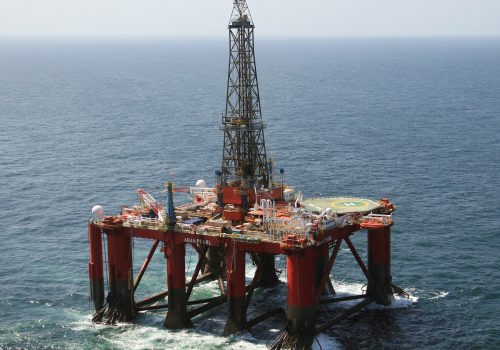
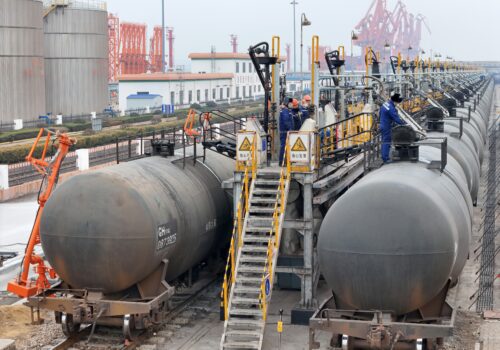
This dashboard focuses on US sanctions and restrictive measures placed on crude oil from Russia, Iran, and Venezuela—including the unintended consequences and the lessons learned.

Econographics

Apr 17, 2025

Russia Sanctions Database

By Kimberly Donovan, Maia Nikoladze, Lize de Kruijf

The Atlantic Council’s Russia Sanctions Database tracks the level of coordination among Western allies in sanctioning Russian entities, individuals, vessels, and aircraft, and shows where gaps still remain.

Eastern Europe Economy & Business

Recent analysis

Programs

At the intersection of economics, finance, and foreign policy, the GeoEconomics Center is a translation hub with the goal of helping shape a better global economic future.

Content

Britain Debrief

Feb 3, 2023

#BritainDebrief – How does the Western price cap on oil work? | A Debrief from Eddie Fishman

By Ben Judah

Ben Judah spoke with Eddie Fishman, Senior Policy Scholar at the Center on Global Energy Policy at Columbia University, to discuss the price cap.

Conflict Eastern Europe

In the News

Feb 2, 2023

Global sanctions dashboard cited in Bloomberg article on Russia-China relations

Read the full article here.

Economy & Business Financial Sanctions and Economic Coercion

In the News

Jan 30, 2023

Global Sanctions Dashboard included in the Cyberwire daily briefing

Read the full article here.

Economy & Business Financial Sanctions and Economic Coercion

UkraineAlert

Jan 28, 2023

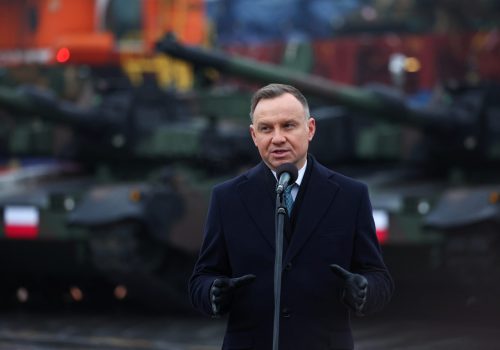
Poland is leading Europe’s response to the Russian invasion of Ukraine

By Diane Francis

Poland was the unsung hero of the recent landmark decision by Berlin and Washington to provide Ukraine with tanks as Polish leadership continues to shape the European response to Russia's genocidal invasion.

Conflict Financial Sanctions and Economic Coercion

In the News

Jan 28, 2023

Nikoladze quoted by the Sanctions Association on challenges of inconsistent sanctions listings, Russia Sanctions Database cited

Read the full article here.

Economy & Business Financial Sanctions and Economic Coercion

In the News

Jan 27, 2023

Sanctions dashboard cited by the Hill in “Welcome to Equilibrium” newsletter

Read the full newsletter here.

Economy & Business Financial Sanctions and Economic Coercion

In the News

Jan 26, 2023

Tannebaum interviewed by the Association of Certified Anti-Money Laundering Specialists’ Sanctions Space podcast

Listen to the podcast here.

Economy & Business Financial Sanctions and Economic Coercion

Econographics

Jan 26, 2023

Global Sanctions Dashboard: How sanctions will further squeeze the Russian economy in 2023

By Charles Lichfield, Maia Nikoladze, and Castellum.AI

The effects of sanctions on the Russian economy; Venezuela's pursuit of lifting energy sanctions; the plans for screening EU-US outbound investment going into China.

China Europe & Eurasia

Experts react

Jan 25, 2023

Experts react: The US opens up Caribbean energy supplies with a sanctions exception for Venezuela. What does it mean for the region?

By Atlantic Council experts

The agreement would boost Caribbean energy supplies while creating an exception for some US sanctions on Caracas—without allowing cash payments to go to President Nicolás Maduro’s government.

Caribbean Energy & Environment

Report

Jan 24, 2023

Authoritarian kleptocrats are thriving on the West’s failures. Can they be stopped?

By Francis Shin, Ben Judah

A new, more dangerous form of kleptocracy has arisen since the end of the Cold War, and the transatlantic community—hobbled by outdated, cliched images of what kleptocracy looks like, and by siloed, reactive regulatory and enforcement systems—isn’t equipped to handle it. A Transatlantic Anti-Corruption Council could coordinate anti-corruption reforms.

Corruption European Union

Experts