Recent analysis

Programs

The Global Energy Center develops and promotes pragmatic and nonpartisan policy solutions designed to advance global energy security, enhance economic opportunity, and accelerate pathways to net-zero emissions.

Events


Global Energy Forum

Jan 9, 2020

International grid integration: Efficiencies, vulnerabilities, and strategic implications in Asia

By
Phillip Cornell

In order to meet growing global demand for electricity, and in response to an increase in renewables, power networks and markets are evolving and becoming increasingly interconnected. South and Southeast Asia have already had some success with interconnections, and China’s vision and Belt and Road Initiative loom large in the region, but there are geopolitical concerns to contend with. Could a US model manage these concerns? What is the state of regional power markets in Asia and investment in regional grid infrastructure, and what responses are we already seeing to emerging trends?

Climate Change & Climate Action
Energy Markets & Governance


Global Energy Forum

Jan 9, 2020

Energy sector diversification: Meeting demographic challenges in the MENA region

By
Bina Hussein

The Middle East and North Africa (MENA) region is projected to experience significant demographic growth by 2050, growth which will have to be met with commensurate economic expansion and job opportunities, or the region will risk an increase in political instability. To meet this challenge, countries in the region must diversify their economies beyond the energy sector and expand their energy sector beyond hydrocarbons. What are the key trends that MENA countries will have to contend with, what is already being done, and what further steps should be taken?

Energy Markets & Governance
Energy Transitions


Issue Brief

Jan 9, 2020

Transforming the power sector in developing countries: Geopolitics, poverty, and climate change in Bangladesh

By
Robert F. Ichord, Jr.

As the South and Southeast Asian region faces increasing energy demand due to both population and economic growth, countries like Bangladesh must meet that demand while facing and overcoming critical environmental and energy security challenges. How is Bangladesh seeking to diversify its energy mix and establish more local and decarbonized power systems, and what are key opportunities for future government and foreign investment?

Bangladesh
Climate Change & Climate Action

Content

In the News

Mar 14, 2017

Shaffer Quoted by CNBC on OPEC and US Shale

By Brenda Shaffer

Read the full article here.

Energy & Environment
Oil and Gas

Report

Jan 6, 2017

Key risks companies face in petroleum investment and operations

By Bud Coote and Karl V. Hopkins

Risk and uncertainty pervade decisions on petroleum investments and operations, raising the stakes for companies committing to multibillion dollar contracts often extending twenty or more years. The array of risk factors is diverse, requiring multidisciplinary analysis to decipher. What are the lessons learned from a variety of experiences and some risk mitigation options?

Energy & Environment
Oil and Gas

Global Energy Forum

Jan 6, 2017

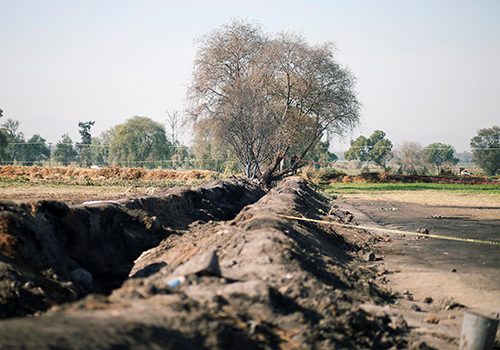
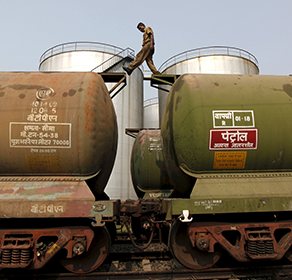
Downstream oil theft: Global modalities, trends, and remedies

By Ian M. Ralby

Hydrocarbons crime, in all its forms, has become a significant threat not only to local and regional prosperity but also to global stability and security. Combating this pervasive criminal activity is made only more difficult by the reality that many of those in a position to curb hydrocarbons crime are the ones benefiting from it.

Energy & Environment
Oil and Gas

Report

Jan 6, 2017

India’s energy needs and the Arab/Persian Gulf

By Jean-François Seznec

India has tried to diversify its sources of crude oil, but due to its proximity to the Gulf, it still relies a great deal on Saudi Arabia, Iran, and Iraq as its major suppliers, while Qatar provides most of its natural gas needs. What is the present crude oil and natural gas situation in India and the role played by the Gulf producers, especially Iran and Saudi Arabia?

Energy & Environment
India

Issue Brief

Jan 6, 2017

Post-Vienna: Prospects for Iran’s oil production and exports

By Sara Vakhshouri

As the Joint Comprehensive Plan of Action nuclear deal ushers Iran back into international energy markets, its oil and gas industry is poised to reach its full potential. With Iranian oil production and exports already rising following the nuclear deal, this paper examines scenarios for Iran’s full reentry into international oil and gas markets.

Energy & Environment
Iran

Issue Brief

Jan 6, 2017

Post-Vienna: Prospects for Iran’s oil production and exports

By Sara Vakhshouri

As the Joint Comprehensive Plan of Action nuclear deal ushers Iran back into international energy markets, its oil and gas industry is poised to reach its full potential. With Iranian oil production and exports already rising following the nuclear deal, this paper examines scenarios for Iran’s full reentry into international oil and gas markets.

Energy & Environment
Iran

New Atlanticist

Dec 16, 2016

Shale Gas Development Within the Global Energy Transition: Friend or Foe?

By Juan Roberto Lozano-Maya

Increasing the use of natural gas is one of the actions suggested to reduce the carbon intensity of energy systems, mainly because it can sustain growing energy needs with lower carbon emissions compared to other fossil fuels. As the quick-ramping ability of natural gas makes it an effective complement to variable renewable energies, such as […]

Energy & Environment
Oil and Gas

Report

Dec 6, 2016

Evaluating Western Sanctions on Russia

By Sergey Aleksashenko

It has been more than two years since the European Union (EU) and the United States imposed economic sanctions on Russia for its aggression in Ukraine. For some of the measures that is time enough to evaluate effectiveness. “The sanctions’ greatest achievement is that they have been an important demonstration of transatlantic unity. Still, there […]

Conflict
Defense Policy

New Atlanticist

Nov 15, 2016

A Path to Growth for US LNG

By Edoardo Saravalle

The shale boom and the newfound abundance of natural gas have put the United States on track to become the world’s third-largest exporter of liquefied natural gas (LNG). This new role in the global market has the potential to benefit both the United States and its worldwide partners. It will make the natural gas trade […]

Energy & Environment
Oil and Gas

Issue Brief

Sep 29, 2016

Sino-Russian strategic energy ties

By Miyeon Oh

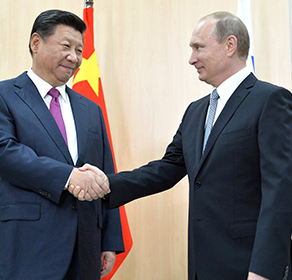
A secure energy relationship between China and Russia could have profound geopolitical effects in Asia, as well as in Europe. The ramifications of this relationship could alter the role and influence of the United States in Asia.

China
Energy & Environment

Experts