

The Atlantic Council Technology Programs comprises five existing efforts—the Digital Forensic Research Lab (DFRLab), the GeoTech Center, the Cyber Statecraft Initiative, the Democracy + Tech Initiative, and the Capacity Building Initiative. These operations work together to address the geopolitical implications of technology and provide policymakers and global stakeholders necessary research, insights, and convenings to address challenges around global technology and ensure its responsible advancement.
Content

UkraineAlert

Oct 13, 2026

Putin snubs Trump’s ceasefire as Russia aims to make Ukraine unlivable

By Maksym Beznosiuk, William Dixon

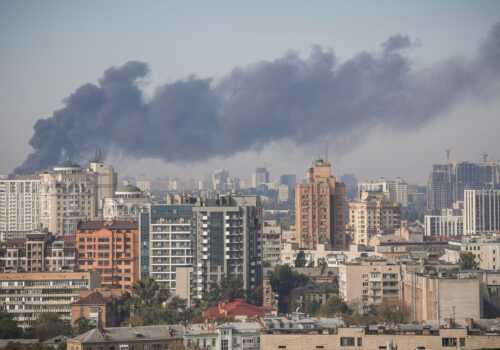
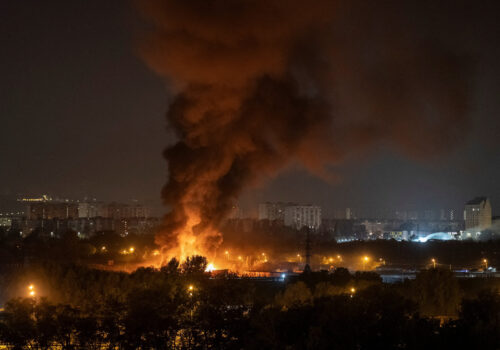
Hours after US President Donald Trump’s surprise Sunday announcement of an energy ceasefire between Kyiv and Moscow, Russia responded by bombing a series of Ukrainian power plants, write Maksym Beznosiuk and William Dixon.

Conflict Drones

GeoTech Cues

Oct 13, 2026

Why is electrification no longer “woke”?

By Mahmoud Abouelnaga

Once a culture-war issue, electrification is now an AI- and Iran war-era necessity.

Artificial Intelligence Energy & Environment

UkraineAlert

Oct 8, 2026

Ukraine can help Europe counter Russia’s escalating shadow war

By Ryan Prior, Maria Kovach

From Leipzig Airport to the Black Sea, Russia’s campaign of gray zone aggression against Europe has been escalating at an alarming rate in recent months. Ukraine's experience can help European leaders find the right response, write Ryan Prior and Maria Kovach.

Cybersecurity Disinformation

UkraineAlert

Oct 8, 2026

Starving Ukrainians must travel ‘road of death’ to flee Russian occupation

By Oleksandr Tolokonnikov

A humanitarian catastrophe is unfolding in Russian-occupied southern Ukraine as the Kremlin authorities refuse to allow the evacuation of starving Ukrainian civilians trapped in front line city Oleshky, writes Oleksandr Tolokonnikov.

Conflict Drones

UkraineAlert

Oct 8, 2026

Russia’s jet drones pose a security threat far beyond Ukraine

By Leonid Baratz

Russian jet drones are currently terrorizing Ukraine’s civilian population and disrupting daily life for millions of people. It is only a matter of time before other countries are also confronted by this threat, writes Leonid Baratz.

Conflict Defense Technologies

Russia Tomorrow

Oct 7, 2026

The deterrence gap: How can NATO protect its front line from Russia? 

By Agnia Grigas

The latest report in the Atlantic Council’s Russia Tomorrow series assesses Russia’s threats to NATO’s eastern flank and evaluates the responses of Estonia, Latvia, Lithuania, Poland, and Romania.

Crisis Management Cybersecurity

UkraineAlert

Oct 6, 2026

We are staying: European diplomats reject Russian calls to leave Ukraine

By Peter Dickinson

European embassies in Kyiv sent a message of defiance to Moscow this week following the Kremlin’s latest call for diplomats to leave Ukraine, writes Peter Dickinson.

Conflict Drones

UkraineAlert

Oct 6, 2026

Jet drones are Putin’s secret weapon as he seeks to break Ukraine

By Mykola Bielieskov

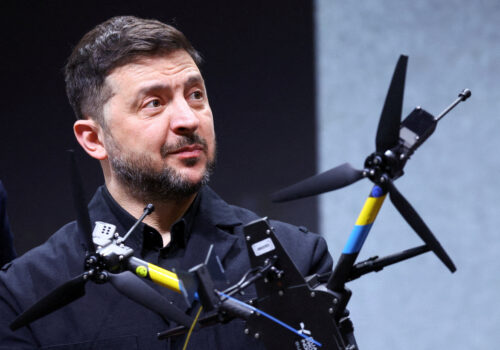
Russia’s air war against Ukraine has recently entered a deadly new phase with round-the-clock jet drone attacks on civilian targets across Kyiv as Vladimir Putin seeks to make the Ukrainian capital unlivable and break the country’s resistance, writes Mykola Bielieskov.

Conflict Defense Technologies

Dispatches

Oct 2, 2026

It’s not just misuse: AI-enabled biological research also runs the risk of accidents

By Isobel Sowells and John “J.T.” O’Brien

Accidental releases are already a serious vulnerability at a time when AI is accelerating biological research.

Artificial Intelligence Technology & Innovation

Dispatches

Oct 2, 2026

What could make AI self-regulation work?

By Trisha Ray

For the new AI accord to work, industry self-regulation will need to be buttressed by binding enforcement or federal oversight.

Artificial Intelligence United States

Experts

Events