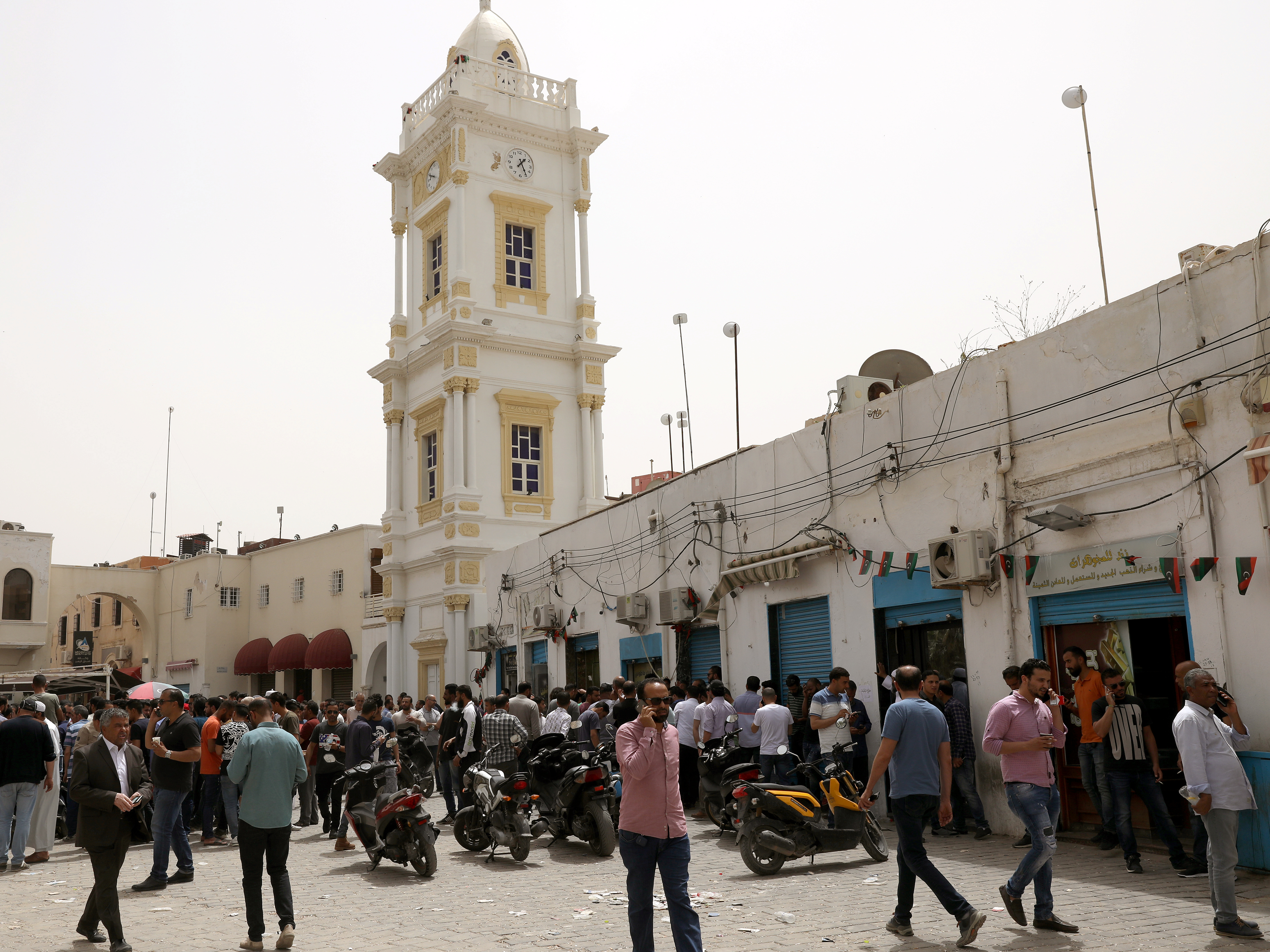
Libya

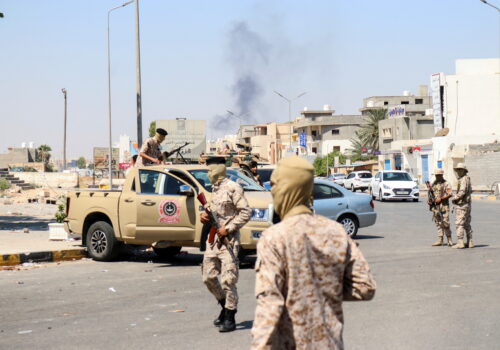
With its proximity to Europe, its significant oil reserves, and its strategic importance to the stability of the North Africa region, the ongoing turmoil in Libya is a concern for the United States and its allies. Rival factions serving as proxies to competing regional powers continue to destabilize the country and hamper any national dialogue efforts. The role of the United States and Europe will be essential in encouraging dialogue, supporting the arms embargo, and contributing to any post-war economic revitalization plan.

Content
In the News

Aug 20, 2024

Mezran quoted in Al-Monitor on failed central bank coup in Tripoli

By Atlantic Council

Conflict Economy & Business

In the News

Aug 19, 2024

Badi quoted in DW on conflict in Libya

By Atlantic Council

Conflict Hausa

Report

Jul 30, 2024

After 2011, the United States stayed on the sidelines—to Libya’s detriment

By Ben Fishman

When reflecting over the last decade of the US policy, especially in the Trump and Biden administrations, three consistent trends emerge: insufficient support for the UN political process to restore legitimacy to Libya’s political; leadership, repeated appeals to eastern warlord and head of the Libyan National Army (LNA) Khalifa Haftar to participate in a political process; and most consequentially for the United States, a seeming lack of attention to Russia’s increased presence in Libya.

Conflict Libya

Report

Jul 30, 2024

After anti-migration efforts shrank its influence, Rome needs a new Libya policy

By Karim Mezran, Aldo Liga

It has been more than thirteen years since the outbreak of the 2011 Libyan revolution and the moment when Italy reluctantly supported the NATO-led intervention that imposed a no-fly zone over Libya purportedly to protect the population from Muammar Gaddafi’s retaliation.

Italy Libya

Report

Jul 30, 2024

Benghazi is a major stumbling block for national reconciliation efforts

By Mary Fitzgerald

In May 2014 Libyan General Khalifa Haftar launched a then-unauthorized military operation from Benghazi, Libya’s second city. The operation, which Haftar named Karama, or Dignity, was centered on but not limited to Benghazi; its declared aim was to eradicate what Haftar and his associates described as terrorism. However, it prompted a swell of armed opposition from those who suspected it was a pretext for the septuagenarian general’s ambition to rule Libya.

Conflict Libya

Report

Jul 30, 2024

Internationalized kleptocracy is on the rise in Libya

By Oliver Windridge

On April 16, 2024, UN Special Representative for Libya Abdoulaye Bathily announced he would resign, citing a “lack of political will and good faith” among Libyan leaders. Few would disagree with his diagnosis that the vested interests of Libyan leaders have created a roadblock for progress.

Conflict Libya

Report

Jul 30, 2024

The UN should take a bolder stance in Libya

By Álvaro de Argüelles

The two main armed conflicts of the last two years—in Gaza and Ukraine—have led to the belief that international politics are ruled again by sheer force and that the United Nations is no longer a relevant actor.

Conflict Libya

Report

Jul 30, 2024

Libya’s protracted crisis, ten years of electoral deadlock

By Ben Fishman, Alvaro de Argüelles Lugo , Mary Fitzgerald, Aldo Liga, Chiara Lovotti, Karim Mezran, Alissa Pavia

A decade has passed since the last elections were held in Libya, and the country remains mired in a stalemate and deeply divided.

Libya Middle East

MENASource

Jul 29, 2024

The Mattei Plan is an opportunity for North Africa

By Karim Mezran

North Africa is particularly vulnerable, and the Mattei Plan can positively defuse regional tensions.

Africa Civil Society

MENASource

Jun 25, 2024

A world in crisis is good news for North Africa’s political elites

By Alia Brahimi, Karim Mezran

Europe should not assume that increasing transactional dealings with these elites will produce stability on its southern frontier.

Conflict Libya

Experts