War in Ukraine

Experts from across the Atlantic Council are assessing the consequences of Russia’s February 2022 invasion, including what it means for Ukraine’s sovereignty, Europe’s security, and the United States’ leadership.

Featured commentary

WATCH

“Putin’s endgame: The stakes beyond Ukraine,” an Atlantic Council documentary

Russia’s full-scale war against Ukraine may be closer to its end than its beginning. How it ends will matter not only for Ukraine, but for the whole of Europe and the wider world. The first-ever documentary from the Atlantic Council’s Eurasia Center, “Putin’s endgame: The stakes beyond Ukraine,” discusses the threat of Russian aggression beyond Ukraine and the dangers it poses to US interests today and in the future.

UPCOMING EVENTS

PAST EVENTS

Content

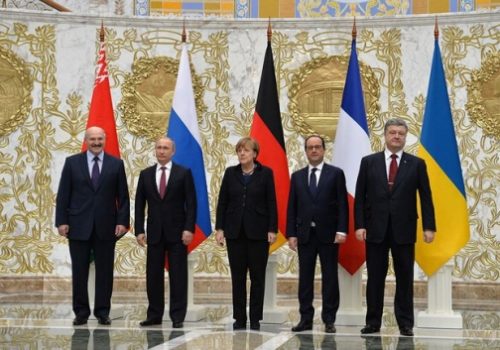
The leaders of Belarus, Russia, Germany, France, and Ukraine, Feb. 11, 2015

NATOSource

Feb 14, 2015

Stephen Walt Makes the Case for Appeasing Russia

By Stephen Walt, Foreign Policy

Those who favor arming Ukraine are also applying “deterrence model” remedies to what is almost certainly a “spiral model” situation.

NATO Russia

In the News

Feb 13, 2015

Herbst on Russian Popular Opinion

By John Herbst

The Star Tribune quotes Dinu Patriciu Eurasia Center Director John Herbst on Russian popular opinion of Putin and the conflict in Ukraine:

Russia Ukraine

In the News

Feb 13, 2015

Dobriansky: Russia Should Be Prosecuted for its Crimes Against Humanity

Paula J. Dobriansky, who served as Undersecretary of State for Democracy and Global Affairs from 2001 to 2009 and is an Atlantic Council Board member, writes in The Washington Post that the International Criminal Court must investigate Russia’s violations in Ukraine: “Russia’s grave violations of international humanitarian norms, especially the law of armed conflict, should […]

Russia Ukraine

In the News

Feb 13, 2015

Brzezinski on the Ceasefire Agreement for Ukraine

By Ian Brzezinski

Scowcroft Center Senior Fellow Ian Brzezinski joins MSNBC’s Morning Joe to discuss the ceasefire agreement for Ukraine, why he’s pessimistic that it will end the violence, and what the West needs to do to enforce the terms:

Ukraine

In the News

Feb 13, 2015

Herbst: “It’s Certainly not a Very Good Agreement for Ukraine”

By John Herbst

Deutsche Welle quotes Dinu Patriciu Eurasia Center Director John Herbst on the agreement in Minsk and what it means for Ukraine:

Ukraine

UkraineAlert

Feb 13, 2015

Ukraine’s Other War: Parliament Advances Anti-Corruption Fight

By New Atlanticist

Lawmakers Vote to End Their Immunity from Prosecution Members of Ukraine’s parliament, the Verkhovna Rada, overwhelmingly passed a bill to end their own legal immunity from prosecution, one of the main laws that for years helped Ukraine to the top of Europe’s corruption charts. Article 80 of Ukraine’s constitution protects all Rada members from prosecution […]

Ukraine

UkraineAlert

Feb 13, 2015

Making Ukraine’s ‘Glimmer of Hope’ Sustainable

By Sabine Freizer

If Russia Permits, the Minsk Accord Could Be a Start for Stabilizing Donbas The ceasefire agreement signed by Russia and Ukraine on in Minsk on 12 February offers what German Chancellor Angela Merkel calls “a glimmer of hope, no more no less” for constricting, and eventually ending, the war in southeast Ukraine’s Donbas region. Whether […]

Russia Ukraine

UkraineAlert

Feb 13, 2015

Russia’s Ukraine War Wins it the Advantage in New Truce Deal

By John E. Herbst

‘Minsk II’ Accord Will Let Moscow Keep Pumping Arms, Fighters into Ukraine’s Donbas With thousands of Ukrainian troops nearly surrounded in Donbas by the freshly armed, Kremlin-directed rebel militias, Ukraine’s President Petro Poroshenko accepted the Minsk II agreement February 12. The new accord is clearly less advantageous to Kyiv than was the Minsk I agreement, which […]

Russia Ukraine
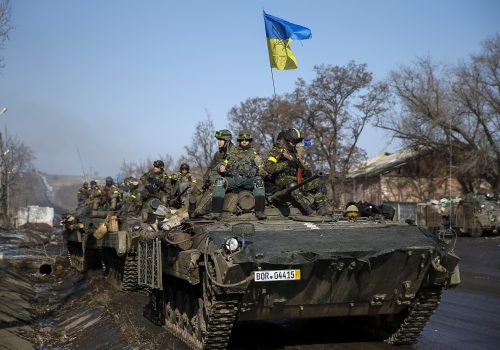
Ukrainian armored unit, Jan, 3, 2015

NATOSource

Feb 12, 2015

Mearsheimer: Don’t Arm Ukraine

By John J. Mearsheimer, New York Times

Sending weapons to Ukraine will not rescue its army and will instead lead to an escalation in the fighting. Such a step is especially dangerous because Russia has thousands of nuclear weapons and is seeking to defend a vital strategic interest.

Germany NATO
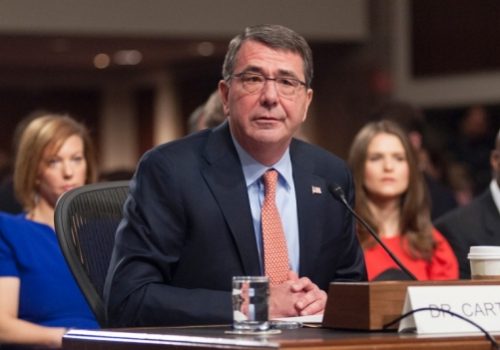
Ash Carter testifying to Senate Armed Services Committee, Feb. 4, 2015

NATOSource

Feb 12, 2015

Ash Carter’s Priorities for NATO

By John T. Bennett and Paul McLeary, Defense News

The United States and NATO should reject Russian assertions that Moscow is entitled to a “sphere of influence” in Eastern Europe — and build militaries capable of handling “any opponent,” said the nominee to be the next US defense secretary.

NATO Russia