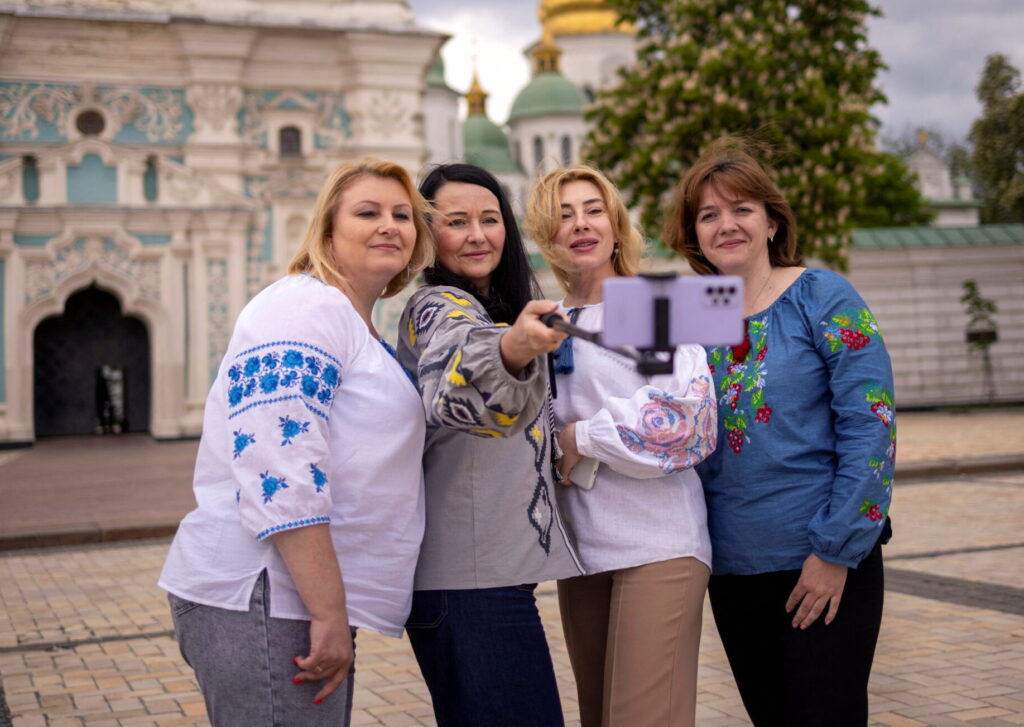
Anyone whose social media algorithms are even vaguely aligned with Ukraine will have spent most of May 21 watching as their feed was flooded with bright images of people posing in traditional Ukrainian embroidered clothing. This annual social media takeover is a key aspect of Vyshyvanka Day, a colorful and highly photogenic holiday held each year on the third Thursday of May that allows Ukrainians and friends of the country to celebrate Ukrainian identity through fashion.
Today’s vyshyvanka outfits have ancient roots in Ukrainian culture that stretch back hundreds or possibly even thousands of years. In contrast, Vyshyvanka Day is a relatively modern invention that first appeared on the calendar just two decades ago. This makes Vyshyvanka Day one of Ukraine’s youngest national holidays. However, there is a good case for arguing that it is also the most quintessentially Ukrainian holiday of them all.
One of the most striking aspects of Vyshyvanka Day is the fact that it is a purely grassroots initiative. Unlike Ukraine’s many state-sanctioned celebrations, Vyshyvanka Day did not begin life as a political project; nor did it emerge as the brainchild of bureaucrats. Instead, the holiday was first established by a group of Chernivtsi University undergraduate students who thought dressing up in vyshyvankas would be a fun way to embrace Ukrainian traditions. Their idea soon caught on and quickly gained a momentum of its own. Within a few years, Vyshyvanka Day had become a national institution.
The grassroots origins and community spirit of Vyshyvanka Day are entirely in step with so much else that has shaped modern Ukraine’s national journey. From the 2004 Orange Revolution and the 2014 Euromaidan Revolution, to the volunteer battalions that saved the country during the initial stage of Russia’s invasion and the popular resistance of 2022, the history of independent Ukraine is essentially a story of ordinary people doing extraordinary things. Vyshyvanka Day is far less dramatic than these momentous events, of course, but it shares the same sense of civic activism and bottom-up initiative that in many ways defines Ukraine.
Stay updated
As the world watches the Russian invasion of Ukraine unfold, UkraineAlert delivers the best Atlantic Council expert insight and analysis on Ukraine twice a week directly to your inbox.
In order to fully appreciate why Vyshyvanka Day has captured the Ukrainian imagination, the holiday must be viewed in the context of modern Ukraine’s historic struggle to shake off the psychological shackles of empire.
Since regaining independence in 1991, Ukrainian society has had to contend with the troubled legacy of centuries spent under Russian rule. In practice, this has meant addressing generations of ruthless russification that by the late twentieth century had succeeded in transforming everyday expressions of Ukrainian identity into acts of extremism. The Ukraine that emerged from the Soviet collapse was a nation trapped in an identity crisis, with a suppressed history, a degraded culture, and a language deliberately sidelined to the fringes of society.
Ukraine’s efforts to undo this damage and define its own place in the world put the country on a direct collision course with Vladimir Putin’s rival crusade to revive the Russian Empire. Indeed, it is possible to identify a direct correlation between Ukraine’s strengthening sense of independence and Russia’s escalating aggression against the country.
Although post-Soviet Russia never truly came to terms with the idea of an independent Ukraine, there had been a superficial degree of recognition in Moscow during the 1990s while Kyiv remained firmly within the Kremlin orbit. Any tolerance quickly evaporated following the 2004 Orange Revolution, however, when millions of Ukrainians rose up to protect a rigged presidential election and demand a democratic European future. From that moment on, Russia has viewed the consolidation of a separate and independent Ukrainian national identity as an existential threat.
Eurasia Center events
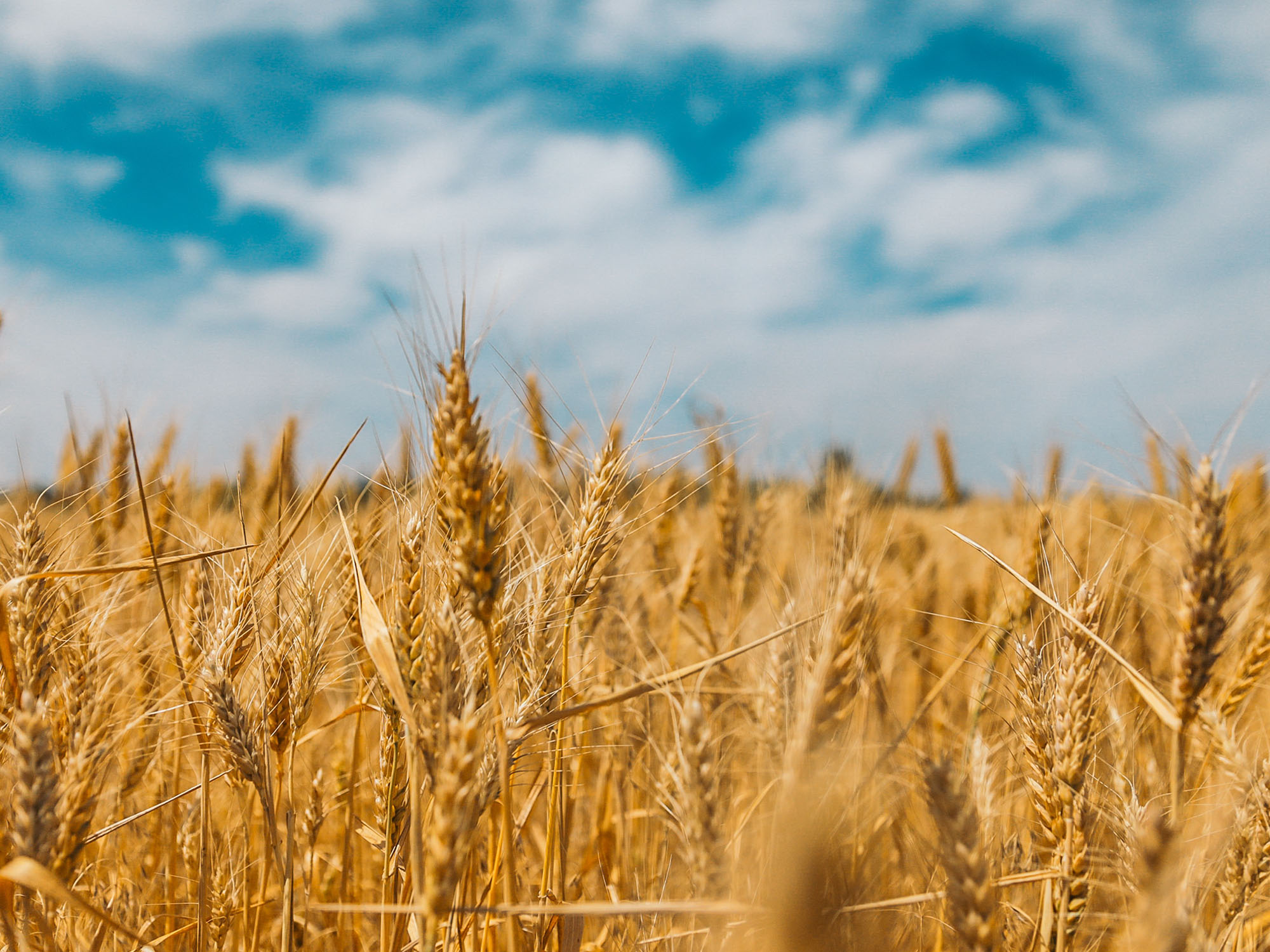
Putin has never made any secret of his hostility toward Ukrainian national identity. Since the early years of his reign, he has consistently stated that Ukrainians are Russians, claiming them to be “one people.” Following the start of Russian military aggression against Ukraine in 2014, Putin’s tone hardened further and he began openly questioning Ukraine’s legitimacy. On the eve of the full-scale invasion, he took the extraordinary step of publishing a 5000-word history essay that read like a declaration of war on Ukrainian statehood. As Russian tanks rolled across the border, the Kremlin dictator declared that Ukraine was “an inalienable part of our own history, culture, and spiritual space.”
Since 2022, Putin’s genocidal rhetoric has been matched by the actions of the invading Russian army. Throughout the occupied regions of Ukraine, Russian forces are conducting a campaign of national destruction that seeks to erase all traces of Ukrainian statehood, language, history, culture, and religion. This has included Stalin-style mass arrests of anyone deemed a potential threat to the occupation authorities, along with the forced adoption of Russian citizenship. The end goal is clear: Putin wants a Ukraine without Ukrainians.
The Ukrainian population is painfully aware of the horrors currently taking place in the occupied regions of their country, just as they are all too familiar with the dehumanizing anti-Ukrainian propaganda that is now a routine feature of Russia’s national discourse. This helps to explain why Vyshyvanka Day resonates with so many people in today’s Ukraine. It serves as an opportunity to express pride in Ukrainian identity at a time when Russia is trying to wipe the country off the map.
Ultimately, Vyshyvanka Day is not about politics at all. It is a simple yet profound celebration of a national identity that has survived centuries of oppression and remains under ferocious attack today. While many people continue to view Putin’s invasion of Ukraine primarily as a geopolitical struggle between Russia and the West, it is at heart a criminal quest to extinguish the Ukrainian nation.
This is well understood by the vast majority of Ukrainians. They know that the current war is a fight not only for independence but for national survival. Despite the barely imaginable hardships of the past four years, they have no intention of giving up. This dogged determination is on display everywhere from the front lines to schools, hospitals, and patched-up power stations across the country. It has also found expression in the colorful spectacle of Vyshyvanka Day, a holiday that has captured the mood in wartime Ukraine.
Peter Dickinson is editor of the Atlantic Council’s UkraineAlert service.
Further reading
The views expressed in UkraineAlert are solely those of the authors and do not necessarily reflect the views of the Atlantic Council, its staff, or its supporters.

The Eurasia Center’s mission is to enhance transatlantic cooperation in promoting stability, democratic values, and prosperity in Eurasia, from Eastern Europe and Turkey in the West to the Caucasus, Russia, and Central Asia in the East.
Follow us on social media
and support our work
Image: Women, dressed in vyshyvankas, traditional Ukrainian embroidered garments, take a selfie in front of St. Sophia's Cathedral on Vyshyvanka Day, amid Russia's attack on Ukraine, in Kyiv, Ukraine, May 15, 2025. (REUTERS/Thomas Peter)
