Econographics

Econographics is the GeoEconomics Center’s in-depth look at key trends in the global economy utilizing state-of-the-art data visualization tools.

Featured analysis

Latest analysis

EconoGraphics

May 26, 2015

Who Will Finance Ukraine?

By Global Business & Economics Program

Ukraine's economic stability is uncertain as the conflict with Russia endures. Alongside the negative impacts to growth, exports, and investment, the level of Ukraine's debts are especially worrisome.

Economy & Business Europe & Eurasia

EconoGraphics

May 20, 2015

Who’s Buying European Companies?

By Global Business & Economics

Who is purchasing European companies? Looking at the five biggest foreign acquisitions of European corporates since 2011 shows that the US are the biggest buyers by a considerable margin, with the China, Hong Kong, Brazil, and Japan following behind.

Brazil China

EconoGraphics

May 12, 2015

Two Decades of Sovereign Debt

By Global Business & Economics

Sovereign default is considered to be a rare event. But as the lessons of the past two decades show, they are far from extraordinary. According to the IMF, the main sovereign debt restructurings from the period spanning 1998 – 2010 totaled $117.6 billion. When Greece’s 2012 default is added to that sum, it means that […]

Economy & Business Fiscal and Structural Reform

EconoGraphics

May 5, 2015

Creating the Digital Single Market

By Global Business & Economics Program

European E-Commerce is still largely confined within national borders.

Economy & Business Europe & Eurasia

EconoGraphics

Apr 28, 2015

Do Sanctions Work After All?

By Global Business & Economics

International Relations scholars disagree about whether economic sanctions are an effective tool to coerce countries to follow a certain course of action.

Economy & Business Europe & Eurasia

EconoGraphics

Apr 21, 2015

Exit, or Voice?

By Global Business & Economics

In March, the UK, Germany, Italy, and France decided to join the China-led Asian Infrastructure Investment Bank (AIIB), shocking the Obama administration.

Brazil China

EconoGraphics

Apr 14, 2015

Who is Investing Abroad?

By Global Business & Economics

While the US still leads the world in outflowing Foreign Direct Investment (FDI), the emerging markets are catching up quickly. Chinese outflowing FDI, in particular has grown tremendously: since 2005, it increased more than 30-fold in 8 years from $5 billion to $166 billion. While initial Chinese foreign investments focused on natural resource industries, over time the investments have spread to diverse industries like agriculture, manufacturing, and professional services. BRIC FDIs are emerging as key growth drivers for low income countries, improving their business environment, building infrastructure, creating jobs, and adding much-needed revenue to government coffers.

China Russia

EconoGraphics

Apr 7, 2015

Is Europe still vulnerable to a Greek default?

By Global Business & Economics Program

Private banks throughout Europe have significantly reduced their exposure to Greek debt (bank, public, and non-bank private sector debt) over the last five years. After Greece came under market pressure and eventually obtained ECB and IMF financial assistance in 2010, most European banks started to rapidly reduce their exposure to Greece. For instance, between 2010 and 2014 French banks' holdings decreased from $63 billion to $2 billion.

Economy & Business Eurozone

EconoGraphics

Mar 31, 2015

The IMF’s Changing Role in Europe

By Global Business & Economics

The International Monetary Fund's purpose and scope of work have changed since its founding after World War II. Whereas at first the Fund aimed to maintain monetary and exchange-rate stability among its members who were primarily advanced economies, today it faces its first credible challenge to its status as the world's lender of last resort.

Economy & Business Financial Regulation

EconoGraphics

Mar 24, 2015

How Much Does it Cost for Cubans to Access Information?

By Global Business & Economics

When President Obama announced his landmark policy shift towards Cuba, easing the 54-year-old embargo, one of the first companies to announce they would begin operating in Cuba was Netflix. The online video company's decision was surprising, if only because Cuba's internet is one of the slowest in the world.

Americas Cuba

Content

Econographics

Mar 12, 2026

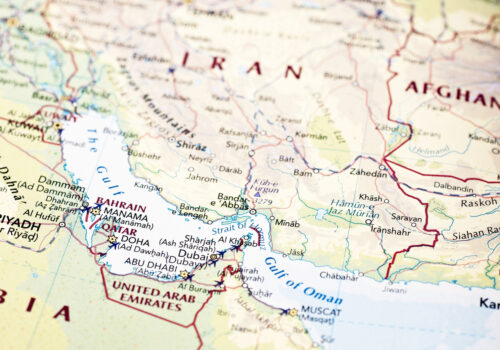
By threatening the Strait of Hormuz, Iran turns geography into a global economic weapon

By Alex Mills

Iran’s threat to attack vessels in the Strait of Hormuz has effectively shut down one of the world’s most critical energy shipping routes, turning geography into a powerful economic weapon.

Economy & Business Energy & Environment

Econographics

Mar 10, 2026

The renminbi is winning over Africa—but can it rival the dollar?

By Lize de Kruijf

In recent years, African governments have taken steps to reduce reliance on the dollar, but progress on their regional payment system has been slow—and in the meantime, China’s renminbi is quietly making inroads across Africa’s trade and finance networks.

Africa China

Econographics

Mar 9, 2026

Middle powers are rewriting the playbook for gender‑equal growth

By Nicole Goldin

Middle powers are advancing gender-equal growth by pairing domestic economic reforms with coalition leadership in global institutions.

Economy & Business Inclusive Growth

Econographics

Feb 25, 2026

The US and Mexico need stronger financial cooperation to disrupt illicit financial flows

By Phil Lovegren

Killing cartel leaders grabs headlines, but lasting progress in curbing the illicit drug trade requires following the money. If the United States and Mexico truly want to tackle organized crime, they must deepen cooperation to disrupt the financial flows that sustain it.

Economy & Business Financial Crimes & Illicit Trade

Econographics

Feb 24, 2026

In Munich, a reminder that economic security is national security

By Kimberly Donovan, Lize de Kruijf

Policymakers at this year's MSC raised economic security as an issue that they cannot cordon off separately from traditional security issues.

Economy & Business European Union

Econographics

Feb 24, 2026

The European Central Bank’s next president may decide the fate of the digital euro

By Alisha Chhangani, Jacopo Pastorelli

The four frontrunners don't oppose the digital euro, but their positions differ on pace, framing, and the risks they're most concerned about.

Digital Currencies Economy & Business

Econographics

Feb 20, 2026

To bridge the transatlantic productivity divide, Europe needs structural reforms—and AI

By Hung Tran

Policymakers and investors should actively incentivize laggard firms to adopt productivity-enhancing practices and technologies.

Economy & Business Europe & Eurasia

Econographics

Feb 12, 2026

Despite US exemptions, the show goes on for a global minimum corporate tax

By Jeff Goldstein

The United States may have carved out protections for its multinationals, but the global minimum tax continues to move forward. With more than sixty-five countries implementing the OECD framework, policymakers are betting imperfect progress will prevent a relapse into corporate tax competition.

Economy & Business Europe & Eurasia

Econographics

Feb 10, 2026

China’s warning on US Treasuries—and why its timing matters

By Jeremy Mark, Josh Lipsky

Beijing has joined the conversation on the dollar. It was leaked this week that Chinese regulators have been urging domestic financial institutions to cut back on US Treasuries, and this timing is no coincidence.

China Dollar Dominance

Econographics

Feb 6, 2026

Iran can still normalize its economy—but the path will be painful and slow

By Bart Piasecki

Iran’s inflation crisis is driven by persistent exchange‑rate instability, entrenched fiscal dominance, and international sanctions. Despite these structural challenges, there remains a clear—but difficult—path toward economic normalization.

Dollar Dominance Economy & Business