Featured analysis

Latest analysis

Bremain vs Brexit

Mar 24, 2016

A Costly Goodbye

By Alvaro Morales Salto Weis & TK Spandhla

On June 23, British citizens will decide on a referendum whether the UK stays or leaves the EU. The consequences of a vote to leave, or Brexit, could decide the UK’s place in the world for generations.

Economy & Business European Union

EconoGraphics

Mar 24, 2016

The French Way of Reforms

By Alvaro Morales Salto Weis & TK Spandhla

France’s economy has struggled to grow in recent years, expanding by a mere 1.1% in 2015. Meanwhile its unemployment rate has stubbornly lingered around 10%, with a slight upwards trend.

Economy & Business Fiscal and Structural Reform

EconoGraphics

Mar 14, 2016

A Tale of Two QE’s

By Alvaro Morales Salto Weis & TK Spandhla

On March 10, the European Central Bank (ECB) announced an expansion of its Quantitative Easing Program (QE), increasing the amount of government bonds it buys monthly from €60 billion to €80 billion. It also extended the range of assets it purchases to include investment grade non-bank corporate bonds. On top of that, the ECB lowered already negative deposit interest rates further down, to -0.4%, and its main interest rate to 0%. So, why have Central Banks embraced QE?

Economy & Business European Union

EconoGraphics

Mar 4, 2016

TTIP: Window of Opportunity is Closing

By Alvaro Morales Salto Weis & TK Spandhla

The 12th round of negotiations for the Transatlantic Trade and Investment Partnership (TTIP) concluded last week in Brussels on an optimistic tone. The Chief Negotiator for the EU announced significant advances in most negotiating areas, including on the Investor-State-Dispute Settlement (ISD), which had been frozen for months. His US counterpart expressed confidence in reaching an ambitious deal in the second half of the year, rejecting calls for a “TTIP lite”.

Economy & Business European Union

EconoGraphics

Feb 25, 2016

TTIP: Cutting the Red Tape

By Global Business and Economics

The 12th round of negotiations for the Transatlantic Trade and Investment Partnership (TTIP) unfolded this week in Brussels between the EU and their American counterparts. At a time when both parties are stuck with weak growth (and persistent high unemployment in Europe), the importance of TTIP cannot be understated.

Economy & Business European Union

EconoGraphics

Feb 23, 2016

Tug of Budget War in Brussles

By Global Business and Economics

In the past weeks, the Portuguese government and EU authorities have engaged in a tug of war over the Portuguese budget proposal for 2016. The European Commission (EC) warned the newly elected anti-austerity government that it risked “serious non-compliance” with the EU’s fiscal rules. Finally, Lisbon narrowly avoided becoming the first Eurozone country to have its budget rejected by Brussels, as it agreed to additional tax hikes and spending cuts.

Economy & Business European Union

EconoGraphics

Feb 16, 2016

Dreaming Big: Size Matters

By Global Business and Economics

Why are Google, Apple or Facebook American-born but not European? Concerns about Europe’s lack of innovative start-ups prompted the European Commission (EC) to launch the Entrepreneurship 2020 Action Plan, aimed at bolstering entrepreneurship culture.

Economy & Business Europe & Eurasia

EconoGraphics

Feb 8, 2016

Juncker Has a Plan

By Global Business and Economics

Europe's fragile recovery has been ailing from low levels of investment. While GDP and consumption have surpassed their pre-crisis levels, by the end of 2014 gross capital formation was still around 15% below its 2007 peak (€230 billion to €370 billion less than the EU's long term investment average). That is why the EU launched an ambitious investment plan, the European Fund for Strategic Investments (EFSI).

Economy & Business European Union

EconoGraphics

Feb 1, 2016

Young Arrivals for an Ageing Europe

By Global Business and Economics

Refugees are pouring into the European Union (EU) at a scale not seen since the Second World War. In 2015 alone, 893.695 applied for asylum, up from around 250.000 in 2010, according to Eurostat. The magnitude of these influxes has rocked the EU boat, prompting yet another consequential crisis on top of last year’s Greek bailout and the incoming referendum on the UK’s permanence.

Economy & Business European Union

EconoGraphics

Jan 21, 2016

Feeling the Oil Crunch

By Global Business and Economics

Oil prices have fallen to their lowest since 2003, sitting under $30 a barrel in recent days. Declining expectations of global growth plus the addition of post-sanction Iranian supply don’t spell a substantial price recovery in the immediate future. Under this new market realities, oil-exporting countries come in different form to weather the storm.

Economy & Business Financial Sanctions and Economic Coercion

Content

Econographics

Sep 10, 2026

Nearly two decades after the global financial crisis, a new regulatory era is dawning

By Matthew L. Ekberg

Nearly two decades after the 2008 crash, the rules governing the world’s banks are being rewritten. But as the US, UK, and EU push to modernize financial regulation, they face a difficult question: Can they boost growth without undermining financial stability?

Economy & Business Europe & Eurasia

Econographics

Sep 9, 2026

The five issues to watch at next month’s IMF-World Bank Annual Meetings

By Hung Tran

From soaring debt to trade fragmentation and AI disruption, the global economy faces no shortage of challenges. Here are the five issues to watch at next month’s fall meetings.

Economy & Business Inclusive Growth

Econographics

Sep 8, 2026

The IMF’s boost to China’s currency is costing the world, ten years later

By Jeremy Mark

The renminbi was supposed to become a global currency. Instead, China’s tight controls have helped lay the groundwork for a more fragmented monetary system.

China Economy & Business

Econographics

Aug 28, 2026

The G20 needs more carrots to rebalance away from China

By Barbara C. Matthews

Tariffs alone won’t fix global imbalances. The G20 should use economic “carrots” to de-risk from China without destabilizing it.

China Economy & Business

Econographics

Aug 25, 2026

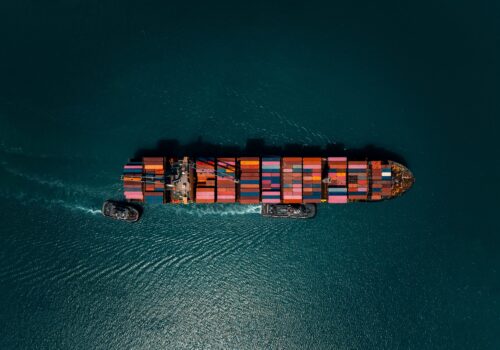
Maritime trade routes are under threat—and markets still underprice the risks

By Alex Mills

Conflict, climate change, and geopolitical tensions are putting unprecedented pressure on the world's most important waterways. The economic costs are set to ripple far beyond the shipping industry.

Central America Economy & Business

Econographics

Aug 24, 2026

Stablecoin regulation has outpaced global coordination. The G20 can help.

By Jai Massari

Three challenges stand out: recognizing issuers across borders, agreeing on common rules for stablecoin use, and making stablecoins truly fungible across jurisdictions.

Digital Currencies Digital Policy

Econographics

Aug 21, 2026

From manufacturing to AI, Thailand must reinvent its growth model

By Amin Mohseni-Cheraghlou

Thailand is at an economic crossroads. Slowing growth and rising structural pressures are exposing the limits of its manufacturing-led model. Can EVs, green industries, and AI drive its next phase of growth?

East Asia Economy & Business

Econographics

Aug 20, 2026

Faster, cheaper, safer? The G20 should address the tradeoffs in cross-border payments.

By Ruth Goodwin-Groen and Louis de Koker

The tensions between inclusion and speed on the one hand, and safety and security on the other, are becoming increasingly difficult to ignore

Economy & Business Financial Regulation

Econographics

Aug 14, 2026

Indonesia has all that it takes to move up the value chain

By Amin Mohseni-Cheraghlou

Ahead of the 2026 IMF-World Bank Annual Meetings, Indonesia has a chance to showcase its growing economic clout. The challenge is turning its natural resources, young population, and strategic position into lasting productivity gains.

Economy & Business South Asia

Econographics

Aug 13, 2026

Are rising bond yields and elevated leverage a recipe for market turmoil?

By Hung Tran

Rising bond yields, elevated leverage, and an ongoing correction in AI stocks are making the financial system more fragile. The appropriate response is preparation, not panic.

Economy & Business Macroeconomics