Content

EnergySource

Aug 28, 2020

Microgrids: The NDAA’s crucial investment for energy resilience

By Katie Wimsatt

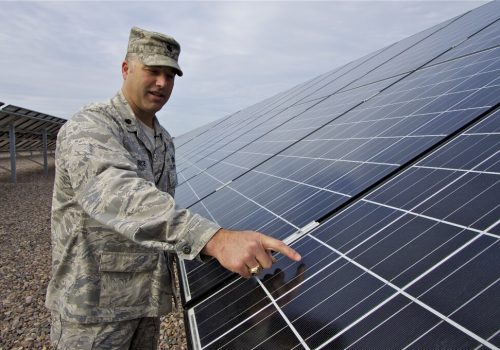
The National Defense Authorization Act (NDAA) sets the US Department of Defense’s (DoD) annual budget, but it has also become a key platform for implementing military climate resilience and emission reduction measures. By investing in microgrid systems, the military will increase its ability to maintain operations in a variety of adverse circumstances, lower carbon emissions, and spur widespread adoption of clean, resilient energy infrastructure across the United States.

Energy & Environment
Energy Transitions

EnergySource

Aug 21, 2020

An effective ESG strategy strengthens the competitiveness of US liquefied natural gas

By Serena Su

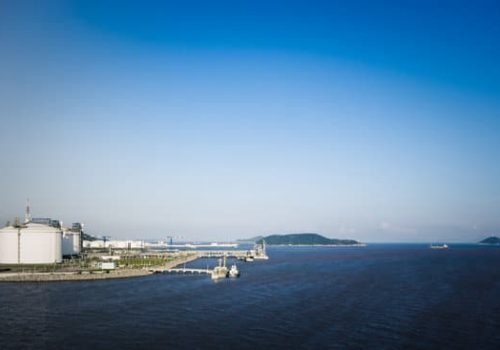
As companies face increased pressure to pursue sustainable investing, business leaders around the world are taking action to address their environmental, social, and governance (ESG) risks and opportunities.

Energy & Environment
Energy Transitions

EnergySource

Aug 20, 2020

Trans-Caspian Pipeline—Still a pipe dream?

By Daniel D. Stein

Although there have been intermittent efforts to revive the Trans-Caspian Pipeline (TCP), the project has largely been dormant in recent years. However, the impending completion of the Southern Gas Corridor (SGC), a new source and route of gas supply to Europe, has led to renewed interest in TCP.

Energy & Environment
Energy Markets & Governance

EnergySource

Aug 12, 2020

Energy security in the era of hybrid warfare

By Arnold C. Dupuy, PhD

On July 2, 2020, the Atlantic Council hosted a kickoff workshop to help scope and define a study authorized by the NATO Science and Technology Board (STB) to analyze hybrid warfare’s impact on the Alliance’s energy security. As an actor in international security, NATO has a vital role to play in the nexus between energy security and hybrid warfare. For this reason, the STB has placed emphasis on the study, designated as Systems Analysis and Studies-163 (SAS-163), “Energy Security in the Era of Hybrid Warfare.”

Geopolitics & Energy Security
NATO

EnergySource

Aug 11, 2020

Averting crisis: leveraging the energy transition to revitalize the coal belt

By Craig Hart

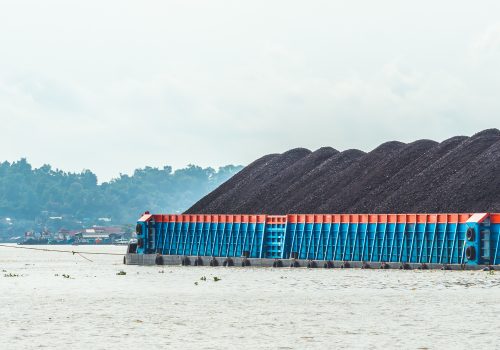
America is undergoing an energy transition away from coal that will leave coal-producing communities in crisis in the absence of policy action to help transition these regions to new and cleaner industries. Until leadership at the federal level arrives, local initiatives and regional coordination will be critical to leading this effort.

Energy Markets & Governance
Energy Transitions

EnergySource

Aug 10, 2020

Beirut’s port explosion reveals underlying problems in energy supply

By Aki Peritz

The cataclysmic explosion at Beirut’s port on August 4th could not have come at a worse time. The nation was already reeling from multiple catastrophes such as a collapsing currency, an environmental disaster on its shores, 1.5 million refugees from Syria, and a healthcare system pushed to the brink by the COVID-19 pandemic. The explosion has only exacerbated one of Lebanon’s core calamities: the lack of stable electricity.

Energy Markets & Governance
Lebanon

EnergySource

Jul 24, 2020

The ACWA Power–Air Products joint venture for green hydrogen: A new Saudi energy policy?

By Jean-François Seznec and Samer Mosis

In early July 2020, the city of Neom and ACWA Power of Saudi Arabia signed a joint venture agreement with Air Products of the United States to build the largest green hydrogen and green ammonia plant in the world. As the energy transition gains speed, this announcement is a significant step forward in establishing a new role for Middle Eastern oil-exporting countries in a future global economy less dependent on hydrocarbons. That said, the scale and relative inexperience of key project partners means the project still faces an uphill battle.

Energy & Environment
Energy Markets & Governance

EnergySource

Jul 24, 2020

Searching for the missing link: Options for firm zero-carbon power

By Stephen S. Greene

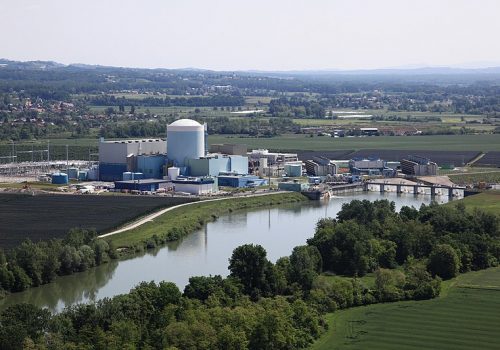
“Firm” zero-carbon generation resources, which are not necessarily intended to run all the time, but can be available at any time, will be needed to complement renewable resources in the future, without emitting the CO2 produced by today’s fossil energy system. These resources might include, for example, fossil-fuel power plants with carbon capture, nuclear power plants with improved dispatchability, geothermal power, and bio-fueled generators. But the path to developing, and certainly deploying, such resources has been slower and more fraught than for renewables; these “firm” electricity generation resources represent a missing link in the path towards a decarbonized electricity grid.

Energy & Environment
Nuclear Energy

EnergySource

Jul 9, 2020

Cybersecurity can help the energy industry seize this moment to embrace its digital future

By Leo Simonovich and Sridhar Sudarsan

Digitally connected oil and gas assets, smart grids, renewables, and intelligent infrastructure promise more efficient, safer, and lower-emissions operations, but truly reimagining the energy sector and fully realizing that promise requires strong cybersecurity. Whether built new, acquired, or retrofitted, future energy assets will rely heavily on digital management and remote access. In these stressful but potentially exhilarating times, the winners will be those who envision more competitive business models based on new technologies.

Energy & Environment
Energy Markets & Governance

EnergySource

Jul 8, 2020

Distributed solar and batteries will power a more inclusive economic recovery in developing countries

By Sandra Chavez

A reliable supply of electricity is crucial for responding to the COVID-19 health crisis and boosting economic activity. Governments in many developing countries already struggle to provide their citizens with enough high-quality electricity to satisfy demand. The additional constraints the COVID-19 crisis places upon utilities, and national economies in general, can make the delivery of reliable electricity even harder. However, distributed solar energy and battery storage can provide reliable, affordable, and pollution-free power globally, while also creating jobs that incorporate local talent—especially from groups underrepresented in the labor market such as women and low-income workers.

Coronavirus
Energy & Environment