Our programs and centers deliver in-depth, highly relevant issue briefs and reports that break new ground, shift opinions, and set agendas on public policy, with a focus on advancing debates by integrating foundational research and analysis with concrete policy solutions.
When major global news breaks, the Atlantic Council’s experts have you covered—delivering their sharpest rapid insight and forward-looking analysis direct to your inbox.
Reports from the front lines of global policy—by the experts shaping it.
A weekly column by Atlantic Council President and CEO Frederick Kempe, Inflection Points focuses on the global challenges facing the United States and how to best address them.
UkraineAlert is a comprehensive online publication that provides regular news and analysis on developments in Ukraine’s politics, economy, civil society, and culture. UkraineAlert sources analysis and commentary from a wide-array of thought-leaders, politicians, experts, and activists from Ukraine and the global community.
MENASource offers the latest news from across the Middle East, combined with commentary by contributors, interviews with emerging players, multi-media content, and independent analysis from fellows and staff.
Econographics provides an in-depth look at trends in the global economy utilizing state-of-the-art data visualization tools.
Translate this site
Translate the page or open accessibility tools from the same menu.
Choose a language for this page.
No matching languages found.
Current language: English
Adjust text size, contrast, link visibility, and motion from the same menu.
Accessibility tools are set to default.
SouthAsiaSource is the Atlantic Council’s premier publication for South Asian affairs, covering areas such as economics and trade, governance, education, climate and environmental issues, politics and diplomacy, migration, security, and other areas.
SouthAsiaSource Mar 31, 2023
By Shuja Nawaz and other experts
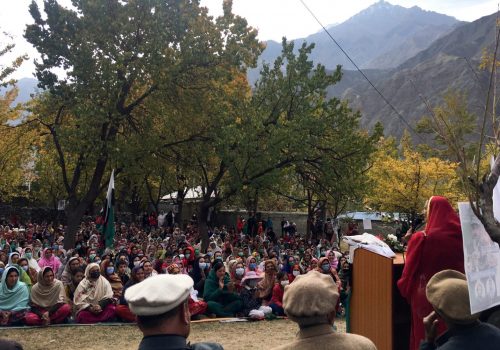
Terrorism is reemerging in Pakistan. To understand how it should respond to this heightened threat, Distinguished Fellow Shuja Nawaz moderated a series of conversations with experts about fighting terrorism and militancy.
SouthAsiaSource Nov 16, 2022
By South Asia Center experts
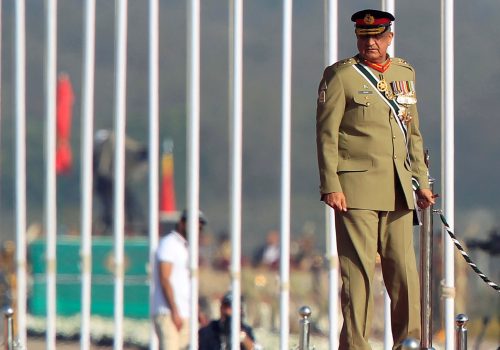
With Chief of Army Staff General Qamar Javed Bajwa set to retire on November 29, 2022, the appointment of a new army chief prompts a new set of challenges. South Asia Center experts provide their analyses of the situation.
SouthAsiaSource Nov 7, 2022
By Ali Hasanain
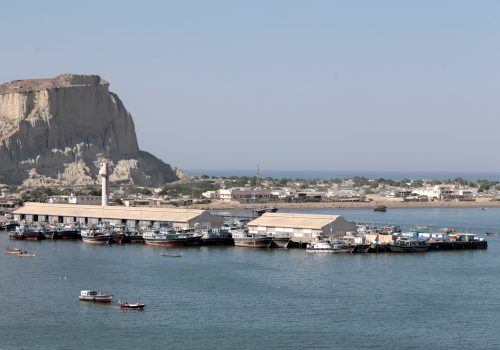
As the China-Pakistan Economic Corridor enters its second phase, each side needs to review how they can improve the program’s effectiveness for mutual benefit.
New Atlanticist
By Dawood Ghazanavi
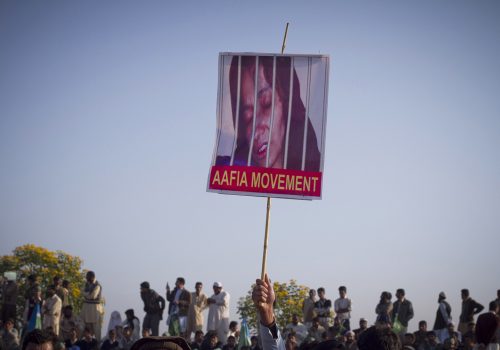
Proper attention to Dr. Aafia Siddiqui's case can be a step in the right direction in recovering the relationship Pakistan's public has with its own government and the United States.
By James B Cunningham, Hugo Llorens, Richard Olson, Ronald E. Neumann, and Earl Anthony Wayne
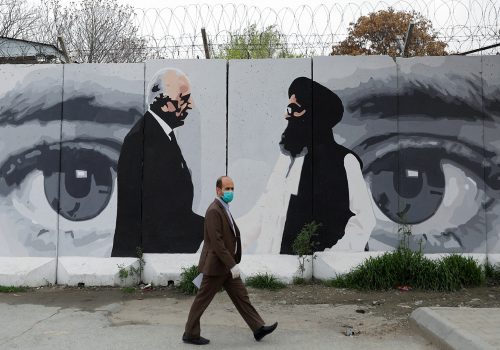
Recent news reports suggest that US President Donald J. Trump is seriously considering withdrawing US troops from Afghanistan because of concerns relating to the novel coronavirus (COVID-19). There are arguments for the United States to stay and to go, but this is a bad one on every count. Our troops will be exposed to COVID-19 wherever they are. In Afghanistan, our military presence is key to the strategy the Trump administration has been laboring to implement to foment peace.
By Marika Theros and Sahar Halaimzai
COVID-19 will not wait for negotiators to reach a humanitarian ceasefire. This is not the time to place political goals above public health or to exploit divisions. A coordinated plan of action, grounded in a public health perspective and which prioritizes pausing the violence, is necessary in order to save lives. Any actor using the pandemic to score political points or to strengthen their hand at the negotiation table cannot be truly committed to peace in Afghanistan.
By Ketki Bhagwati
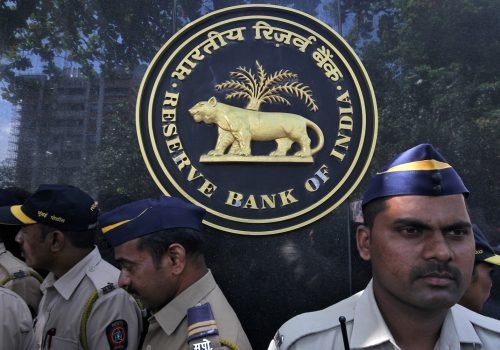
The unwelcome arrival of the novel coronavirus (COVID-19) pandemic and the accompanying national lockdown is very likely to bring on a fresh wave of non-performing loans as banks resort to credit contraction to preserve capital for future losses.
By Shweta Desai
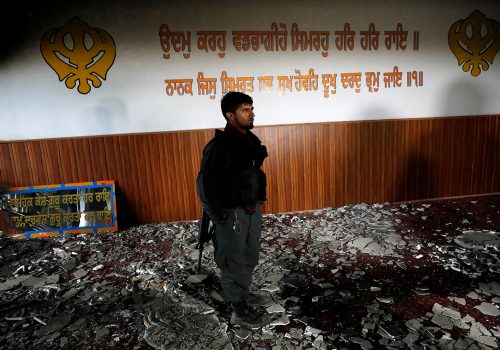
This is the first instance when IS has used an Indian national to spread terror on the handful of remaining Sikh residents in Kabul. The symbolism of an Indian fighter indiscriminately gunning down worshippers is not lost on India, which promises to provide citizenship to the religiously-persecuted Afghan Sikh community. The attack has brought home a haunting realization that Indian nationals who joined jihadist groups like al-Qaeda and the IS in Syria and Afghanistan pose a tremendous security threat and are likely to be used to attack Indian interests at home and abroad.
Video
By South Asia Center
India is now several week into the government-mandated lockdown intended to control the spread of COVID-19. Led by Non-Resident Senior Fellow Dr Edmond Fernandes, the CHD Group and the Atlantic Council’s South Asia Center surveyed Indian citizens in rural Karnataka to capture the impact of the outbreak and lockdown on their access to public health services […]
By Vappala Balachandran
The application of facial recognition technologies in India would almost certainly aid the country’s stretched law enforcement units and may prove useful in future incidents of public rioting or unrest. Given the state of current technologies, however, observers and government officials in India need to critically examine the reliability of this new platform and its potential to wrongfully infringe on the rights of innocent individuals.
By Ali Riaz
The Bangladeshi government’s $8 billion stimulus package, about 2.5 percent of the country’s gross domestic product (GDP), primarily focuses on industries, particularly export-oriented ones. In doing so, the package intended to contain and mitigate the economic fallout of novel coronavirus (COVID-19) left out the most vulnerable sections of the society and the sectors which desperately need support.
By Ajay Chhibber
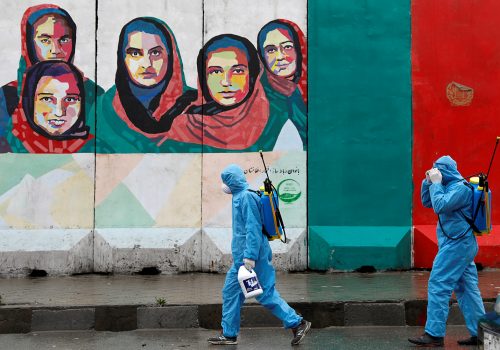
With weak health systems and crowded living conditions, the chances of wide-spread pandemic is very high. If COVID-19 is not brought under control quickly, despite all the progress in medicine and healthcare since 1918, the number of deaths may rise rapidly. Governments are responding with lockdowns, more health spending, and fiscal and monetary packages for economic life-support—but with weak social safety nets millions will have fallen back into poverty
Experts from the Atlantic Council’s South Asia Center analyze the current efforts of these governments and the potential economic consequences of the coronavirus pandemic on South Asia:
If refreshing the page doesn't resolve the issue you could try clearing the sites browser cache.