Insights and impact
About the Council
The Atlantic Council promotes constructive leadership and engagement in international affairs based on the Atlantic Community’s central role in meeting global challenges. The Council provides an essential forum for navigating the dramatic economic and political changes defining the twenty-first century by informing and galvanizing its uniquely influential network of global leaders. Through the papers we write, the ideas we generate, and the communities we build, the Council shapes policy choices and strategies to create a more secure and prosperous world.
Featured content
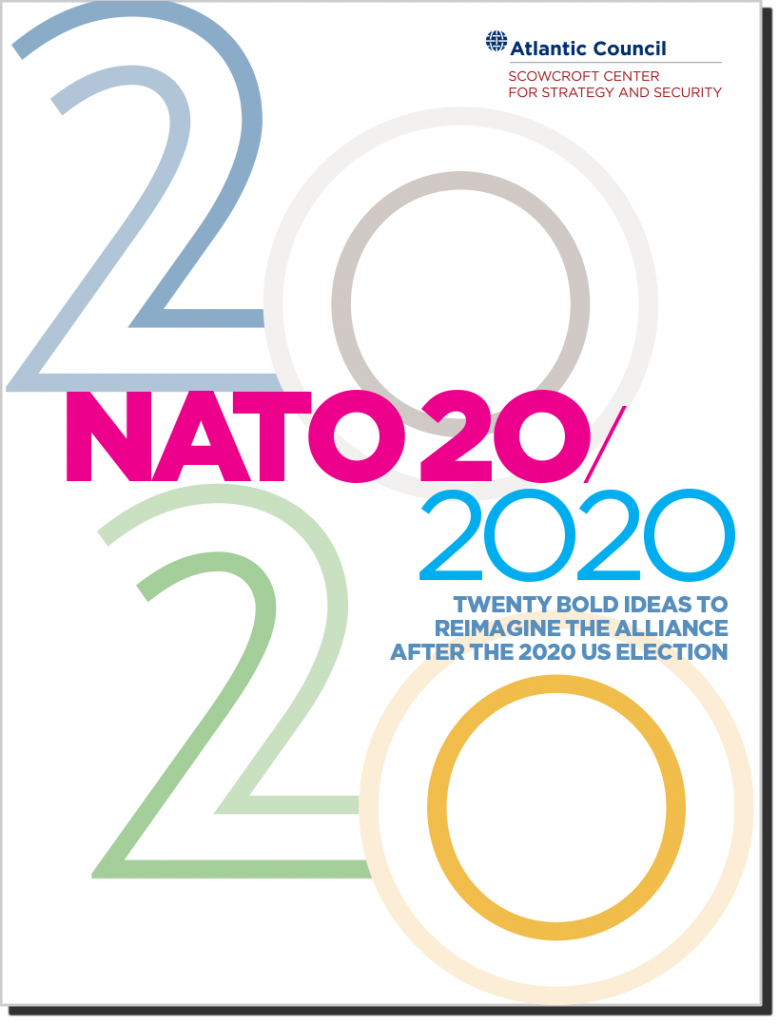
NATO 20/2020
Twenty bold ideas to reimagine the Alliance after the 2020 US election
More than two decades after NATO’s inspired decision to invite former adversaries to join its ranks, the Alliance is in need of equally captivating ideas. The essays in this volume are intended to push the Alliance to think boldly and creatively in the service of recapturing the public’s imagination.
Explore the podcast series
Making a difference
Learn more about the Atlantic Council’s insights & impact through these stories of how our regional and thematic programs are making a difference not only in shaping how we view global issues but also in shaping their outcome.
In the News
Dec 17, 2020
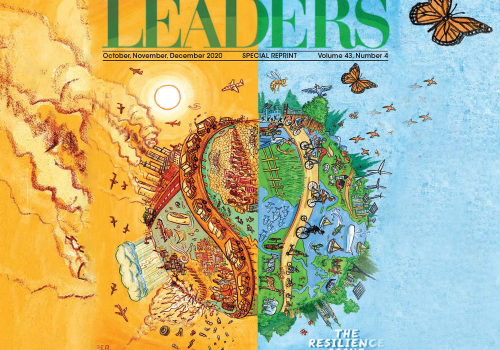
The Adrienne Arsht-Rockefeller Foundation Resilience Center partners with LEADERS Magazine to dedicate an entire issue to resilience
For its Fall/Winter issue of 2020, LEADERS Magazine, asked the Adrienne Arsht-Rockefeller Foundation Resilience Center to produce an issue dedicated to resilience. The Resilience Issue assembles a broad range of global thought leaders and experts who are currently tackling the challenges and crises facing the world from different perspectives.
Insights & Impact
Mar 3, 2020
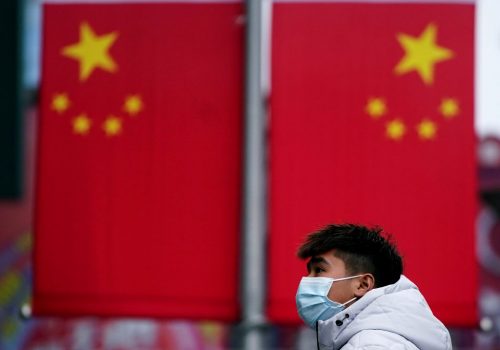
Peering Around the Corner: The Geopolitics of Coronavirus
By
Atlantic Council
On February 11, 2020 the DFRLab hosted "Peering Around the Corner: The Geopolitics of Coronavirus," a timely series of panels on the potential geopolitical and economic consequences of Coronavirus, and how misinformation about the crisis may influence its impact.
Program Impact Story
Feb 6, 2020
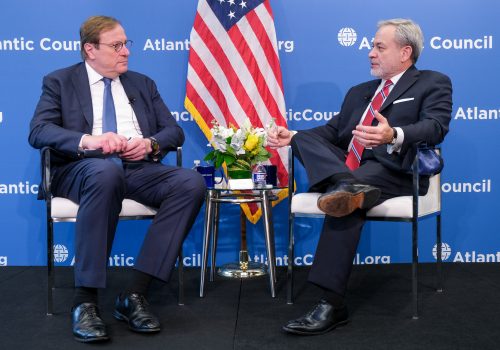
US energy priorities abroad: A conversation with US Secretary of Energy Dan Brouillette
By
Global Energy Center
On Friday, February 7, 2020, the Atlantic Council hosted newly appointed US Secretary of Energy Dan Brouillette for a public address and moderated discussion about US government energy priorities abroad.
Latest commentary and analysis

Econographics
Jun 19, 2026
Central banks can’t afford to keep missing their inflation targets
By
Jack Muldoon
While the Iran war explains the sudden rise in inflation, relying on this excuse obscures that there is potentially a long-term problem central banks will need to confront as they manage the long tail of this crisis.
UkraineAlert
Jun 18, 2026
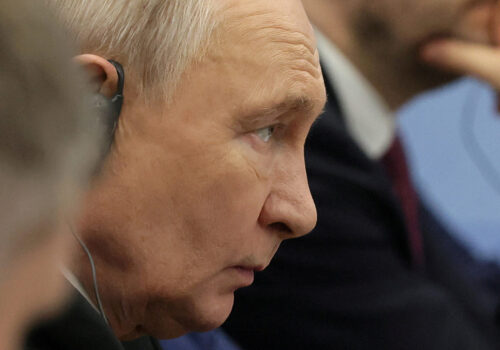
Putin’s obsession with ‘denazifying’ Ukraine makes peace impossible
By
Peter Dickinson
Putin’s obsession with “denazifying” Ukraine makes a mockery of efforts to portray the Russian invasion as a mere land grab and helps explain why there has been no meaningful progress toward peace despite more than a year of US-led efforts, writes Peter Dickinson.

Podcast
Jun 18, 2026
“Shoot everybody”: US contractors in San Diego court
By
Alia Brahimi
In Season 2, Episode 16 of the Guns for Hire podcast, host Alia Brahimi is joined by Daniel McLaughlin, an international lawyer and Legal Director of the Centre for Justice and Accountability (CJA), a California-based legal nonprofit working on behalf of victims of torture and other atrocity crimes. Daniel and CJA are leading a civil suit in San Diego against a Delaware-registered PMC, Spear Operations Group, for war crimes in Yemen. They represent the Yemeni parliamentarian Anssaf Ali Mayo, who was one of the targets of an alleged hit-squad in Yemen. Daniel talks us through the facts of the case, how it ended up in a California courtroom ten years later, and which US and international laws were ostensibly broken by the PMC. He also argues forcefully that the US government has a duty to regulate how former members of its military use their training and know-how.
Latest in-depth research and reports
Issue Brief
Jun 18, 2026
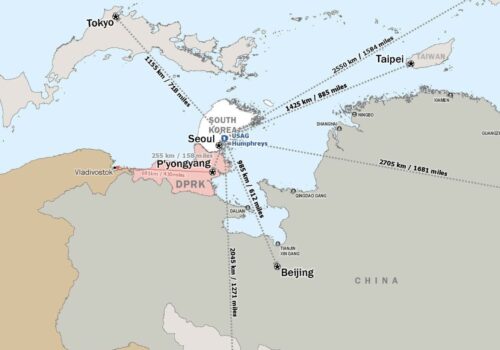
The case for a US Northeast Asia Command
By
Christopher Lee, Ben Blane, and Markus Garlauskas
To maximize its deterrent and warfighting effectiveness in the Indo-Pacific region, the United States must reform its military command-and-control structure in Northeast Asia.

Report
Jun 16, 2026
Financing the end of the digital divide
By
Kenton Thibaut, Jochai Ben-Avie
Digital connectivity has become a strategic geopolitical contest shaping the future of the global internet. This report examines China’s global digital infrastructure investments and the ways that the United States and its allies can leverage blended finance, partnerships, and policy to close the digital divide while offering a credible alternative to China’s expanding digital influence.
Issue Brief
Jun 15, 2026
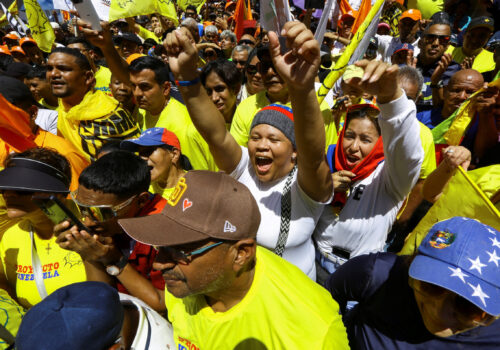
Updating the Democratic Transition Framework to chart a way forward in Venezuela
By
Geoff Ramsey
To seize the opportunity for a democratic transition in Venezuela in the wake of Nicolás Maduro's January capture, the United States should update a power-sharing framework proposed in 2020 to serve as a road map for the restoration of Venezuela’s democratic institutions.