

Financial Sanctions and Economic Coercion

Financial sanctions and other forms of economic coercion have become policy tools of choice for the US government to deter illegal activity by international actors or to pressure governments into reversing actions that harm US interests. Yet these instruments and their potential pitfalls are often misunderstood. Restrictive economic measures such as financial sanctions, export controls, tariffs, and investment screening can play an important role in advancing certain policy objectives, but they risk being ineffective if misapplied or poorly implemented. Policymakers must also recognize the impact of economic statecraft on the private sector, which bears many of the compliance burdens and operational costs associated with these measures.

Energy Sanctions Dashboard

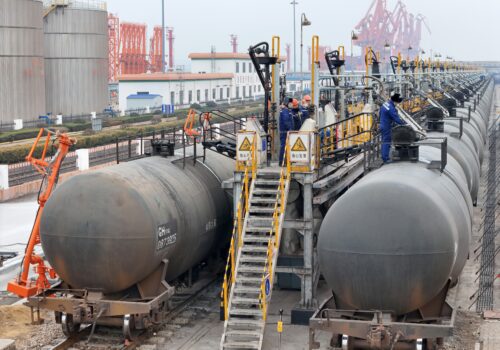
This dashboard focuses on US sanctions and restrictive measures placed on crude oil from Russia, Iran, and Venezuela—including the unintended consequences and the lessons learned.

Econographics

Apr 17, 2025

Russia Sanctions Database

By Kimberly Donovan, Maia Nikoladze, Lize de Kruijf

The Atlantic Council’s Russia Sanctions Database tracks the level of coordination among Western allies in sanctioning Russian entities, individuals, vessels, and aircraft, and shows where gaps still remain.

Eastern Europe Economy & Business

Recent analysis

Programs

At the intersection of economics, finance, and foreign policy, the GeoEconomics Center is a translation hub with the goal of helping shape a better global economic future.

Content

Event Recap

Oct 22, 2019

Sudanese finance minister shares plan for economic revival

By Africa Center

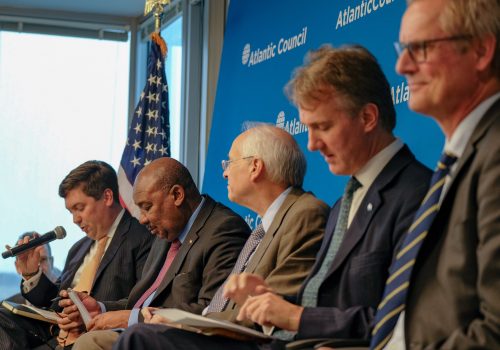
On Tuesday, October 22, the Atlantic Council’s Africa Center hosted H.E. Ibrahim Elbadawi, minister of finance of the Republic of the Sudan, for a public discussion on the Sudanese economy. Following the ouster of longstanding president Omar al-Bashir in April and months of popular protests that led to the formation of a civilian-led transitional government […]

Africa East Africa

In the News

Oct 21, 2019

Sultoon joins War on the Rocks to discuss various sanctions on Turkey

By Atlantic Council

Financial Sanctions and Economic Coercion Politics & Diplomacy

IranSource

Oct 17, 2019

Forget Telegram: Iranians are using Instagram to shop

By Fariba Parsa

Maryam searched all over Neyshabur’s pharmacies, a town in northeastern Iran, for her mother’s diabetes medication. “I came back home, exhausted and didn’t know what to say to my mother,” the 30-year-old economist explained. “It was late in the night and I searched Instagram. Wow! I found a place where I could buy my mother’s medicine.” […]

Financial Sanctions and Economic Coercion Iran

New Atlanticist

Oct 15, 2019

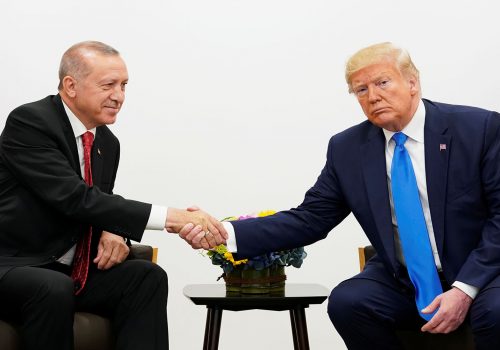
Trump vs Erdoğan: It’s hard to bluff when your cards are on the table

By Brian O'Toole

It is hard to take seriously threats by the US government to ruin the Turkish economy when Trump himself gave this green light in the first place. Under such circumstances, sanctions have almost no chance of succeeding in putting this genie back in the bottle.

Financial Sanctions and Economic Coercion Syria

In the News

Oct 14, 2019

O’Toole quoted in Foreign Policy on Turkey sanctions

By Atlantic Council

Economy & Business Financial Sanctions and Economic Coercion

In the News

Sep 27, 2019

Slavin joins France 24 to discuss Trump, UNGA, and sanctions on Iran

By Atlantic Council

Financial Sanctions and Economic Coercion International Organizations

In the News

Sep 25, 2019

Hudson in Foreign Policy: The United States should lift sanctions on Sudan

By Atlantic Council

Africa English

Event Recap

Sep 24, 2019

Key Sanctions Risks and Trends

By Global Business & Economics Program

On September 19th, the Atlantic Council’s Global Business & Economics Program’s Economic Sanctions Initiative hosted an event alongside Kharon to discuss key sanctions risks and trends. Ambassador Daniel Fried, the Weiser Family distinguished fellow at the Atlantic Council, offered brief opening remarks to introduce the event’s topic and presenters.

China Economy & Business

Feature

Sep 22, 2019

Sanctions explained: How a foreign policy problem becomes a sanctions program

By Brian O'Toole and Samantha Sultoon

Sanctions allow a US president to exercise power unilaterally and often expeditiously. They are often one of the few middle grounds between war and words.

Financial Sanctions and Economic Coercion

Inflection Points

Sep 21, 2019

Trump’s Iran test: Nerves and vision

By Frederick Kempe

President Trump’s maximum pressure and Iran’s escalating responses have increased the risks of conflict. They have also brought a new chance of resolution that may become the most significant test yet of President Trump’s ability to transform his disruptive foreign policy into positive outcomes.

Defense Policy Financial Sanctions and Economic Coercion

Experts