

Financial Sanctions and Economic Coercion

Financial sanctions and other forms of economic coercion have become policy tools of choice for the US government to deter illegal activity by international actors or to pressure governments into reversing actions that harm US interests. Yet these instruments and their potential pitfalls are often misunderstood. Restrictive economic measures such as financial sanctions, export controls, tariffs, and investment screening can play an important role in advancing certain policy objectives, but they risk being ineffective if misapplied or poorly implemented. Policymakers must also recognize the impact of economic statecraft on the private sector, which bears many of the compliance burdens and operational costs associated with these measures.

Energy Sanctions Dashboard

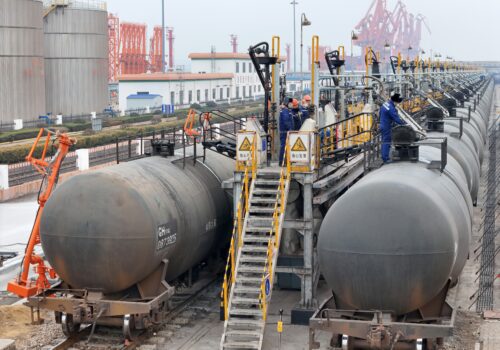
This dashboard focuses on US sanctions and restrictive measures placed on crude oil from Russia, Iran, and Venezuela—including the unintended consequences and the lessons learned.

Econographics

Apr 17, 2025

Russia Sanctions Database

By Kimberly Donovan, Maia Nikoladze, Lize de Kruijf

The Atlantic Council’s Russia Sanctions Database tracks the level of coordination among Western allies in sanctioning Russian entities, individuals, vessels, and aircraft, and shows where gaps still remain.

Eastern Europe Economy & Business

Recent analysis

Programs

At the intersection of economics, finance, and foreign policy, the GeoEconomics Center is a translation hub with the goal of helping shape a better global economic future.

Content

In the News

Apr 6, 2022

Friedlander interviewed on MSNBC Meet the Press on Western sanctions

Watch the full interview here.

Conflict Economy & Business

In the News

Apr 5, 2022

Cohen joins Marketplace to discuss economic sanctions against Russia

Economy & Business Financial Sanctions and Economic Coercion

In the News

Apr 5, 2022

Lipsky quoted in Politico discussing impacts of a potential Russian default on the global economy

Read the full article here.

Conflict Economy & Business

New Atlanticist

Apr 5, 2022

How the world’s parliaments can team up against Russian aggression

By Francis Shin and Riho Terras

An interparliamentary alliance against Kremlin aggression would maximize global efforts to coordinate sanctions and keep the pressure on Moscow.

Corruption Europe & Eurasia

In the News

Apr 4, 2022

Manning in The Hill: The weaponization of interdependence – and other consequences of the war in Ukraine

By Atlantic Council

On April 4, Robert Manning published his biweekly column in The Hill on how interdependence can be weaponized and the systemic consequences from the Russia-Ukraine war.  “One of the many nagging uncertainties of the horrendous, epoch-altering war in Ukraine is what the endgame will look like. That is still over the horizon. But regardless, many […]

Conflict Crisis Management

In the News

Apr 4, 2022

Lichfield quoted in the New York Times regarding capital controls’ implications for Russia’s future

Read the full article here.

Conflict Economy & Business

In the News

Apr 3, 2022

Global Sanctions Dashboard and graphic showing Russian foreign reserve assets cited in the New York Times

Read the full piece here.

Conflict Economy & Business

In the News

Apr 2, 2022

Friedlander cited in the Economist on illegal oil shipments as a means of sanctions evasion

Read the full article here.

Conflict Economy & Business

In the News

Apr 1, 2022

Friedlander interviewed in Voice of America (VOA) on Western sanctions on Russia

Listen to the full interview here.

Conflict Economy & Business

New Atlanticist

Apr 1, 2022

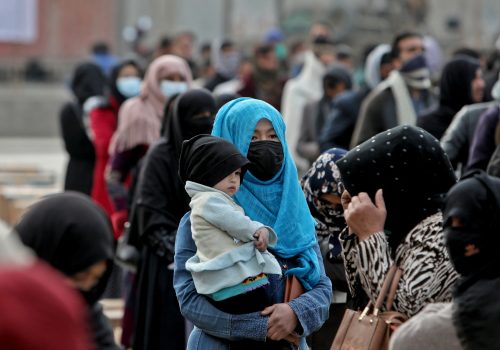
Policy memo: Four ways to send money and aid to Afghanistan

By Julia Friedlander, Mrugank Bhusari

Now that the international community has pledged billions for Afghanistan, it is time to consider creative financial tools that can effectively deliver these funds to those who need them most.

Afghanistan Economy & Business

Experts