Geopolitics & Energy Security
The combination of energy and geopolitics can disrupt regional stability and have major effects on global energy markets. By monitoring challenges and opportunities at this intersection, emerging risks can be identified and trends can be highlighted to provide a clearer picture of the global energy landscape.
Recent analysis
Dispatches
Mar 17, 2026
How the Iran war could trigger a European energy crisis
By
Lisa Basquel
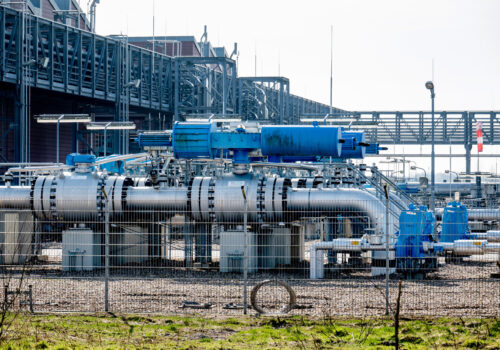
Refilling Europe’s depleted gas storage—already a difficult task given the continent’s efforts to stop purchasing Russian gas—is even more difficult now with the Strait of Hormuz effectively closed.
UkraineAlert
Mar 17, 2026
The Iran war is good for the Russian economy but bad for Putin’s prestige
By
Maksym Beznosiuk, Will Dixon
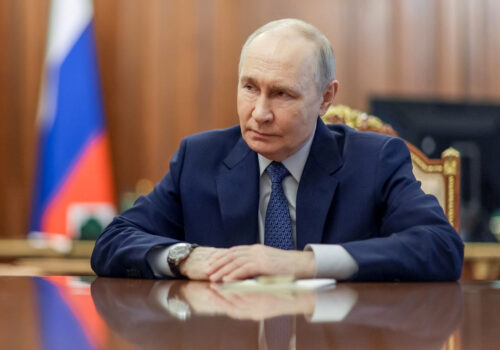
From Armenia and Syria to Venezuela and Iran, Moscow’s inability since 2022 to aid its allies in times of crisis has seriously damaged Russia’s reputation as a global power, write Maksym Beznosiuk and Will Dixon.
Dispatches
Mar 13, 2026
Romania’s drone and energy plans with Ukraine make Europe stronger and more secure
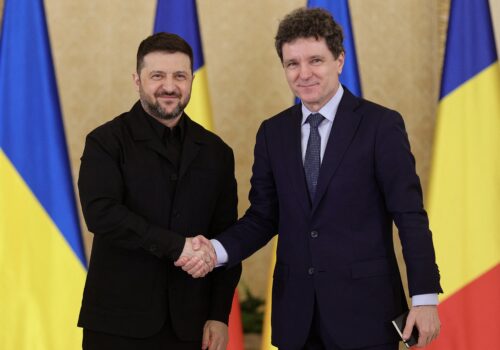
Romanian President Nicușor Dan hosted his Ukrainian counterpart on March 12, underscoring Bucharest’s growing role in regional security.
Programs

The Global Energy Center develops and promotes pragmatic and nonpartisan policy solutions designed to advance global energy security, enhance economic opportunity, and accelerate pathways to net-zero emissions.
Events
Report
Jan 9, 2020
International grid integration: Efficiencies, vulnerabilities, and strategic implications in Asia
By
Phillip Cornell
In order to meet growing global demand for electricity, and in response to an increase in renewables, power networks and markets are evolving and becoming increasingly interconnected. South and Southeast Asia have already had some success with interconnections, and China’s vision and Belt and Road Initiative loom large in the region, but there are geopolitical concerns to contend with. Could a US model manage these concerns? What is the state of regional power markets in Asia and investment in regional grid infrastructure, and what responses are we already seeing to emerging trends?
Report
Jan 9, 2020
Energy sector diversification: Meeting demographic challenges in the MENA region
By
Bina Hussein
The Middle East and North Africa (MENA) region is projected to experience significant demographic growth by 2050, growth which will have to be met with commensurate economic expansion and job opportunities, or the region will risk an increase in political instability. To meet this challenge, countries in the region must diversify their economies beyond the energy sector and expand their energy sector beyond hydrocarbons. What are the key trends that MENA countries will have to contend with, what is already being done, and what further steps should be taken?