Inclusive Growth

The world is undergoing a series of profound economic shifts, with many individuals around the globe feeling divorced from the benefits of the globalized economy. Three key development areas—improving the financial inclusion of women and girls, harnessing migration, and shaping workforce transitions for the future economy—can help generate sustainable and equitable economic gains for both advanced and developing societies. The Atlantic Council’s Inclusive Growth Initiative aims to build a platform for sharing best practices in these policy spheres with communities around the world to exchange ideas and shine a light on successful real-world case studies.

Content

refugee resilience

Report

Jul 13, 2020

Turkey’s Refugee Resilience: Expanding and Improving Solutions for the Economic Inclusion of Syrians in Turkey

By Bastien Revel

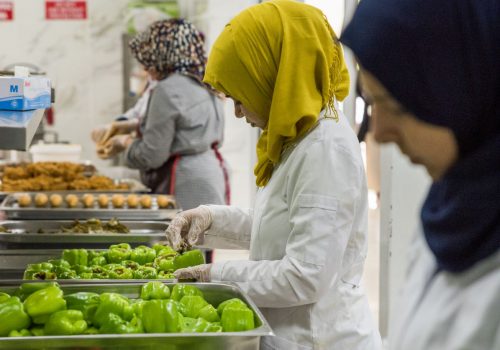
Since 2014, Turkey has not only hosted the world’s largest refugee population but has also modeled a best practice for the global refugee policy discussion. Turkey’s experience on the key issues such as jobs and employment should be examined as lessons for both refugee hosting countries and donor countries alike.

Conflict Crisis Management

In the News

Jul 8, 2020

Remes for McKinsey Global Institute: Prioritizing health: A prescription for prosperity

By Atlantic Council

Africa Americas

In the News

Jul 8, 2020

Remes in Project Syndicate: Seizing the Health Opportunity

By Atlantic Council

Africa Americas

In the News

Jul 1, 2020

Chhibber in The Economic Times: The time couldn’t be more ripe for Narendra Modi to cement a strategic India-US alliance

Economy & Business Inclusive Growth

Future of Capitalism

Jun 12, 2020

How COVID-19 is worsening America’s racial economic divide

By Nicole Goldin

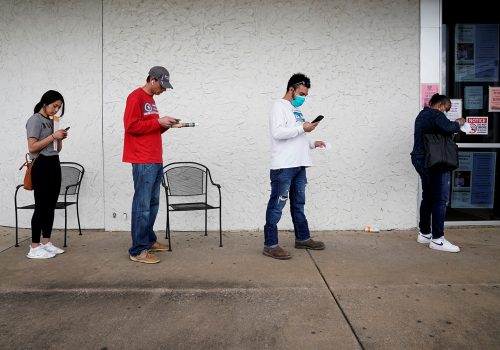
While the White House cheered the surprising jobs numbers on June 5, many Americans—especially people of color, women, lower-skilled workers, young people, or rural residents—remain out of work and left behind by this nascent recovery.

Coronavirus Inclusive Growth

GeoTech Cues

Jun 10, 2020

Central bank digital currency can contribute to financial inclusion but cannot solve its root causes

By Nikhil Raghuveera

In Part II of the Central Bank Digital Currency Series series, the GeoTech Center and guest author Nikhil Raghuveera examine how CBDCs can contribute to financial inclusion in a post-COVID-19 world.

Digital Currencies Digital Policy

New Atlanticist

Jun 10, 2020

India’s “Atmanirbhar Bharat” vision requires open, not protectionist, policies

By Harsha Vardhana Singh

While Prime Minister Narendra Modi's "self-reliance" push could be interpreted as inward-looking or protectionist, the emphasis on linking India up with global value chains suggests a different approach.

Inclusive Growth India

Inflection Points

Jun 7, 2020

Why U.S. global leadership rests on how it manages anti-racism upheavals

By Frederick Kempe

U.S. credibility as a global leader depends on how it manages anti-racism upheavals. Americans have a shot at proving Martin Luther King right that the long arc of the moral universe once again “bends toward justice.”

Inclusive Growth Political Reform

TURKEYSource

Jun 5, 2020

How to maximize Syrian refugee economic inclusion in Turkey

By Bastien Revel

Turkey’s experience on the key issues such as jobs and employment should be examined as lessons for both refugee hosting countries and donor countries alike. The country has provided Syrians under Temporary Protection the right to access work permits and formal employment. But more can be done to help facilitate refugees' access to decent employment.

Inclusive Growth Migration

In the News

May 28, 2020

How tech, data and geopolitics impact food

By Atlantic Council

On May 28, 2020, Ms. Daniella Taveau, Dr. Molly Jahn, and Dr. David Bray, Director of Atlantic Council's GeoTech Center, discussed how tech, data, and geopolitics impact food. The conversation focused on how these vulnerabilities have existed for sometime and how the COVID-19 pandemic has exacerbated these issues, amplifying existing instabilities, inequities, and insecurities, and will continue to do so unless action is taken to address problems in the food system.

Coronavirus Economy & Business

Experts

Events