

Technology & Innovation

The rapid pace of technological change can both provide governments and individuals with new tools to achieve policy goals, while also presenting societies with new economic, political, and social challenges. The harnessing of new technologies can unlock new economic growth, enhance inclusivity and equity, and increase citizens’ quality of life, but their potentially damaging side effects must also be managed. In an era of growing geopolitical and economic competition, governments must also focus on how to ensure their societies retain a technological edge, and produce new innovative products and solutions to drive growth.

The Atlantic Council Technology Programs comprises five existing efforts—the Digital Forensic Research Lab (DFRLab), the GeoTech Center, the Cyber Statecraft Initiative, the Democracy + Tech Initiative, and the Capacity Building Initiative. These operations work together to address the geopolitical implications of technology and provide policymakers and global stakeholders necessary research, insights, and convenings to address challenges around global technology and ensure its responsible advancement.
Content

UkraineAlert

Jul 1, 2022

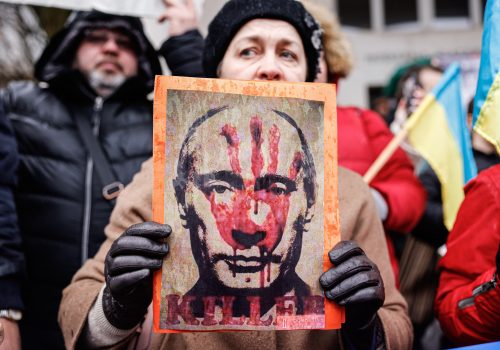
With all eyes on Ukraine, Vladimir Putin targets domestic dissidents

By Doug Klain

While international attention focuses on Vladimir Putin’s genocidal war in Ukraine, the Russian government is accelerating its brutal crackdown on any remaining expressions of anti-regime dissent on the domestic front.

Civil Society Conflict

UkraineAlert

Jun 30, 2022

Goodwill gestures and de-Nazification: Decoding Putin’s Ukraine War lexicon

By Peter Dickinson

From “goodwill gestures” to “de-Nazification” and “reclaiming Russian lands,” the Atlantic Council's Peter Dickinson decodes some of the key phrases from the lexicon of Putin’s Ukraine War into plain English.

Central Asia Conflict

In the News

Jun 30, 2022

CBDC tracker cited in Reuters on countries exploring CBDCs in light of advancements to Taiwan’s pilot program

Read the full article here.

Digital Currencies Digital Policy

UkraineAlert

Jun 29, 2022

Vladimir Putin’s Ukrainian genocide is proceeding in plain view

By Taras Kuzio

Western policymakers should be in no doubt that the many different Russian war crimes currently taking place in Ukraine are all part of a coherent plan developed by Vladimir Putin to commit genocide.

Civil Society Conflict

In the News

Jun 29, 2022

Dr. Akhtar featured in Business Recorder: ISSI holds seminar on ‘ensuring traditional security through technology optimisation’

By Atlantic Council

Cybersecurity Defense Technologies

The 5×5

Jun 29, 2022

The 5×5—Cybercrime and national security

By Simon Handler, Liv Rowley

Five experts weigh in on emerging trends in cybercrime and their impacts on national security. 

Cybersecurity Intelligence

Issue Brief

Jun 28, 2022

Twenty-first-century diplomacy: Strengthening US diplomacy for the challenges of today and tomorrow

By Jeffrey Cimmino, Amanda J. Rothschild

The practice of diplomacy has changed over the past several decades, and significant work remains to be done to fully adapt US diplomacy to the challenges of our time.

China International Organizations

UkraineAlert

Jun 27, 2022

Odesa rejects Russia: Putin’s Ukraine War turns old allies into bitter enemies

By Oleksiy Goncharenko

Putin has long claimed to be the champion of pro-Russian Ukrainians. However, the Ukrainian regions most closely associated with pro-Kremlin sentiment have also been hardest hit by the current invasion.

Conflict Disinformation

AC Selects

Jun 25, 2022

AC Selects: Highlights from 2022 EU-US Defense & Future Forum

Event from week of June 24, 2022 Last week, the Delegation of the European Union to the United States hosted the EU-US Defense and Future Forum in partnership with the Atlantic Council Europe Center. The forum featured policymakers and experts from both sides of the Atlantic who explored the EU-US relationship and how it can […]

Central Europe Conflict

New Atlanticist

Jun 24, 2022

Russian War Report: Pro-Kremlin Russian outlet refers to Russian troops in Mariupol as ‘occupiers’ 

By Digital Forensic Research Lab

News outlet Moskovsky Komsomolets published an article that referred to Russian soldiers in Mariupol as "occupiers," but it was quickly deleted. Meanwhile, fires strike Russian oil and power plants, and Chinese media report on Russia-Lithuania dispute.

China Conflict

Experts

Events