



The Atlantic Council Technology Programs comprises five existing efforts—the Digital Forensic Research Lab (DFRLab), the GeoTech Center, the Cyber Statecraft Initiative, the Democracy + Tech Initiative, and the Capacity Building Initiative. These operations work together to address the geopolitical implications of technology and provide policymakers and global stakeholders necessary research, insights, and convenings to address challenges around global technology and ensure its responsible advancement.

Content

UkraineAlert

Sep 1, 2026

For Putin, the ‘root cause’ of the war is the existence of independent Ukraine

By Kateryna Odarchenko

Moscow claims to be ready for peace once the "root causes" of the Russia-Ukraine War are addressed, but Putin's demands confirm that he believes the "root cause" of the war is the existence of an independent Ukraine, writes Kateryna Odarchenko.

Conflict Disinformation

Dispatches

Sep 1, 2026

Russia wants to sell ‘sovereign AI’ abroad. Here’s what it’s really selling.

By Eto Buziashvili

Russia’s new AI law puts domestic models under state control. Moscow now wants to sell the same model abroad.

Artificial Intelligence Russia

GeoTech Cues

Aug 28, 2026

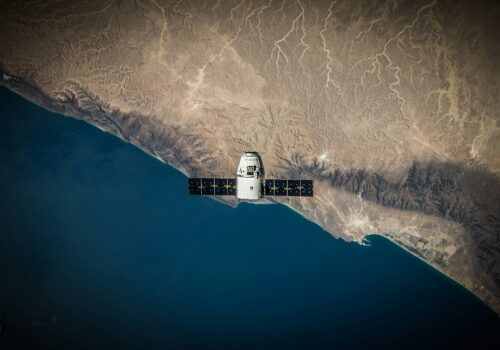
In space, everyone can hear you stream: Challenges ahead of the corporate space data race

By Will LaRivee, Matt Petit

Private companies are driving the rise of space-based data centers, but it is not yet clear who will own, govern, and access data processed in orbit.

Space Technology & Innovation

UkraineAlert

Aug 27, 2026

Drone parade showcases Ukraine’s remarkable military transformation

By Mykola Bielieskov

Ukraine celebrated Independence Day this week with a novel military parade made up exclusively of unmanned systems, underlining the country’s emergence as a global leader in the field of drone warfare, writes Mykola Bielieskov.

Conflict Defense Industry

Report

Aug 27, 2026

AI and autonomy in contested operations

By Owen J. Daniels

Any potential major conflict the United States engages in will be shaped by AI and autonomous systems. US forces should expect their systems to operate in denied, degraded, intermittent, and limited (DDIL) conditions imposed by jamming techniques, cyber-attacks, and anti-satellite capabilities designed to sever the connectivity and wreak havoc on military operations.

Artificial Intelligence Defense Policy

Report

Aug 24, 2026

An economic shock is coming. Boosting women’s economic opportunity may be the key to overcoming it.

By Jérémie Bertrand, Nina Dannaoui-Johnson, Annie (Yu-Lin) Lee, Caroline Perrin

With over a billion young people set to enter the global workforce in the next decade, policymakers must prioritize education and jobs for young women to advance prosperity.

Africa Entrepreneurship

UkraineAlert

Aug 20, 2026

As pressure mounts on Putin, Russia is escalating against Ukraine’s allies

By Peter Dickinson

With the Russian army struggling to advance in Ukraine and Ukrainian strikes increasing inside Russia, Putin is escalating his gray zone campaign against Kyiv's European allies in a bid to deprive Ukraine of vital support and rescue his faltering invasion, writes Peter Dickinson.

Conflict Drones

UkraineAlert

Aug 18, 2026

Odesa under attack: Russia is cutting Ukraine off from the Black Sea

By Michael Bociurkiw

Russia's current bombing strategy is not simply to punish Odesa. Moscow aims to make Ukraine's largest Black Sea port city functionally landlocked, writes Michael Bociurkiw.

Conflict Drones

UkraineAlert

Aug 18, 2026

Echoes of Odysseus in Ukraine’s ingenious approach to the art of war

By Brian Mefford

Christopher Nolan's new blockbuster film version of the Odyssey is shaped by timeless values of military ingenuity, righteous justice, and a longing for one’s homeland that offer ancient echoes of modern-day Ukraine’s fight against Russia’s invasion, writes Brian Mefford.

Conflict Defense Policy

Issue Brief

Aug 17, 2026

Sovereignty without borders: Decoding the transatlantic digital relationship at a time of change

An examination of the EU–US trust deficit and its implications for digital policymaking.

Digital Policy Europe

Experts

Events