Nuclear strategy project

The Scowcroft Center is proud to play a central role in crafting an effective and nonpartisan strategic forces policy for the twenty-first century.

The Scowcroft Center’s namesake, General Brent Scowcroft, was the chairman of the 1983 Scowcroft Commission that established the foundation for US nuclear deterrence and arms control policy through the present day. As the United States enters a new era of strategic challenges, the Scowcroft Center’s Forward Defense program is proud to play a central role in crafting an effective and nonpartisan strategic forces strategy and policy for the twenty-first century.

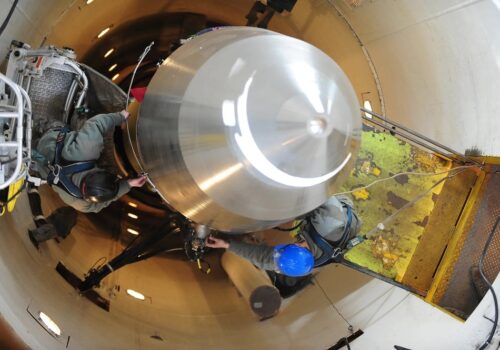
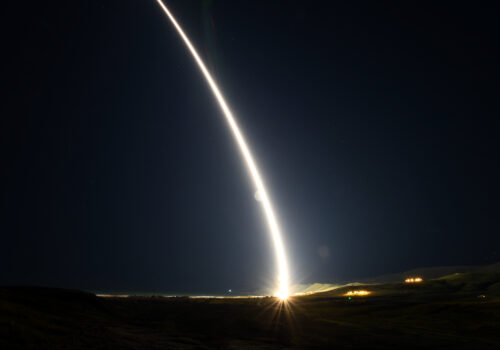
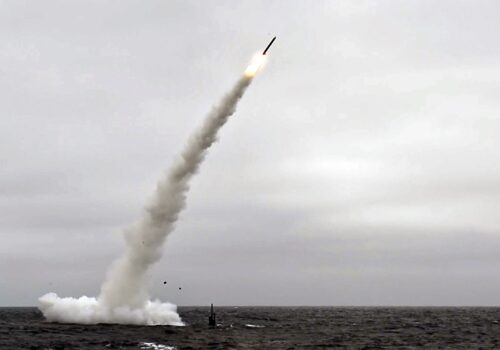
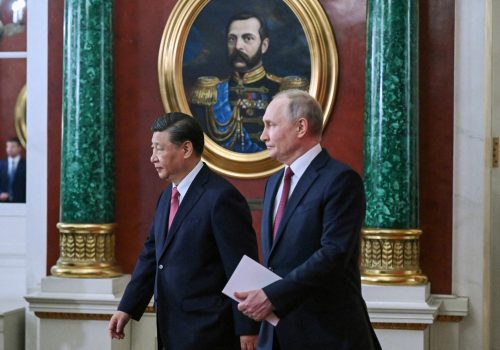
The 2022 National Defense Strategy and Nuclear Posture Review caution that the United States will, for the first time in its history, face the challenge of simultaneously deterring two nuclear great powers, each with aggressive revisionist goals. Our Nuclear Strategy Project, within the Forward Defense program, focuses on the role of nuclear deterrence, nuclear strategy and employment, missile defense, and arms control in deterring conventional aggression and nuclear escalation against the United States, its allies, and partners.

Principal research areas

Must Reads
Report

Jan 4, 2025

‘First, we will defend the homeland’: The case for homeland missile defense

By Robert Soofer with contributions from Kari Anderson, James McCue, Tom Karako, Mark J. Massa, Alyxandra Marine, and Jonathan Rosenstein

A comprehensive analysis of U.S. homeland missile defense, addressing policies, security challenges, and strategies to counter threats from North Korea, China, and Russia.

China Defense Technologies

Reports & issue briefs

Issue Brief

Feb 20, 2026

Four options for arms control after New START

By Amy Woolf

With the last quantitative limit on the world's largest nuclear arsenals now expired, Washington finds itself in a new and uncertain era, with less clarity about Russia’s nuclear forces, plans to upgrade its own, and growing concern about China's. The best option may be trilateral talks—but not about a new arms control treaty.

Arms Control China

Report

Jan 21, 2026

Countering Russian escalation in space

By John Klein, Clementine G. Starling-Daniels

Current US space policy and acquisitions are inadequate to address the growing threats from Russia in space. The United States needs a more resilient space architecture, able to withstand major-power conflict—and Russia’s designs to place a nuclear weapon in orbit. Here are fifteen recommendations to make that happen.

China Missile Defense

Issue Brief

Dec 22, 2025

Is extending the New START limits in the US national security interest?

By Greg Weaver

This issue brief will ask and answer the question of whether extending the New START limits is in the US national security interest.

Arms Control Nuclear Deterrence

Issue Brief

Dec 22, 2025

Nuclear priorities for the Trump administration: A time to decide

By Matthew Kroenig, Jonathan Rosenstein

This report offers recommendations to the Donald Trump administration for policy and investment decisions that will shape this new era of strategic competition in the United States’ favor.

China Missile Defense

Issue Brief

Aug 27, 2025

Navigating the new normal: Strategic simultaneity, US Forces Korea flexibility, and alliance imperatives

By Bee Yun Jo

The future of deterrence on the Korean Peninsula—and indeed, the wider Indo-Pacific region—will hinge on Seoul’s ability to reframe US force realignments not as unilateral disengagements but as catalysts for action.

Defense Policy Korea

Commentary & quick analysis

New Atlanticist

May 21, 2024

Congress should save the Sentinel ICBM—its true value is more than simply its cost

By James McCue

The value of the new intercontinental ballistic missile program should be measured over its full lifetime and not just by its current price tag.

Defense Technologies National Security

New Atlanticist

Apr 11, 2024

Is the United States falling behind the North Korean ICBM threat? Congress needs answers.

By Robert Soofer

Washington must not wait until Pyongyang is regularly test-launching ICBMs with multiple re-entry vehicles and countermeasures to improve US defenses.

Defense Technologies Korea

New Atlanticist

Apr 3, 2024

The US is building a nuclear sea-launched cruise missile. Congress must make sure it’s built right.

By Robert Soofer

There are forces at play—bureaucratic, budgetary, and programmatic—that could stymie the SLCM-N if US lawmakers do not pay close attention.

Defense Technologies Nuclear Deterrence

New Atlanticist

Feb 15, 2024

Russian nuclear anti-satellite weapons would require a firm US response, not hysteria

By Clementine G. Starling-Daniels, Mark J. Massa

If fielded, such weapons would directly challenge norms of responsible behavior in space and present a serious risk to all nations’ satellites.

Arms Control Russia

Experts react

Feb 15, 2024

Experts react: What to know about Russia’s apparent plans for a space-based nuclear weapon

By Atlantic Council experts

Reports that Russia is developing a space-based nuclear anti-satellite weapon have raised national security concerns in Washington.

Defense Policy National Security

Past events

In the news

In the News

Feb 18, 2026

Kroenig interviewed on NHK Japan Broadcasting on the expiration of New START

By Atlantic Council

On February 13, Atlantic Council vice president and Scowcroft Center senior director Matthew Kroenig was interviewed on NHK Japan Broadcasting about the expiration of New START and implications for the US and its allies.

Nuclear Deterrence Security & Defense

In the News

Jan 30, 2026

Kroenig quoted in Wall Street Journal on adversary nuclear capabilities

By Atlantic Council

On January 30, Atlantic Council vice president and Scowcroft Center senior director Matthew Kroenig was quoted in The Wall Street Journal on Russian and Chinese nuclear capabilities amid discussions on renewing New Strategic Arms Reduction Treaty.

China Nuclear Deterrence

In the News

Jan 30, 2026

Amato in RealClearDefense on the 2025 National Security Strategy

By Atlantic Council

On January 29, Forward Defense Nonresident Senior Fellow Paul Amato published an article in RealClearDefense on the Trump administration’s ambiguity on nuclear deterrence in the Korean peninsula. In the article, Amato argues that silence on the regime ending policy risks emboldening North Korea and unsettling South Korea and Japan.

Japan Korea

In the News

Nov 18, 2025

Kroenig quoted in Wall Street Journal on the new nuclear age

On November 16, Atlantic Council vice president and Scowcroft Center senior director Matthew Kroenig was quoted in an article in the Wall Street Journal titled “The Nuclear-Arms Race Is Now a Three-Way Contest.” Kroenig discusses the nuclear competition between the United States, Russia, and China.

China Nuclear Deterrence

In the News

Nov 18, 2025

Punaro quoted in Air & Space Forces magazine on acquisition reform

By Atlantic Council

On November 18, Forward Defense nonresident senior fellow MajGen Arnold Punaro, USMC (ret.) was quoted in an Air & Space Forces Magazine article entitled "What Experts Will Watch as the Pentagon Implements Acquisition Reform."

Defense Industry Defense Policy

Subscribe to stay engaged

Sign up for updates from Forward Defense to hear the latest on the trends, technologies, and military challenges shaping tomorrow.


  • This field is for validation purposes and should be left unchanged.

Related experts

Forward Defense leads the Atlantic Council’s US and global defense programming, developing actionable recommendations for the United States and its allies and partners to compete, innovate, and navigate the rapidly evolving character of warfare. Through its work on US defense policy and force design, the military applications of advanced technology, space security, strategic deterrence, and defense industrial revitalization, it informs the strategies, policies, and capabilities that the United States will need to deter, and, if necessary, prevail in major-power conflict.