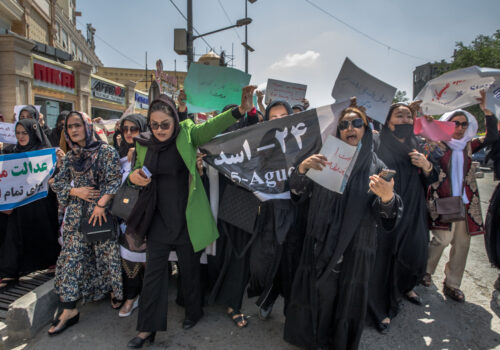
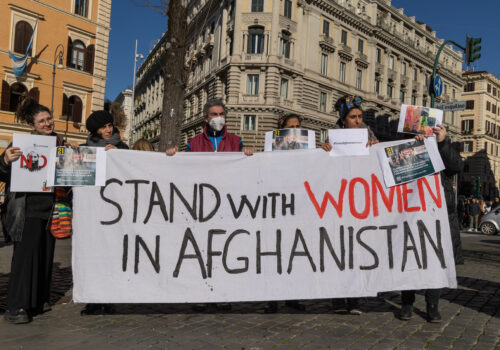
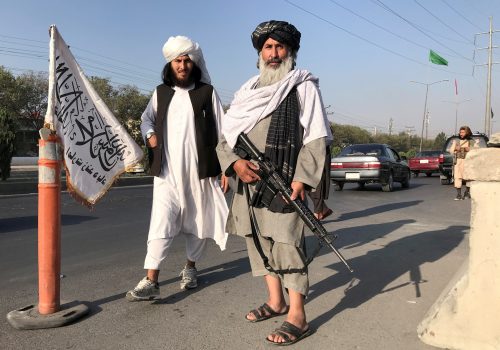
After the Taliban’s return to power on August 15, 2021, women in Afghanistan are treated as second-class citizens, systematically stripped of their rights. Over eighty decrees issued by the Taliban confine women to their homes and ban girls from attending school, turning Afghanistan into a prison for women and girls.

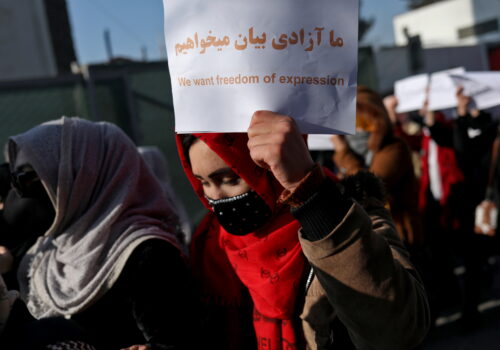
This gender apartheid is reinforced by new educational curricula and severe restrictions on women’s participation in every aspect of society. Women’s protests against these injustices have been met with harsh repression, including imprisonment, torture, and accusations of being influenced by foreign entities.

Inside the Taliban’s gender apartheid, a joint project of the Civic Engagement Project and the Atlantic Council’s South Asia Center, highlights the stories of women who have courageously resisted these injustices—women who have endured imprisonment and brutality for their peaceful demands for basic rights. By refusing to remain silent and shedding light on the violence they face, their testimonies serve as evidence in the fight for justice.

The women who have survived this regime are now calling for international recognition of the Taliban’s gender apartheid as a crime against humanity. This recognition would not only validate their suffering but could also challenge the Taliban’s grip on power and pave the way for transitional justice, offering a potential path to healing and justice for Afghan women and girls. 
The South Asia Center is the hub for the Atlantic Council’s analysis of the political, social, geographical, and cultural diversity of the region. ​At the intersection of South Asia and its geopolitics, SAC cultivates dialogue to shape policy and forge ties between the region and the global community.
Content

In the News

Aug 24, 2021

Duclos in Instituto Montaigne: “The Fall of Kabul and the Weight of Western Defeat”

By Atlantic Council

Afghanistan
Conflict

In the News

Aug 24, 2021

Nasr quoted in VOA on the Taliban’s turn from insurgency to governing

By Atlantic Council

Afghanistan
Crisis Management

New Atlanticist

Aug 24, 2021

Could China become the Taliban’s new benefactor?

By Amin Mohseni-Cheraghlou, Niels Graham

Beijing is eyeing major investments in Afghanistan—but it's up to the Taliban to ease its concerns about security.

Afghanistan
China

In the News

Aug 24, 2021

Nasr’s book, “Dispensable Nation”, quoted in Dawn

By Atlantic Council

Afghanistan
Conflict

In the News

Aug 24, 2021

Samad joins ABC News to discuss “Afghanistan’s last bastion of Taliban resistance” led by Ahmad Masoud

By Atlantic Council

Afghanistan
Conflict

Event Recap

Aug 23, 2021

Event recap: “On the frontline: Protecting Afghanistan’s human rights defenders”

By Areeba Atique

On August 5th, 2021, the Atlantic Council’s South Asia Center, held a discussion with some of Afghanistan’s leading human rights defenders (HRDs) and experts to explore what lies ahead for the activists who put their lives on the line to fight impunity, militancy, and violence.

Afghanistan
Human Rights

In the News

Aug 23, 2021

Alam in Asharq Al-Awsat Arabic: Ahmad Masoud: I am ready to pardon for peace in Afghanistan

By Atlantic Council

Afghanistan
Conflict

In the News

Aug 23, 2021

Samad joins The Nutshell Group to talk about the situation in Afghanistan

By Atlantic Council

Afghanistan
Conflict

In the News

Aug 23, 2021

Charai in The Hill: Refugees can be a step toward redemption for Afghanistan failures

By Atlantic Council

While the chaos of the sudden US withdrawal from Afghanistan has been unpopular, the United States can redeem itself by providing humanitarian assistance for all Afghans without exception, says Ahmed Charai.

Afghanistan
Conflict

New Atlanticist

Aug 23, 2021

They aren’t listed, but make no mistake: The UN has sanctions on the Taliban

By Brian O’Toole

As the militant group settles in to rule Afghanistan again, sanctions remain one of the only viable points of leverage for the international community. Here's what the UN's own rules say.

Afghanistan
Economic Sanctions

Experts