Programs

The Iraq Initiative provides transatlantic and regional policy makers with unique perspectives and analysis on the ongoing challenges and opportunities facing Iraq as the country tries to build an inclusive political system, attract economic investment, and encourage a vibrant civil society.

Top experts

Content

MENASource

Jan 16, 2020

Consequences of Iraq’s vote to end Coalition troop presence

By Rend Al-Rahim

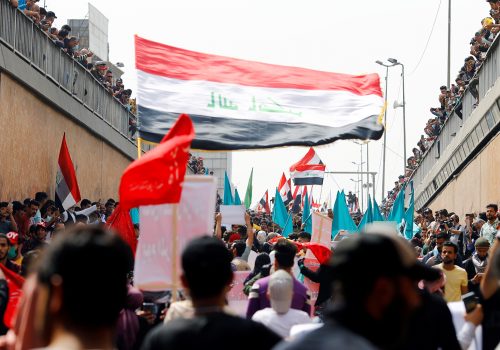
The parliament’s vote on January 5 was driven by emotional rhetoric of sovereignty and patriotism that left no space for dissent and implicitly accused anyone going against the current of betraying Iraq’s sovereignty. The vote displayed majoritarian rule at its worst with the underlying premise that the Shia religious groups can and will determine the interests of Iraq and determine its future, to the exclusion of other communities. The views of Kurds and Sunnis, and indeed of more secular Shia groups, were ignored, with the implication that their patriotism is suspect.

Conflict
Iraq

In the News

Jan 13, 2020

Kempe joins CNBC to discuss Iranian influence over Iraq

By Atlantic Council

Iran
Iraq

In the News

Jan 12, 2020

Warrick quoted in USA Today on Iran’s missile attack on US air bases

By Atlantic Council

Conflict
Iran

Global Energy Forum

Jan 12, 2020

Energy markets underestimate Middle East supply vulnerability

By Adal Mirza

Buoyed by ample supply, global energy markets continue to underestimate risks to output from the Middle East, despite the recent escalation in tensions between the United States and Iran.

Energy Markets & Governance
Geopolitics & Energy Security

Inflection Points

Jan 11, 2020

Abu Dhabi dispatch: The Soleimani earthquake and coming aftershocks

By Frederick Kempe

The conventional wisdom – underpinned by visuals from Iran – is that the US drone strike reinforced hardliners and shifted the internal Iranian dynamics from protests against the regime to angry demonstrations against the United States. Far harder to measure is the longer-term impact of Soleimani’s absence on the country’s revolutionary effectiveness and structure.

Conflict
Iran

New Atlanticist

Jan 9, 2020

Democratic lawmakers criticize Trump administration policy after Soleimani targeting

By David A. Wemer

“This entire escalatory lead up,” Murphy contended, “was all an exercise of choice.” While both Democratic lawmakers conceded that Soleimani—who led the Iran’s Islamic Revolutionary Guard Corps (IRGC) Quds Force—was an enemy of the United States and responsible for the deaths of US soldiers, they called into question the administration’s decision to target Soleimani on Iraqi soil and at a moment of such high tensions in the region.

Conflict
Iran

In the News

Jan 9, 2020

Bryza joins CNN to discuss Iran’s strikes against US military bases in Iraq

By Atlantic Council

Conflict
Iran

IranSource

Jan 8, 2020

Both the United States and Iran proved their points. Now they need to de-escalate tensions

By Robert Czulda

After Trump’s press conference, there are some good reasons to be optimistic and believe that both sides will remain restrained. However, on the other hand, in the Middle East restraint is very often seen not as a virtue, but as a sign of weakness which has to be exploited by one’s enemies.

Conflict
Iran

In the News

Jan 8, 2020

Kadhim quoted in PBS on US sanctions against Iraq

By Atlantic Council

Financial Sanctions and Economic Coercion
Iraq

New Atlanticist

Jan 8, 2020

De-escalation still possible after Iran’s missile retaliation

By Atlantic Council

Iran avoided a central US red line, and "therefore, the Trump administration will have the opportunity to test Iranian claims that they truly do not seek any further escalation," Will Wechsler says.

Conflict
Iran

Experts

Events