Stay Updated


The latest pieces from MENASource:

Through our Rafik Hariri Center for the Middle East, the Atlantic Council works with allies and partners in Europe and the wider Middle East to protect US interests, build peace and security, and unlock the human potential of the region.

Content
In the News

Aug 11, 2015

Mardini on Iraqi Parliamentary Reforms

By Ramzy Mardini

The Financial Times quotes Rafik Hariri Center Nonresident Fellow Ramzy Mardini on the parliamentary reforms proposed by Iraqi Prime Minister Haider al-Abadi designed to counter corruption in the government:

Iraq

In the News

Aug 11, 2015

Mardini on Iraq’s Political Reforms

By Ramzy Mardini

The New York Times quotes Rafik Hariri Center Nonresident Fellow Ramzy Mardini on the Iraqi parliament’s vote on anti-corruption measures and the potential for unintended consequences:

Iraq

In the News

Aug 11, 2015

Stein on al-Nusra Withdrawal

By Aaron Stein

Agence France-Presse quotes Rafik Hariri Center Nonresident Fellow Aaron Stein on the decision of al-Qaeda’s Syria affiliate al-Nusra to withdraw from the fight against ISIS, in light of the US-Turkish efforts to create an ISIS-free zone on the Syrian border:

Syria Turkey

MENASource

Aug 11, 2015

Egypt and Saudi Make a Public Show of Support

By Khaled Dawoud

Leaders of Cairo and Riyadh sought last week to downplay reports of alleged tensions on regional and domestic issues in the wake of the death of Saudi Arabia’s late King Abdullah eight months ago.

North Africa

New Atlanticist

Aug 10, 2015

Will Europe Continue to Stand with the United States if Congress Rejects Iran Nuclear Deal?

By Ashish Kumar Sen

Supporters of nuclear agreement say United States will be ‘worse off’ if Congress rejects agreement A steadfast alliance between United States and Europe—epitomized by a crippling sanctions regime—is widely credited with having brought Iran to the point where it was willing to consider curbs on its nuclear ambitions. But what would happen to that united […]

China European Union

New Atlanticist

Aug 10, 2015

Delivering Energy and the Nuclear Deal with Iran

By Alan Riley

Iran should join the Energy Charter to boost oil flows and reassure the world that it intends to comply with the nuclear deal Iran should join the Energy Charter Treaty (ECT). Joining the ECT, the world’s multilateral energy investment treaty, would encourage greater energy investment flows into Iran leading to a more rapid increase in […]

Energy & Environment Energy Markets & Governance

In the News

Aug 9, 2015

Stein on Turkey’s Two Front War

By Aaron Stein

The Washington Post quotes Rafik Hariri Center Nonresident Fellow Aaron Stein on why Turkey’s two front war, against both ISIS and the Kurds, is not strategically smart:

Syria Turkey

MENASource

Aug 7, 2015

A Critical Moment in North Africa

By Karim Mezran

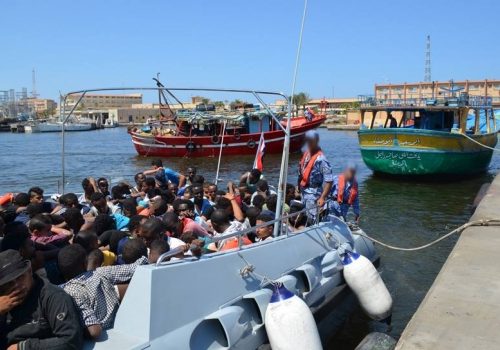
The situation in North Africa has reached a critical point, demanding greater attention from policymakers in Western capitals and elsewhere. While the crisis in Syria and Iraq, the consequences of the Iran deal, and the Yemeni conundrum have garnered global consideration, critical signals of unrest and instability continue to emanate from the North African countries.

Libya North Africa

SyriaSource

Aug 6, 2015

Syria: Is There a Political Future for Assad?

By Frederic C. Hof

News that Iran may submit a Syria peace plan to the United Nations combined with ongoing Syria-related talks between Moscow and Washington brings to the fore the perennial question of Bashar al-Assad, still recognized by the West as presiding over a heap of physical and political wreckage known as the Syrian Arab Republic.

Syria

MENASource

Aug 6, 2015

What is the Best Case Scenario for Egypt’s New Suez Canal?

By Tarek Radwan

One cannot deny Egyptian President Abdel Fattah al-Sisi’s clear desire to reinvigorate Egypt’s economy after four years of steady weakening due largely to tumultuous political change and ongoing violence. One large project (among many mega projects Sisi has envisioned)—the “New” Suez Canal—has come to fruition two years ahead of schedule on presidential orders.

North Africa

Experts