Featured commentary & analysis

Programs


Perspectives on North Africa

The North Africa Initiative at the Atlantic Council’s Rafik Hariri Center for the Middle East analyzes the strategic, political, and economic importance of the region for the United States and its allies. Since the 2011 Arab Spring uprisings, North Africa has undergone political and economic transformations that have impacted stability and security in the region. With its geographic crossroad between Europe, Africa, and the Middle East, North Africa continues to be an integral partner in addressing shared interests and concerns.

Learn more about the Middle East programs
Middle East Programs

Working with our allies and partners in Europe and the wider Middle East to protect US interests, build peace and security, and unlock the human potential of the region.
Content

New Atlanticist

Jun 19, 2013

Conflict and Opportunity on the Nile

By Peter Pham

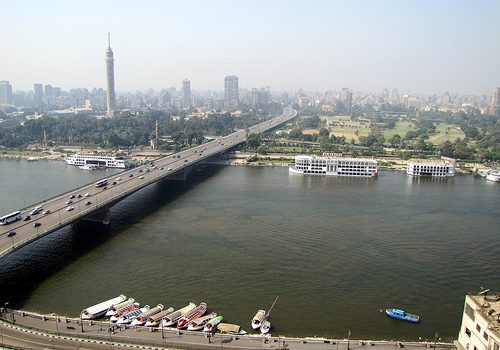
Last week, Ethiopia’s parliament unanimously ratified a treaty with five of its neighbors that opens the way for broad regional cooperation on the use of the waters of the Nile River. In response, Egyptian President Mohamed Morsi, whose government was not part of the pact, angrily declared that “all options are open,” implying that force […]

Energy & Environment Energy Markets & Governance

Event Recap

Jun 12, 2013

Roundtable on Egypt’s Ongoing Political Crisis

The Atlantic Council’s Rafik Hariri Center for the Middle East hosted a roundtable discussion with former member of parliament and founding member of Egypt’s Social Democratic Party Ziad Bahaa-Eldin on the ongoing crisis in Egypt.

North Africa

New Atlanticist

May 22, 2013

Crisis in the Sahel: Overview

By Rudolph Atallah

North Africa and the intertwined Sahel, from Egypt to Mauritania, is a region that has undergone profound and destabilizing political and social change in the last several years, especially since the “Arab Spring” of 2011. Nascent political systems, newly empowered non-state actors, and underlying structural problems in the region contribute to an increasingly volatile mix, […]

National Security North Africa

Issue Brief

May 21, 2013

Post-revolutionary politics in Libya: Inside the General National Congress

By Karim Mezran, Fadel Laman, and Eric Knecht

In the latest issue brief from the Rafik Hariri Center at the Atlantic Council, “Post-revolutionary Politics in Libya: Inside the General National Congress,” authors Karim Mezran, Fadel Lamen, and Eric Knecht analyze the evolution of Libya’s political landscape since the July 2012 elections for the General National Congress (GNC). In the lead-up to the GNC […]

Libya

New Atlanticist

May 21, 2013

Three Benghazi Myths

By R. Nicholas Burns

The Benghazi controversy’s return to Washington’s raging partisan wars continues to portray our political culture at its worst.

Libya National Security

Event Recap

May 13, 2013

Egypt’s Growing Judicial Activism Stymies Democratic Consolidation

On May 13, the Atlantic Council’s Rafik Hariri Center for the Middle East held an event to release a new issue brief, “Egypt’s Litigious Transition: Judicial Intervention and the Muddied Road to Democracy.” Director of the Rafik Hariri Center Michele Dunne moderated a discussion with the author Mahmoud Hamad, who is assistant professor at Drake […]

North Africa

Issue Brief

May 13, 2013

Egypt’s litigious transition: Judicial intervention and the muddied road to democracy

By Mahmoud Hamad

The Rafik Hariri Center for the Middle East is pleased to release a new issue brief, Egypt’s Litigious Transition: Judicial Intervention and the Muddied Road to Democracy. Mahmoud Hamad, assistant professor of politics and international relations at Drake University, evaluates to the evolving role of Egypt’s judiciary in the country’s transition since the ouster of […]

North Africa

MENASource

May 8, 2013

The Questionable Campaign Behind Libya’s Political Isolation Law

By Eric Knecht

The recent passage of a political isolation law in Libya’s General National Congress (GNC), under pressure from armed militants, represents the most significant development during its tenure and threatens to derail the government of Prime Minister Ali Zidan. 

Libya

MENASource

May 7, 2013

Frustration and Isolation in Libya

By Karim Mezran and Fadel Lamen

The next few weeks in Libya will be extremely critical for the government of Prime Minister Ali Zidan. Passage of the so-called political isolation law is a clear sign that the offensive organized against the prime minister by a coalition of opponents has been successful. There is no doubt, that the law, which bans from […]

Libya

Libya Working Group

May 6, 2013

Libya Needs the US for its Transition to Democracy

By Charles Dunne Stephen McInerney and Karim Mezran

Deborah Jones is scheduled to appear Tuesday before the Senate Foreign Relations Committee on her nomination as the new U.S. ambassador to Libya. This will present a stark reminder of the events that took the life of Ambassador Chris Stevens and three other Americans on Sept. 11, 2012.

Libya

Experts