War in Ukraine

Experts from across the Atlantic Council are assessing the consequences of Russia’s February 2022 invasion, including what it means for Ukraine’s sovereignty, Europe’s security, and the United States’ leadership.

Featured commentary

WATCH

“Putin’s endgame: The stakes beyond Ukraine,” an Atlantic Council documentary

Russia’s full-scale war against Ukraine may be closer to its end than its beginning. How it ends will matter not only for Ukraine, but for the whole of Europe and the wider world. The first-ever documentary from the Atlantic Council’s Eurasia Center, “Putin’s endgame: The stakes beyond Ukraine,” discusses the threat of Russian aggression beyond Ukraine and the dangers it poses to US interests today and in the future.

UPCOMING EVENTS

PAST EVENTS

Content

UkraineAlert

Oct 19, 2015

Europe’s Refugee Crisis Shows Ukraine’s Resilience

By Colin Cleary

Ukraine Has Absorbed 1.5 Million Displaced; Soon It Must Employ Them With Europe awash in more than a half-million refugees from Middle Eastern and other wars, it might be easy to overlook Ukraine’s response to its own population—nearly three times the size, at 1.5 million—displaced by the Russian-backed war in the east. More than 18 […]

Ukraine

UkraineAlert

Oct 19, 2015

Ukrainians Eager to Go to Polls

By Brian Mefford

In less than a week, Ukrainians go to the polls to elect mayors, city councils, and regional councils, and they’re eager to do so. A recent poll carried out by the International Republican Institute found that 75 percent of Ukrainians are very likely or somewhat likely to vote on October 25. A new law requires […]

Ukraine

UkraineAlert

Oct 19, 2015

Ukraine Can Beat Its Political Corruption

By Anders Åslund

Ukraine’s politics suffer from a vicious circle of corruption. Its elections are extremely expensive. Large amounts of gray and black funds are needed to finance them. Criminals, called gray cardinals, handle this black financing, extracted from the state treasury and state companies. To corrupt all, the gray cardinals and their political allies insist on tiny […]

Ukraine
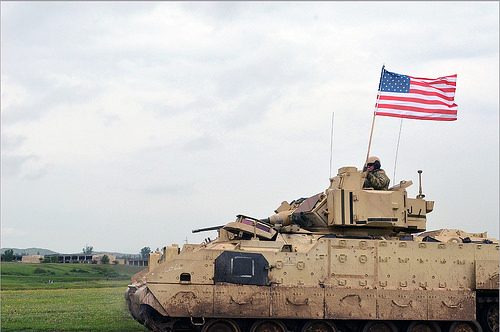
Crew of a US Bradley vehicle participating in Noble Partner exercise, May 12, 2015

NATOSource

Oct 19, 2015

Despite Cuts, U.S. Army Prepares for Threats in Europe

By Emmarie Huetteman, New York Times

Less than three years after the United States Army sent home the last of its tanks that were permanently based in Europe, American commanders have been forced to rely on weapons shipped back temporarily or hardware borrowed from allies

NATO Russia

In the News

Oct 19, 2015

Ullman: Syria 2015: Spain 1938 or Sarajevo June 1914?

By Harlan Ullman

Atlantic Council Senior Adviser Harlan Ullman writes for United Press International on the political and geostrategic impact of Russia’s military intervention in Syria:

Russia Syria

News

Oct 17, 2015

Aslund: Why Can’t Ukraine Refuse Russian Gas?

By Anders Aslund

Dinu Patriciu Eurasia Center Resident Senior Fellow Anders Aslund writes for Zhizn on Ukraine’s reliance on Russian gas:

Russia Ukraine

In the News

Oct 17, 2015

Cohen on Turkey and Russia

By Ariel Cohen

International Business Times quotes Dinu Patriciu Eurasia Center and Global Energy Center Nonresident Senior Fellow Ariel Cohen on the impact of Russian intervention in Syria on its energy deals with Turkey: 

Russia Syria

In the News

Oct 17, 2015

Herbst on Montenegro Joining NATO

By John E. Herbst

International Business Times quotes Dinu Patriciu Eurasia Center Director John E. Herbst on the possibility of Montenegro joining NATO as a response to Russian aggression in the region: 

NATO Russia

In the News

Oct 16, 2015

Aslund on Dutch MH17 Report

By Anders Aslund

Dinu Patriciu Eurasia Center Resident Senior Fellow Anders Aslund joins The Background Briefing with Ian Masters to discuss the Dutch Safety Board’s final report on the crash of Malaysia Airlines Flight 17: Listen to the full interview here.

Ukraine
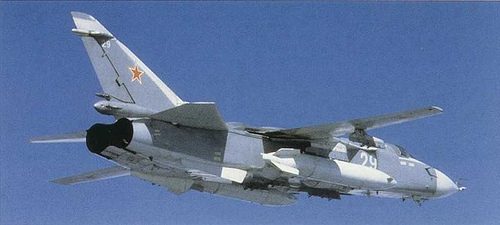
Su-24 fighter bomber, Sept. 26, 2009

NATOSource

Oct 16, 2015

Russia’s Low-Tech Bombing Campaign in Syria Prone to Inflict More Collateral Damage

By Paul McLeary, Foreign Policy

[T]he majority of Russian strikes [in Syria] have used older “dumb” bombs that can’t actually be guided to their intended targets — and are not guaranteed to come anywhere close to hitting them.

Russia Syria