Atlantic Council blogs

Atlantic Council blogs provide short-form analyses from Council experts and a wider community of global voices on the world’s most important news stories.
View all
of our blogs
Subscribe to our
newsletters

Latest from across our blogs

NATOSource

Jul 30, 2012

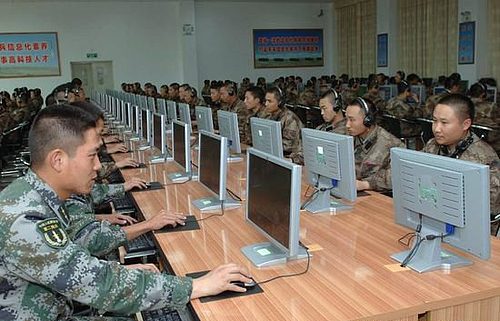
Cyber investigators expose details of ‘vast hacking industry in China’

By Michael Riley and Dune Lawrence, Bloomberg

Cybersecurity Security & Defense

MENASource

Jul 30, 2012

Morsi Fulfills His First Election Promise, but Fails to Impress

By Nancy Messieh

As Egyptians have kept a watchful eye on President Mohamed Morsi’s first 30 days in office, this past weekend, he was finally able to cross one item off the election promise checklist. Turning an eye on Egypt’s garbage problem, Morsi’s project has been quite reminiscent of a clean-up initiative that took place in February, 2011. […]

NATOSource

Jul 30, 2012

Hackers steal emails from Van Rompuy and 10 other senior EU officials

By Andrew Rettman, the EUobserver

From Andrew Rettman, the EUobserver:  Hackers last summer raided the emails of EU Council chief Herman Van Rompuy and 10 other senior officials.

Cybersecurity European Union

MENASource

Jul 30, 2012

Is Egypt’s Constitution Here to Stay?

By Daniel Tavana

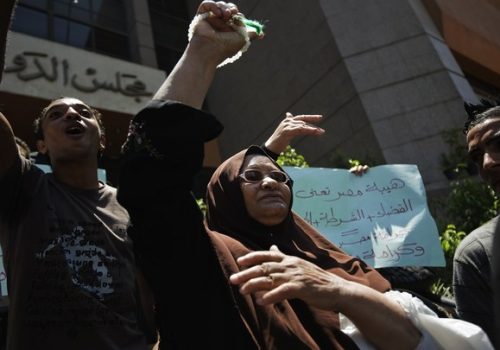
Earlier this afternoon, the Administrative Court postponed judgment on a recusal request made by Muslim Brotherhood lawyers in a case considering the dissolution of the Constituent Assembly. The postponement, which will now be heard on September 24, could significantly alter the trajectory of Egypt’s transition. After the first Assembly was dissolved in April, many thought […]

New Atlanticist

Jul 30, 2012

Cyber Offense is King

By Jorge Benitez and Jason Healey

Every single computer in the world can be hacked. From your personal computer at home to the office workstation of the CIA director, it is not possible to fully protect any computer from cyber penetration. For all the talk about cyber protection and the billions of dollars being spent ($3.2 billion in 2012 for the Pentagon […]

Cybersecurity Security & Defense

NATOSource

Jul 30, 2012

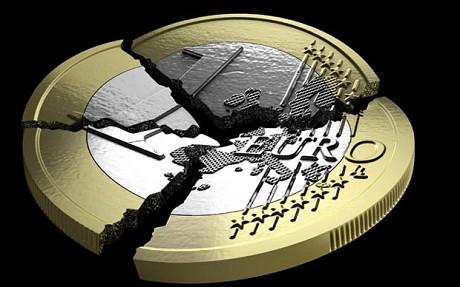
The Strategic Consequences Of The Euro-Crisis: Cracks In NATO, New Euro Map

By Harald Malmgren and Robbin Laird, AOL Defense

From Harald Malmgren and Robbin Laird, AOL Defense:  Europe is essentially on its own in a fundamental sense as the key nations of Europe seek to sort through the disaggregation of the Euro zone, and the shaping of a new political and economic map of Europe.

Economy & Business Energy & Environment

MENASource

Jul 30, 2012

Top News: Egypt’s Court Adjourns Ruling on Constitution-Drafting Assembly

By Egypt Source

Egypt’s Supreme Administrative Court (SAC) decided Monday to postpone the court ruling over a petition filed by Muslim Brotherhood lawyers to 24 September. The petition calls for the recusal of the judges expected to rule on the validity of the second Constituent Assembly, to 24 September.

New Atlanticist

Jul 30, 2012

China’s New City: Is this Beijing’s Pivot?

By Robert Manning

It’s not relocating aircraft carriers to the Pacific or stationing 2500 marines in Australia but China’s provocative establishment of a new city, Sansha, in the disputed Paracels chain takes the geopolitical drama in the South China Sea to a new stage. This escalating assertiveness may have a larger strategic importance as part of Beijing’s response to […]

China

NATOSource

Jul 30, 2012

Secret Turkish nerve center leads aid to Syria rebels

By Regan Doherty and Amena Bakr, Reuters

From Regan Doherty and Amena Bakr, Reuters:  Turkey has set up a secret base with allies Saudi Arabia and Qatar to direct vital military and communications aid to Syria’s rebels from a city near the border, Gulf sources have told Reuters.

NATOSource

Jul 30, 2012

NATO Should Improve Relations with Its Southern Neighbors

By Luke Coffey, the Heritage Foundation

From Luke Coffey, the Heritage Foundation:  To the south of Europe, from the eastern Atlantic Ocean to the Middle East, is a region experiencing increasing instability from demographic pressures, increased commodity prices, interstate and intrastate conflict, piracy, tribal politics, competition over water and other natural resources, religious tension, revolutionary tendencies, terrorism, and nuclear proliferation.