

Featured analysis

Latest analysis

EconoGraphics

Apr 1, 2020

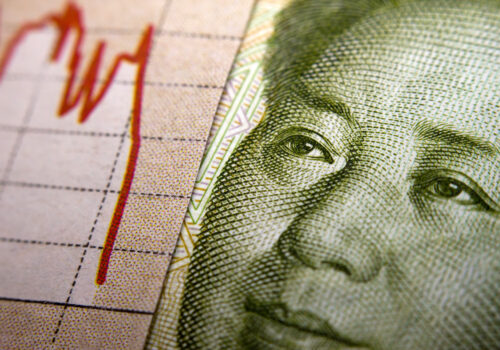
Coronavirus versus financial crisis: US policy responses compared

By Ole Moehr | Graphics by Nikolai Albishausen

A look at the economic harm done so far and contrasts the measures taken by the Federal Reserve (Fed), Congress, and the G20 in response to coronavirus.

Economy & Business
Macroeconomics

EconoGraphics

Aug 28, 2019

US-EU Auto Tariffs: What’s at Stake?

By OLE MOEHR | GRAPHICS BY MARIANNA ASLUND, NICK BROWN, ANDREW LASCALEIA

Escalating trade tensions between the world’s major economies are widely considered the greatest threat to the global economy’s health. Following the White House’s cancellation of its threatened tariffs on all Mexican imports on June 7, attention swiftly turned back to the brewing US-China trade war. This edition of the EconoGraphic, however, puts the focus on how US tariffs on cars and car parts might disrupt transatlantic trade flow.

Economy & Business
European Union

EconoGraphics

Aug 9, 2019

Breaking Down France’s Digital Tax

By BY ANDREW LASCALEIA, EDITED BY OLE MOEHR | GRAPHICS BY MARIANNA ASLUND AND ANDREW LASCALEIA

In July, France’s parliament ratified a new law to tax big digital tech firms making it the first country to pass a tax law of this manner. Paris’ new tax scheme triggered criticism from the Trump Administration and is further complicating the transatlantic relationship. This edition of the EconoGraphic explains the motivation behind taxing digital technology firms more aggressively, the way that the French tax will work, and the potential impacts and response to the tax.

Economy & Business
Financial Regulation

EconoGraphics

Jul 23, 2019

My Way or the Huawei: 5G at the Center of US-China Strategic Competition

By OLE MOEHR | GRAPHICS BY MARIANNA ASLUND, NICK BROWN, ANDREW LASCALEIA

On July 22, President Trump met with a group of major tech CEOs to discuss the easing of some restrictions on US companies supplying high-tech parts to Chinese telecommunications company Huawei. In May, the US Commerce Department banned US companies from selling any products to Huawei. The Chinese company’s position as the world’s leading provider of 5G technology has made it a focal point of the escalating great power competition between China and the United States. This edition of the EconoGraphic explains the US government’s move to blacklist Huawei, outlines the ban’s potential costs, and describes why US allies are conflicted about banning Huawei.

China
Economy & Business

EconoGraphics

Jun 3, 2019

US Cuba policy: EU and Canadian firms to suffer?

By BY OLE MOEHR | GRAPHICS BY SHIQING HUA, FRANCIS AUBEE, AND NICK BROWN

On April 17 2019, US Secretary of State Michael Pompeo announced an important change in the United States’ policy toward Cuba: Title III of the Cuban Liberty and Democracy Solidarity Act of 1996 (LIBERTAD Act) would no longer be suspended. As a result of this decision, US claimants can now seek compensation for property confiscated by the Castro government. The move has important implications for US and foreign companies doing business in Cuba. This edition of the EconoGraphic explains the history and purpose of the LIBERTAD Act, evaluates the policy’s potential impact on US allies’ economic interests in Cuba, and highlights its implications for the pressure campaign against the Maduro regime in Venezuela.

Cuba
Economy & Business

EconoGraphics

Apr 29, 2019

Central Bank Independence Under Scrutiny

By Ole Moehr | Graphics by Shiqing Hua and Francis Aubee

On April 26, following stronger than expected US economic growth numbers, the White House’s National Economic Council director, Larry Kudlow, urged the Federal Reserve (Fed) to cut interest rates by 50 basis points.

Economy & Business
Financial Regulation

EconoGraphics

Feb 6, 2019

A Breakdown of the Sanctions Deal between the United States and Oleg Deripaska

By Ole Moehr | Graphics by Shiqing Hua and Zachary Coles

On January 16, a US Senate resolution to maintain US sanctions on the Russian aluminum giant RUSAL and its holding company EN+ failed to garner the necessary 60 votes to pass. As a result, the Trump administration lifted its economic sanctions on RUSAL and EN+ on January 27.

Economy & Business
Financial Sanctions and Economic Coercion

Blogs

Dec 21, 2018

Economic Outlook for 2019

By Global Business & Economics Program

December 2018 is set to become the worst year-end finish for US markets since 1931. A yield curve inversion combined with the fourth annual rate hike by the US Federal Reserve (Fed) and growing geo-political uncertainty, triggered widespread angst among US investors about an economic slowdown and the increasing probability of a recession. This edition of the EconoGraphic assesses key economic indicators to make a case that while a slowing of the US economy seems certain, a recession in the next two years remains unlikely.

China
Economy & Business

EconoGraphics

Dec 5, 2018

Trade Disrupted: US and China Need More Than a Truce

By Ole Moehr

At this year’s G20 summit in Buenos Aires, the trade dispute between China and the United States took center stage. Chinese President Xi and his US counterpart President Donald Trump agreed to avoid further escalations of the ongoing bilateral trade war for the next 90 days. The temporary deal does not assuage the escalatory measures already taken, leaving the existing tariffs in place. This edition of the EconoGraphic explores how the brewing trade conflict is impacting manufacturing supply chains, soybean cargo routes, and trade flows of liquefied petroleum gas (LPG) among the United States, China, and the rest of the world.

China
Economy & Business

EconoGraphics

Oct 30, 2018

SWIFTly Disconnecting Iran

By Ole Moehr

With the snapback of significant US sanctions against Iran fast approaching on November 5th, speculation is mounting over how the Trump Administration will enforce the sanctions, and how its European allies might attempt to bypass them. The previous EconoGraphic outlined how a Special Purpose Vehicle (SPV) may facilitate trade between European small and medium-sized enterprises (SMEs) and Iran after US sanctions go back into effect. This edition of the EconoGraphic provides a primer on the Society for Worldwide Interbank Financial Telecommunication (SWIFT) and explains why sanctioning the financial messaging service would likely cause more harm than good.

Economy & Business
Financial Sanctions and Economic Coercion

Content

EconoGraphics

Jun 16, 2015

Does ISDS Tip the Scales in Favor of Investors?

By Global Business and Economics

Looking at over 400 cases that have been decided through 2014, the rate of success for US and EU investors is 30% and 34%, respectively. Foreign states win against US claimants 42% of the time, and 36% of the time against EU-based firms, with the remainder being settled.

Economy & Business
European Union

EconoGraphics

Jun 9, 2015

Where Do Trillion-Dollar Asset Managers Hail From?

By Global Business and Economics

Of the 16 investment firms in the world that hold more than $1 trillion in assets, the US leads with 12 representatives, including well-known firms like BlackRock, Vanguard Group, and the asset management arms of Goldman Sachs and Bank of New York Mellon.

Economy & Business
France

EconoGraphics

Jun 2, 2015

How big is the opportunity to increase US exports in the Transpacific Partnership?

By Global Business & Economics

Data from 2014 shows that while American exports to the 11 other TPP nations totaled more than half a trillion dollars in absolute terms, there remains considerable room for improvement in relative terms

Americas
Australia

EconoGraphics

May 26, 2015

Who Will Finance Ukraine?

By Global Business & Economics Program

Ukraine's economic stability is uncertain as the conflict with Russia endures. Alongside the negative impacts to growth, exports, and investment, the level of Ukraine's debts are especially worrisome.

Economy & Business
Europe & Eurasia

EconoGraphics

May 20, 2015

Who’s Buying European Companies?

By Global Business & Economics

Who is purchasing European companies? Looking at the five biggest foreign acquisitions of European corporates since 2011 shows that the US are the biggest buyers by a considerable margin, with the China, Hong Kong, Brazil, and Japan following behind.

Brazil
China

EconoGraphics

May 12, 2015

Two Decades of Sovereign Debt

By Global Business & Economics

Sovereign default is considered to be a rare event. But as the lessons of the past two decades show, they are far from extraordinary. According to the IMF, the main sovereign debt restructurings from the period spanning 1998 – 2010 totaled $117.6 billion. When Greece’s 2012 default is added to that sum, it means that […]

Economy & Business
Fiscal and Structural Reform

EconoGraphics

May 5, 2015

Creating the Digital Single Market

By Global Business & Economics Program

European E-Commerce is still largely confined within national borders.

Economy & Business
Europe & Eurasia

EconoGraphics

Apr 28, 2015

Do Sanctions Work After All?

By Global Business & Economics

International Relations scholars disagree about whether economic sanctions are an effective tool to coerce countries to follow a certain course of action.

Economy & Business
Europe & Eurasia

EconoGraphics

Apr 21, 2015

Exit, or Voice?

By Global Business & Economics

In March, the UK, Germany, Italy, and France decided to join the China-led Asian Infrastructure Investment Bank (AIIB), shocking the Obama administration.

Brazil
China

EconoGraphics

Apr 14, 2015

Who is Investing Abroad?

By Global Business & Economics

While the US still leads the world in outflowing Foreign Direct Investment (FDI), the emerging markets are catching up quickly. Chinese outflowing FDI, in particular has grown tremendously: since 2005, it increased more than 30-fold in 8 years from $5 billion to $166 billion. While initial Chinese foreign investments focused on natural resource industries, over time the investments have spread to diverse industries like agriculture, manufacturing, and professional services. BRIC FDIs are emerging as key growth drivers for low income countries, improving their business environment, building infrastructure, creating jobs, and adding much-needed revenue to government coffers.

China
Russia