Content

UkraineAlert

Oct 30, 2019

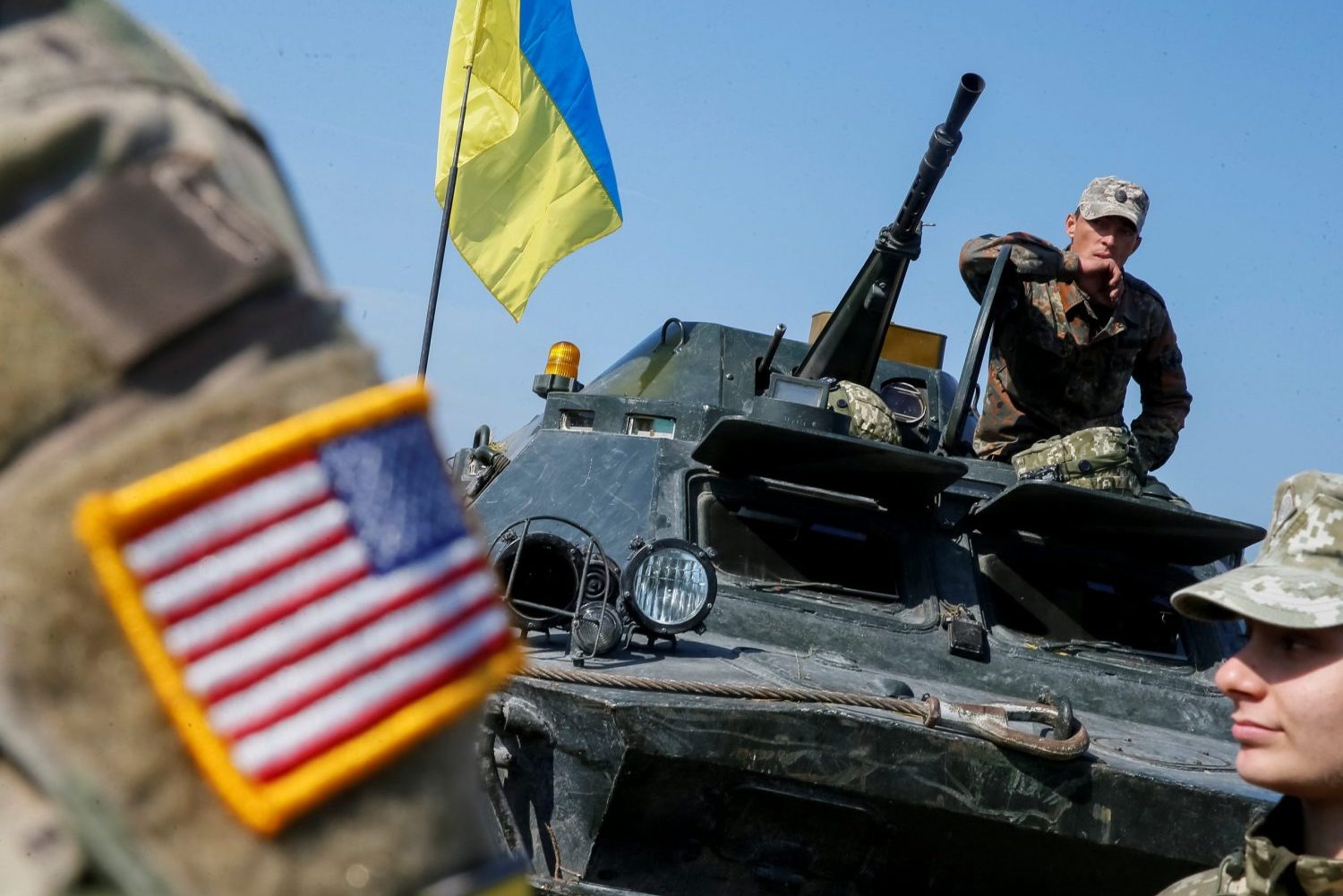
What are Ukrainians willing to compromise for peace?

By Maria Zolkina

A strong demand for peace and the direct impact of the conflict do not make those who live in the government-controlled areas of the Donbas sympathetic to the most painful compromises.

Civil Society Conflict

New Atlanticist

Oct 30, 2019

By blocking enlargement decision, Macron undercuts France’s Balkan goals

By Loic Tregoures

By strongly supporting the government of North Macedonia from the start and granting it the opening of negotiations, it would have been possible to create a virtuous circle in the region and kill four birds with one stone. President Macron chose to do exactly the opposite.

European Union France

New Atlanticist

Oct 29, 2019

A most peculiar general election

By John M. Roberts

Perhaps the most important question of all, as current polling suggests, is whether voter support for Brexit or determination to see the UK remaining within the European Union proves more important than traditional party allegiance.

Elections European Union

MENASource

Oct 29, 2019

NATO countries should help Egypt mitigate security challenge near Libyan border

By Amal Kandeel

Egypt is facing multiple security challenges for which a military solution is deficient. A complex interplay between internal and external challenges, as well as human and security challenges, is evident in western Egypt and within the area bordering Libya. The mix of harsh climatic conditions, inhospitable terrain, and lagging economic development, on one hand, and […]

Libya Middle East

UkraineAlert

Oct 29, 2019

This should be Zelenskyy’s next big push

By Sergii Bondarchuk

Ukraine now has a chance to take the radical steps needed to re-build the SBU and establish a genuine security service under firm democratic control.

Corruption Democratic Transitions

Conflict, Risk, and Tech

Oct 28, 2019

The zero-day war? How cyber is reshaping the future of the most combustible conflicts

By Simon Handler

Conventional wisdom would suggest that scaled-up capabilities, growing competition, and the proliferation of malware across cyberspace presents a legitimate risk of escalation in state conflict, transcending the cyber domain toward the kinetic. However, recent history has shown that states have more often availed themselves of their offensive cyber arsenals to achieve surprisingly de-escalatory effects.

Cybersecurity Iran

UkraineAlert

Oct 28, 2019

Assessing Zelenskyy’s first six months

By Oleksiy Goncharenko

In general, it seems that Zelenskyy believes all complex issues have simple solutions.

Democratic Transitions Political Reform

MENASource

Oct 28, 2019

A highway linking Iraq and Syria becomes an opportunity for Tehran

By Caroline Rose

In the past month, the sands have shifted within the Levant’s political landscape. The United States has recalibrated its official policy in the region, choosing to draw down its special operations forces in northern Syria and thereby introducing a power vacuum in the region. After an offensive and brief ceasefire in northern Syria, Moscow and Ankara […]

Iran Iraq

New Atlanticist

Oct 28, 2019

Five takeaways from the death of Abu Bakr al-Baghdadi

By William F. Wechsler

This is a serious but not fatal blow to the Islamic State, and the generational conflict against Salafi jihadist organizations is far from over. The Islamic State's center of gravity will increasingly be its narrative pull rather than its claim to represent a governing caliphate.

Conflict Extremism

MENASource

Oct 25, 2019

What do the new protests in Iraq mean?

By MENASource

Protests intensified in Iraq on Friday, as Iraqi security forces fired tear gas and rubber bullets into the crowd to disperse thousands of demonstrators.

Corruption Iraq