Insights and impact
About the Council
The Atlantic Council promotes constructive leadership and engagement in international affairs based on the Atlantic Community’s central role in meeting global challenges. The Council provides an essential forum for navigating the dramatic economic and political changes defining the twenty-first century by informing and galvanizing its uniquely influential network of global leaders. Through the papers we write, the ideas we generate, and the communities we build, the Council shapes policy choices and strategies to create a more secure and prosperous world.
Featured content
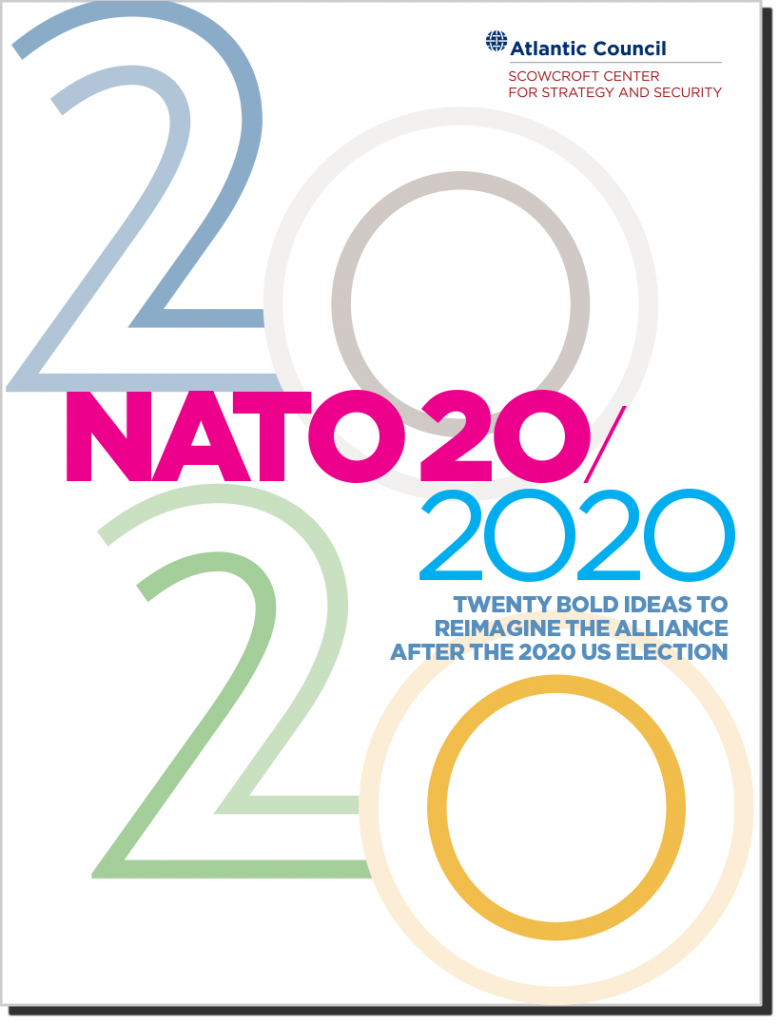
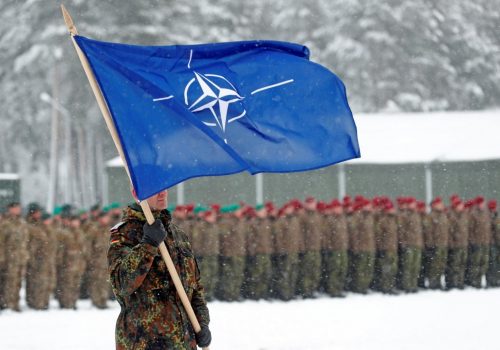
NATO 20/2020
Twenty bold ideas to reimagine the Alliance after the 2020 US election
More than two decades after NATO’s inspired decision to invite former adversaries to join its ranks, the Alliance is in need of equally captivating ideas. The essays in this volume are intended to push the Alliance to think boldly and creatively in the service of recapturing the public’s imagination.
Explore the podcast series
Making a difference
Learn more about the Atlantic Council’s insights & impact through these stories of how our regional and thematic programs are making a difference not only in shaping how we view global issues but also in shaping their outcome.
In the News
Dec 17, 2020
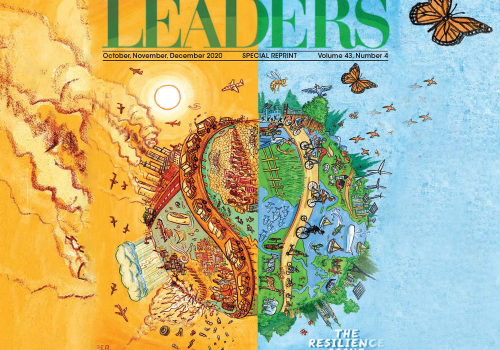
The Adrienne Arsht-Rockefeller Foundation Resilience Center partners with LEADERS Magazine to dedicate an entire issue to resilience
For its Fall/Winter issue of 2020, LEADERS Magazine, asked the Adrienne Arsht-Rockefeller Foundation Resilience Center to produce an issue dedicated to resilience. The Resilience Issue assembles a broad range of global thought leaders and experts who are currently tackling the challenges and crises facing the world from different perspectives.
Insights & Impact
Mar 3, 2020
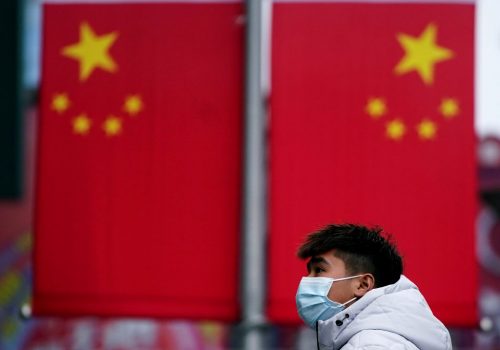
Peering Around the Corner: The Geopolitics of Coronavirus
By
Atlantic Council
On February 11, 2020 the DFRLab hosted "Peering Around the Corner: The Geopolitics of Coronavirus," a timely series of panels on the potential geopolitical and economic consequences of Coronavirus, and how misinformation about the crisis may influence its impact.
Program Impact Story
Feb 6, 2020
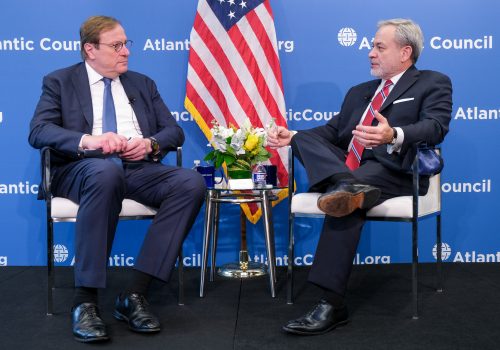
US energy priorities abroad: A conversation with US Secretary of Energy Dan Brouillette
By
Global Energy Center
On Friday, February 7, 2020, the Atlantic Council hosted newly appointed US Secretary of Energy Dan Brouillette for a public address and moderated discussion about US government energy priorities abroad.
Latest commentary and analysis
UkraineAlert
Jun 25, 2026
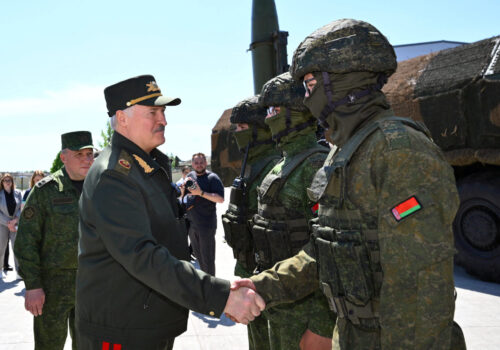
Belarus is quietly preparing to play a larger role in Russia’s Ukraine war
By
Hanna Liubakova
Belarus dictator Alyaksandr Lukashenka is not enthusiastic about the prospect of joining Russia’s Ukraine invasion, but he appears to be steadily building up his country’s military capacity in case he finds himself pushed more directly into the war, writes Hanna Liubakova.

UkraineAlert
Jun 25, 2026
The West can learn from Ukraine’s AI future vision beyond the battlefield
By
Andrew D’Anieri
The US and Europe are already looking to Ukraine for the next generation of defense technologies. As Western countries debate their own AI strategies, they would likewise do well to examine Ukraine as a similar starting point for further innovation, writes Andrew D’Anieri.

AfricaSource
Jun 24, 2026
Governments are still underestimating the power of sports
By
Rama Yade
Governments should harness the power of sports for their economic development strategies.
Latest in-depth research and reports

Issue Brief
Jun 24, 2026
Harmonizing USMCA: Enhancing customs to facilitate US-Mexico competitiveness
By
the Binational Task Force on Economic Security and Competitiveness
With the 2026 USMCA review underway, negotiating authorities should focus on strengthening the mechanisms that promote trade facilitation: customs.
Issue Brief
Jun 24, 2026
Perspectives from the 2026 CEO Dialogue
By
Nour Dabboussi, Joze Pelayo, Manal Fatima, David Maloney, Khalid Azim
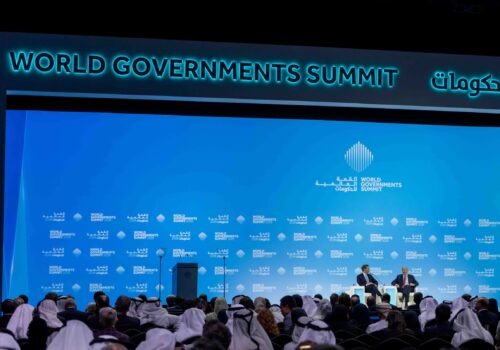
The Atlantic Council’s MENA Futures Lab hosted a group of more than thirty business leaders, academics, analysts from international organizations, and policymakers for the CEO Dialogue in the lead up to the World Governments Summit in Dubai. The insights shared there reflect trends in AI, supply chain resilience, and more.
Report
Jun 23, 2026
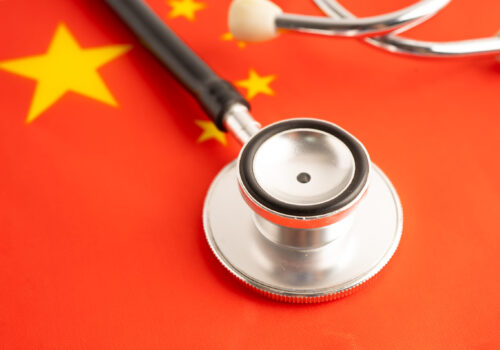
Balancing openness and control: Cross-border health data and AI governance in China
By
Kenton Thibaut
In China, health data is no longer just a medical resource—it is a strategic asset at the center of AI competition.