Energy Transitions

The global energy mix is experiencing profound change, with equally profound geopolitical and market challenges and opportunities on the horizon. Policy makers and business leaders will need to develop strategies to navigate the changing global energy landscape, addressing both the challenges and opportunities the energy transition is providing.

Recent analysis

Programs

The Global Energy Center develops and promotes pragmatic and nonpartisan policy solutions designed to advance global energy security, enhance economic opportunity, and accelerate pathways to net-zero emissions.

Events

Global Energy Forum

Jan 11, 2020

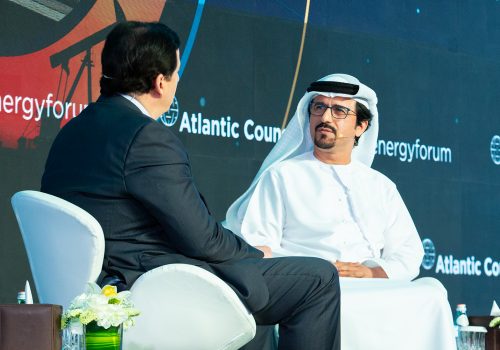
The role of the oil and gas industry in the energy transition

By Atlantic Council

Atlantic Council 2020 Global Energy Forum The Role of the Oil and Gas Industry in the Energy Transition Conversation With: Musabbeh Al-Kaabi, Chief Executive Officer, Petroleum and Petrochemicals, Mubadala Investment Company Panel Discussion: Dr. Barbara Burger, President, Technology Ventures, Chevron Corporation Anatol Feygin, Executive Vice President and Chief Commercial Officer, Cheniere Energy Inc. Dr. Robert […]

Energy Markets & Governance Energy Transitions

Global Energy Forum

Jan 11, 2020

How can oil and gas companies contribute to the energy transition?

By David A. Wemer

“There is no thing that is a magic solution” to climate change, according to Musabbeh Al-Kaabi, chief executive officer for petroleum and petrochemicals at the Mubadala Investment Company, but oil and gas companies are increasingly realizing that “the future outlook for energy consumption will require different sources of energy.”

Climate Change & Climate Action Energy Markets & Governance

Global Energy Forum

Jan 11, 2020

Climate commitments needed to head off threats of volatility and instability

By Adal Mirza

A widening gap between perceptions and reality of the global energy markets could increase volatility as governments, policy makers, and industries struggle to tackle climate change, according to Fatih Birol, the executive director of the International Energy Agency.

Climate Change & Climate Action Energy Markets & Governance

Content

Report

Aug 2, 2021

The energy transition in the Arab Gulf: From vision to reality

By Dr. Jean-François Seznec; Samer Mosis

The United Arab Emirates and Kingdom of Saudi Arabia have emerged as leaders in the Arab Gulf's energy transition. But even as the two countries work to decarbonize their economies, challenges remain.

Energy & Environment Energy Transitions

EnergySource

Jul 28, 2021

These military veterans are solving our energy and climate problems, one idea at a time

By Veterans Advanced Energy Fellows, Cohort 2

A series of policy papers focusing a host of topics from Just Transition policy in Colorado, to hydrokinetic energy in rural areas, to port decarbonization strategies, all written by the Atlantic Council's Veterans Advanced Energy Fellows.

Energy & Environment Energy Transitions

EnergySource

Jul 22, 2021

Expanding nuclear energy to the Arctic: The potential of small modular reactors

By Julia Nesheiwat

As Arctic communities look to reduce reliance on diesel generators for electricity production, small modular reactors are becoming an increasingly attractive option. Collaboration between governments, private companies, and civil society organizations is crucial to ensure the successful development and deployment of safe, transportable, microreactors for remote areas.

Energy & Environment Energy Transitions

EnergySource

Jul 21, 2021

Bitcoin mining: Digital money printing with real world footprints?

By Julia Nesheiwat

As interest in cryptocurrency surges and scrutiny over energy usage intensifies, new policies and market mechanisms to improve ESG standards and use clean energy for bitcoin mining have become increasingly important.

Central Europe Digital Currencies

In-Depth Research & Reports

Jul 21, 2021

Brief 3: Hydrogen transportation and storage

By Cynthia Quarterman

This third brief in the Atlantic Council’s hydrogen policy sprint discusses pathways for hydrogen transportation and storage infrastructure development in the United States.

Energy Markets & Governance Energy Transitions

EnergySource

Jul 17, 2021

Hydrogen: Australia’s new liquefied natural gas

By Mary-Rose de Valladares

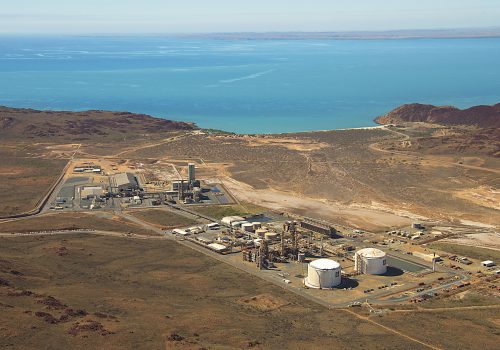
Australia aims to be a leading producer and exporter of green hydrogen by 2030. It is already the world’s largest exporter of coal and the second largest exporter of liquefied natural gas (LNG). In response to climate change, Australia is emulating its own LNG export success in order to position itself for a new role as a major hydrogen producer and exporter.

Australia Energy & Environment

EnergySource

Jul 15, 2021

Fit for 55: Reshaping global climate leadership and transatlantic cooperation

By The Global Energy Center

Global Energy Experts analyze the impact and highlights from the newly released European Union "Fit for 55" climate action package.

Energy & Environment Energy Transitions

AC Selects

Jul 11, 2021

AC Selects: The carbon economy: impacts and solutions

Week of July 11, 2021 This week, the Global Energy Center dives into the carbon economy’s impact on spatial inequality, and how net-zero emissions goals are being targeted. Related events

Energy & Environment Energy Transitions

TURKEYSource

Jul 1, 2021

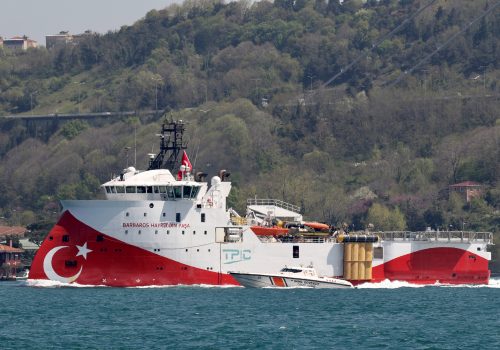
Can energy be the key to Turkish-US relations in the Biden era?

By Eser Özdil

In spite of ups and downs in the political relationship, the United States and Turkey have always shared mutual interests on energy including through the Southern Gas Corridor and emerging LNG trade. Shared priorities on developing renewables and cooperation to strengthen the energy security of Eastern Europe are now emerging areas of cooperation.

Climate Change & Climate Action Economy & Business

EnergySource

Jun 28, 2021

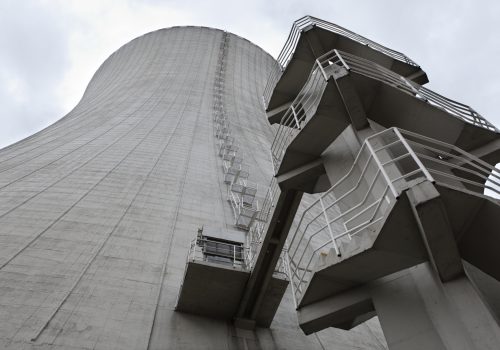
Climate change, energy security, and international nuclear energy: Competition in the Czech Republic

By Robert F. Ichord, Jr.

Recent reports of Russian intelligence operations in the Czech Republic in 2014 have escalated tensions between the two countries, directly affecting the Czech government's plans for the future development of its nuclear sector. In light of this changing dynamic, President Biden should work to support Czech energy security and act to weaken Russia’s position in Central and Eastern European nuclear power markets.

Central Europe Energy & Environment

Experts

Events