Political Reform

As societies around the world look to transition toward more democratic systems of governance, political reforms are often needed to improve decision-making processes, ensure fair representation of social groups, and increase transparency and accountability of government functions. Effective reforms can help make governments more effective, foster stability within societies, and unlock economic potential. Whether initiated by electorates or through the process of accession to multilateral political or economic pacts, political reform measures can be important stepping stones on the road to healthy democratic rule.

Content

New Atlanticist

Mar 26, 2020

EU greenlights North Macedonia and Albania membership talks: Breakthrough or symbolic gesture?

By Jörn Fleck

"The decision by the EU foreign ministers to open accession talks with North Macedonia and Albania comes at a time when Europe is battling a major public health crisis and is bracing for its economic aftershocks," Dimitar Bechev says. "Keeping enlargement alive speaks volumes about the union’s ability to muddle through."

Democratic Transitions European Union

SouthAsiaSource

Mar 23, 2020

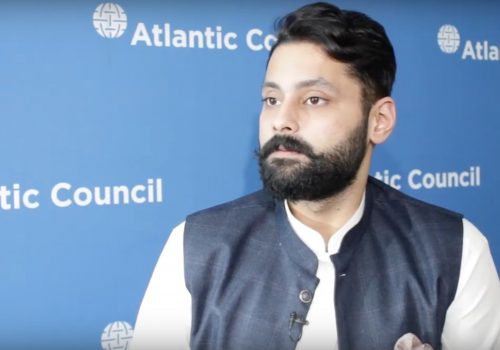
Social Justice and Activism in Pakistan with Jibran Nasir

By South Asia Center

With an exceedingly shrinking space for civil society and an emboldened right-wing, Pakistani Prime Minister Imran Khan’s Naya Pakistan is turning out to be the same-old Pakistan. Pakistani lawyer and civil rights activist Jibran Nasir helps us detangle some of Pakistan’s toughest contexts surrounding the country’s citizen empowerment, legal reforms, and social justice.

Civil Society Elections

In the News

Mar 18, 2020

Haring quoted by Forbes on Ukraine government shakeup

By Atlantic Council

Corruption Economy & Business

New Atlanticist

Mar 17, 2020

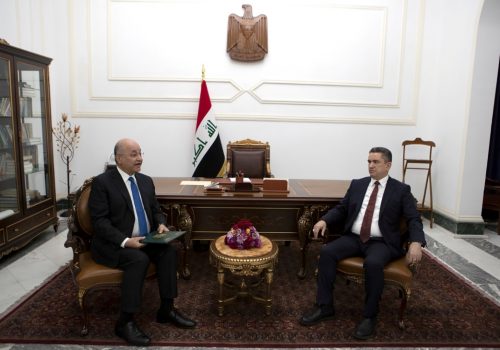
Another prime minister nominee in Iraq: Will this one take?

By Abbas Kadhim

Al-Zurfi's success will depend on the Kurds and the Sunnis, whose opposition destroyed the chances of the previous nominee. For the Kurdish and the Sunni blocs, it is not a matter of whether Al-Zurfi is able to meet the governance challenges, but rather a question of if he will undertake enough political bargaining and ethno-sectarian apportionment of political positions that come with perks. Al-Zurfi will have to calculate how much he can give them to keep a semblance of legitimacy for his government.

Corruption Democratic Transitions

New Atlanticist

Mar 11, 2020

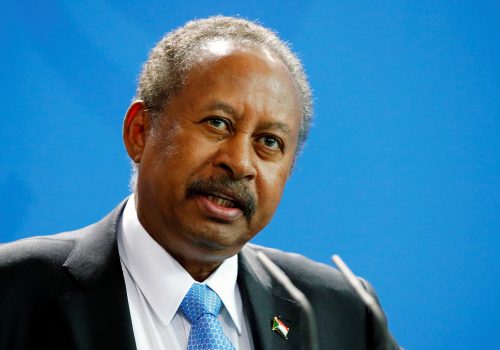
Support civilian leaders in Sudan while we have them

By Cameron Hudson

Rather than serving as a wakeup call to those inside Sudan that the former regime was still a force to be feared, the assassination attempt on Prime Minister Hamdok may have instead put Western nations on notice to support the civilian government while it still can.

Democratic Transitions Political Reform

In the News

Mar 6, 2020

Roberts on the growing discontent of Chinese migrant workers

By Atlantic Council

On March 6, 2020, Dexter Tiff Roberts, nonresident senior fellow at the Asia Security Initiative and a veteran China journalist, published an article on the Wall Street Journal. His article focuses on how China’s experience with COVID-19 has revealed the existing “vulnerability of a pivotal, undervalued part of China’s economy—the hundreds of millions of migrant […]

China Democratic Transitions

In the News

Mar 6, 2020

Haring breaks down Ukrainian government reshuffle on Hromadske

By Atlantic Council

English Political Reform

New Atlanticist

Mar 6, 2020

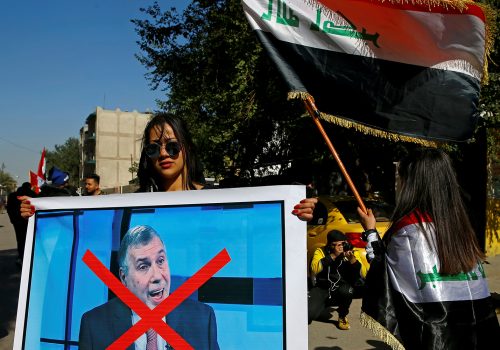
Allawi withdraws PM nomination: Opportunities in Iraq despite the dysfunction

By C. Anthony Pfaff

As dysfunctional as Iraq’s democracy can be, it is still a democracy and even the Iranian-backed political parties have to pay attention to the will of their various constituencies. This point means that an energized protest movement can help bring about conditions more favorable to Iraq’s recovery.

Democratic Transitions Iraq

Diversity, Equity, and Inclusion

Mar 4, 2020

United States Commission on International Religious Freedom Hearing: Citizenship Laws and Religious Freedom

By Atlantic Council

On March 4th, 2020, the United States Commission on International Religious Freedom (USCIRF) held a hearing to discuss how citizenship laws can be used to deny religious minorities rights guaranteed by their citizenship, making them disproportionately vulnerable to exploitation and mass atrocities.

Human Rights India

Feature

Mar 3, 2020

South Asia: The road ahead in 2020

By South Asia Center

South Asia’s economies are powered by an energetic young population eager to embrace 21st century economic opportunities and conscious of their growing centrality to global geopolitical calculations. Whether the governments of South Asia’s countries are capable of delivering on this promise is another question. Each state faces serious policy and governance challenges that must be addressed in 2020

Afghanistan Bangladesh

Experts

Events