Featured Content

Stay Updated


To stay up to date on our insight, analysis, and events covering pressing political, economic, and strategic issues across the region, sign up below.

Geographic priorities
THEMATIC AREAS IN FOCUS
Experts of the Americas Series

Our Experts of the Americas video series brings together thought leaders from countries and industries across the region for in-depth conversations on the most pressing issues. Stay tuned for the next episode!
Stay connected

Content

AlertaVenezuela email banner

#AlertaVenezuela

Dec 3, 2019

#AlertaVenezuela: December 3, 2019

By Atlantic Council's DFRLab

Internet users in Venezuela faced partial and total loss of connectivity on December 1, 2019. The disruption was not caused by censorship, as has happened previously, but by the planned maintenance of an undersea cable. Users from privately owned service providers faced connectivity issues from 9:00 a.m. to 6:00 p.m. (local time), which did not affect the state-provider CANTV, according to NetBlocks, a nonprofit organization that monitors internet accessibility around the world.

Disinformation Venezuela
AlertaVenezuela email banner

#AlertaVenezuela

Nov 26, 2019

#AlertaVenezuela: November 26, 2019

By Atlantic Council's DFRLab

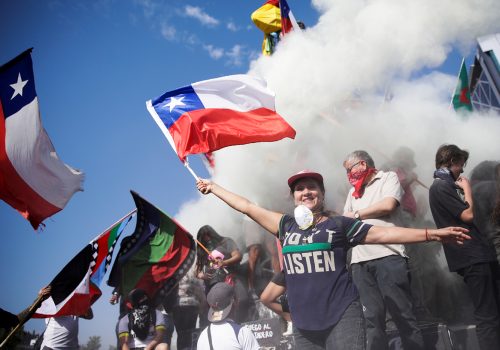
Colombia has become the latest Latin American country to engage in anti-government protests, as citizens took to the streets across the region calling for change: from marches decrying austerity policies in Ecuador and Chile to protests in Bolivia initially based on claims of fraud in the October 20 election and more recently over the perception that President Evo Morales’s resignation was forced (i.e., a “coup”).

Disinformation Venezuela
AlertaVenezuela email banner

#AlertaVenezuela

Nov 19, 2019

#AlertaVenezuela: November 19, 2019

By Atlantic Council's DFRLab

Inspired by recent events in Bolivia, supporters of both Juan Guaidó and Nicolás Maduro took to the streets in parallel, competing marches on Saturday, November 16. Guaidó called for the November 16 march as the first of a permanent series of protests to reach a definitive solution for the crisis. He said the aim was to “achieve what happened in Bolivia and that the Armed Forces and the police side with all Venezuelans.” In response, Maduro called on his supporters to head to the streets. Following Evo Morales removal in Bolivia, Maduro’s supporters added an additional cause into their protest and also marched in solidarity with the ousted Bolivian leader, who they claimed was the victim of a coup.

Disinformation Venezuela

Press Release

Nov 14, 2019

Atlantic Council Launches Adrienne Arsht Latin America Center Advisory Council

By Gerardo Mato

Led by Center Founder Adrienne Arsht and Chaired by HSBC’s Gerardo Mato, the Advisory Council will bring new perspectives and innovative solutions to harness opportunities with Latin America

Economy & Business Latin America
AlertaVenezuela email banner

#AlertaVenezuela

Nov 12, 2019

#AlertaVenezuela: November 12, 2019

By Atlantic Council's DFRLab

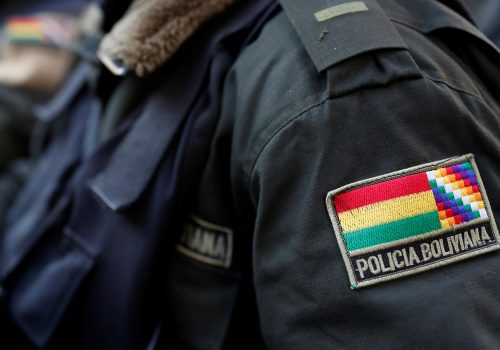
The Maduro regime reacted to the resignation of one of its long-time allies, Bolivia’s Evo Morales, by showing support and denouncing what it referred to as “a coup.” After more than two weeks of protests in the country following claims of fraud in the October 20 election, Morales resigned on November 10. Because the resignation occurred after the heads of the Bolivian armed forces and national police called on Morales to step down, Morales himself as well as Nicolás Maduro and other left-wing world leaders described the event as “a coup.”

Disinformation Venezuela

In the News

Nov 6, 2019

Marczak joins BBC World News to discuss violence in Mexico

By Atlantic Council

Conflict Crisis Management
AlertaVenezuela email banner

#AlertaVenezuela

Nov 5, 2019

#AlertaVenezuela: November 5, 2019

By Atlantic Council's DFRLab

Nicolás Maduro has been accused of being an instigator behind social unrest in Latin American countries, including in Chile and Ecuador. Twitter accounts operating from Venezuela have a history of attempting to influence domestic events in Catalonia and in the United States. The DFRLab analyzed 1.1 million tweets about protests in Chile, posted between October 16 and October 25, 2019, to measure the possibility of involvement of the Maduro regime’s digital militias in the country.

Disinformation Venezuela

New Atlanticist

Nov 1, 2019

Argentina’s election: The international implications of a Fernández government

By Frederico Fróes

Supporters of President Mauricio Macri hope that the new Fernández government will follow a moderate and pragmatic agenda, yet there is no doubt that it will be a departure from the current course, with regional and international repercussions

Argentina Elections
AlertaVenezuela email banner

#AlertaVenezuela

Oct 29, 2019

#AlertaVenezuela: October 29, 2019

By Atlantic Council's DFRLab

On October 24, 2019, the U.S. Department of the Treasury issued an order giving Juan Guaidó’s team three months to "restructure or refinance payments" by suspending the terms of some financial sanctions, which – if implemented – would have foreclosed on Venezuelan-owned Citgo’s oil refineries in Texas and which were originally meant to pressure Nicolás Maduro from office. The move was intended to shield Guaidó, who is recognized as interim President of Venezuela by more than 50 countries as of June 2019, from losing control of Citgo.

Disinformation Venezuela

New Atlanticist

Oct 25, 2019

Transport infrastructure in southern Mexico and Guatemala: A step toward development

By María Fernanda Pérez Arguello & Pablo Reynoso Brito

Transport infrastructure development in Southern Mexico and Guatemala can boost local economic development and reduce migration by creating local economic opportunities for citizens.

Central America Mexico