Latin America Commentary & Analysis

All commentary & analysis

New Atlanticist

Jan 13, 2017

With Migration Policy Change, Obama Leaves Cuba Relationship to Trump

By Ashish Kumar Sen

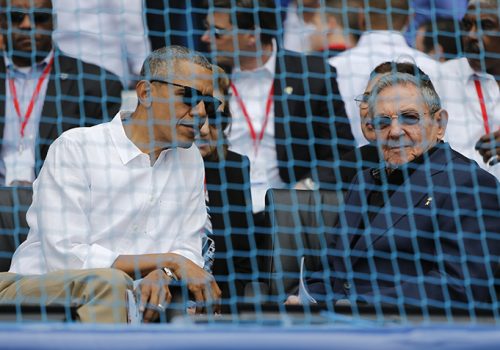
White House ends policy that allowed Cubans reaching US soil to automatically apply for asylum US President Barack Obama’s decision to end the “wet foot, dry foot” policy that allowed any Cuban migrant who reached US soil to stay in the country will slow the number of Cuban immigrants rushing to the United States, but […]

Cuba

New Atlanticist

Dec 22, 2016

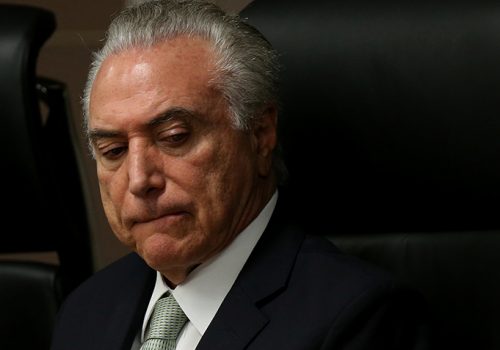
Brazil Braces for Another Tumultuous Year

By Ricardo Sennes

Throughout 2016, Brazilians and foreigners alike kept stating—and hoping—that 2017 would bring more stability, allowing Brazil to reform and grow its economy. But those of us who thought we were heading into calmer waters will have to think again. The new year is gearing up to be another tumultuous one for Brazil, in spite of […]

Brazil

New Atlanticist

Dec 9, 2016

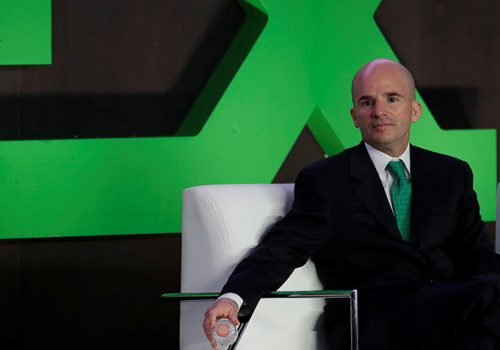
Energy Reform Takes Hold in Mexico

By Lourdes Melgar

Three years after its historic approval, with the conclusion of Round One and the first farm out of Pemex, Mexico’s energy reform in the upstream—the exploration and production sector—is beginning to consolidate itself.  On December 5, for the first time in Mexico’s history, international and national oil companies bid competitively for blocks in the deep […]
Mexico

New Atlanticist

Nov 10, 2016

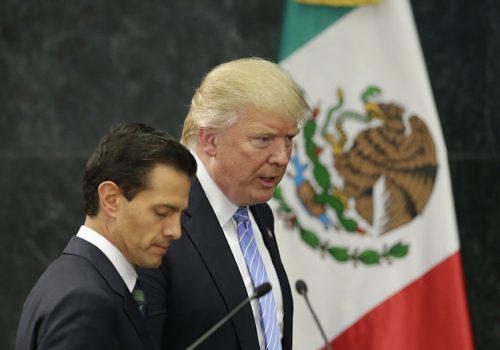
What Will a Trump Administration Mean for Latin America?

Peter Schechter, senior vice president for strategic initiatives and director, Adrienne Arsht Latin America Center Important progress was made during the Obama administration to advance US interests in the Western Hemisphere. First impressions are frequently wrong. But Donald Trump’s rhetoric targeting Hispanics—specifically Mexicans—throughout the campaign raises concerns that progress could be halted.

Latin America

New Atlanticist

Oct 24, 2016

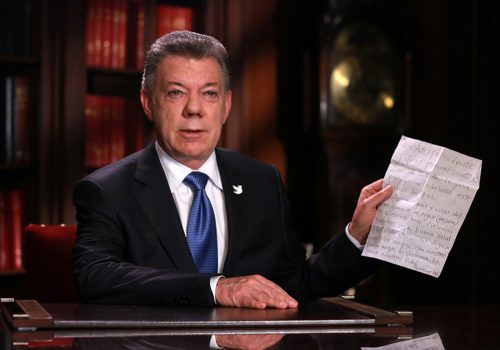
Pushing for Peace in Colombia

By Ashish Kumar Sen

US Ambassador to Colombia, Kevin Whitaker, cites need to move quickly on achieving an accord acceptable to all sides Two ground realities in Colombia—former guerrillas gathered in remote rural cantonments with scarce infrastructure and nationwide elections in the spring of 2018—make it imperative that a peace agreement that is acceptable to all sides is quickly […]

Colombia

New Atlanticist

Oct 5, 2016

Colombia’s Peace Plebiscite: A Divided Nation

By Andrea Saldarriaga Jiménez

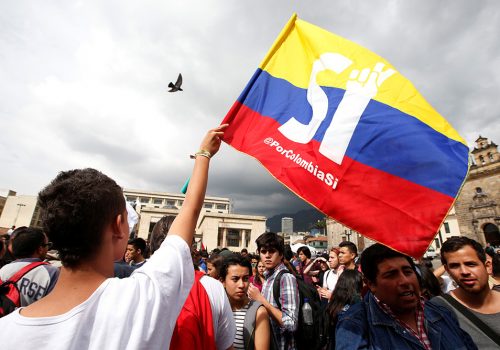
On October 2, Colombians rejected the peace agreement brokered between the government and the Revolutionary Armed Forces of Colombia (FARC). The “no” vote won the plebiscite by less than 0.5 percent of the vote with only 37 percent of voter participation. The world is shocked and Colombians astonished. Polls leading up to the plebiscite had […]

Colombia

Event Recap

Oct 4, 2016

Colombia Votes No to Peace: What Happens Now?

By Mae Louise Flato

On October 2, Colombian electoral officials announced the surprise victory of the ‘No’ vote in the national referendum to approve the peace agreement between the government and the Revolutionary Armed Forces of Colombia (FARC).

Colombia

New Atlanticist

Oct 3, 2016

Plebiscite Leaves Colombia’s Peace Process in Limbo

By Ashish Kumar Sen

On October 2, Colombian voters rejected a peace accord with the Revolutionary Armed Forces of Colombia (FARC) guerrillas. This was a “surprising” outcome of a plebiscite that has thrown into question the prospects for peace in the country, according to Atlantic Council analysts. “One could argue that it both complicates and eases this problem,” said […]

Colombia

Video

Oct 3, 2016

#ACexplainer: Atlantic Council Colombia Experts Respond to Peace Deal Vote

Colombia

New Atlanticist

Sep 26, 2016

The Presidential Debates: Here’s What We Would Like to Know

By Ashish Kumar Sen

Democratic presidential nominee Hillary Clinton and her Republican challenger, Donald Trump, took part in their first presidential debate in New York on September 26. The debate was the first of three. Here are some questions the Atlantic Council’s experts would like to pose to the candidates.

Colombia Russia