Middle East Programs Commentary & Analysis

Our blogs feature thoughtful reflections and opinions on current events in the Middle East & North Africa.

Through our Middle East Programs, the Atlantic Council works with allies and partners in Europe and the wider Middle East to protect US interests, build peace and security, and unlock the human potential of the region.
Meet our blogs

All commentary & analysis

SyriaSource

Mar 13, 2019

The horrors inflicted on Idlib: ongoing ceasefire violations

By Trevor Mace

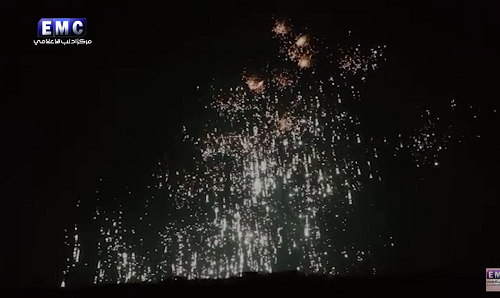
The de-escalation zone in Syria encompassing Northern Hama and Idlib Provinces is witnessing ongoing and large-scale cease-fire violations by multiple parties. Recent escalations last night showed the first use of incendiary phosphorous attacks—a flammable chemical weapon—in almost a year and targeting the towns of al-Tamanah, Sarmin, and Khan Sheikhoun all located Idlib countryside; which several reports indicate through the use of Russian warplanes.

Syria

SyriaSource

Mar 12, 2019

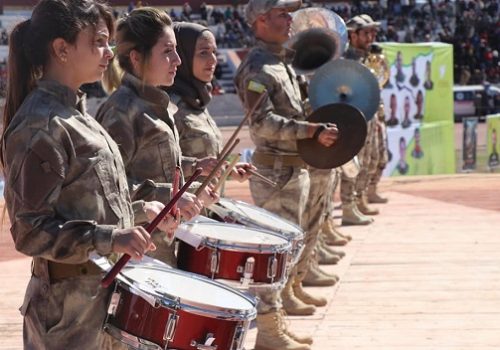
Tokenism or empowerment? Syrian women and the SDF

By Feras Hanoush

Although Raqqa and the areas east of the Euphrates were liberated from ISIS in 2017—by the US coalition and allied forces, the Syrian Democratic Forces (SDF), which now controls the area—it cannot be said that women’s circumstances in these areas improved significantly. Women now face oppression and challenges in different ways, but they are also able to take on new roles.

Arabic Syria

SyriaSource

Mar 11, 2019

Syria and its armed rebellion, eight years on

By Burhan Nassir

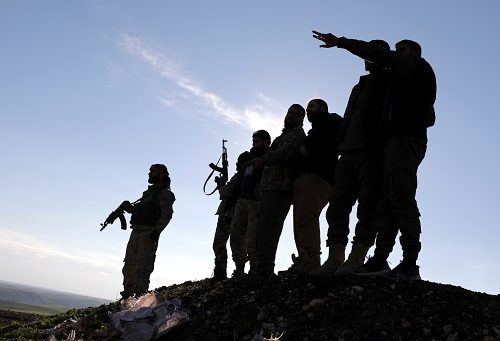
Eight years of constant war have brought pain and destruction to the Syrian people and their country. What these years have also brought is a chaotic kaleidoscope of armed opposition groups (AOGs) fighting against the regime of Syrian President Bashar al-Assad. With various forms of foreign fighters, agenda-ascribed funding, and rising religious and ethnic extremism; almost all of the […]

Syria

SyriaSource

Mar 7, 2019

Eight years

By Frederic C. Hof

Eight years ago, a very quiet American peace mediation between Syria and Israel was showing promise. Territorial disputes long dividing the parties were being resolved. Security issues key to a genuine peace were being tackled. The fact that months of shuttle diplomacy had not leaked suggested the parties were serious. Had the mediation continued, both Israeli Prime Minister Benjamin Netanyahu and Syrian President Bashar al-Assad would likely have faced a choice by year’s end: inform their respective citizenries that mutually agreed terms of peace had been arrived at; or scuttle everything. Alas, we will never know what those choices would have been.

Syria

IranSource

Mar 7, 2019

UK’s Hezbollah Ban May Signal Tougher Stance on Iran

By David Daoud

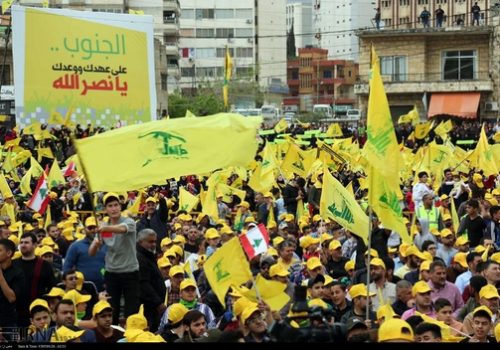
Hezbollah’s Secretary-General Hassan Nasrallah once dubbed dividing his group into distinct political and military wings an “English innovation.” Yet, last week, the United Kingdom decided to end this mainstay of British policy. Shortly after Home Secretary Sajid Javid announced a total ban on Hezbollah, Parliament amended the UK’s Terrorism Act 2000 to proscribe the group “in its entirety.” London’s acknowledgment of Hezbollah’s unity […]

Iran Middle East

MENASource

Mar 5, 2019

Are the mass protests in Algeria signs of the Arab Spring 2.0?

By Sarah Aljishi and Ellen Jacobs

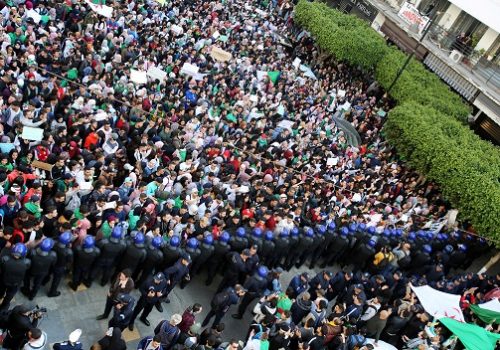
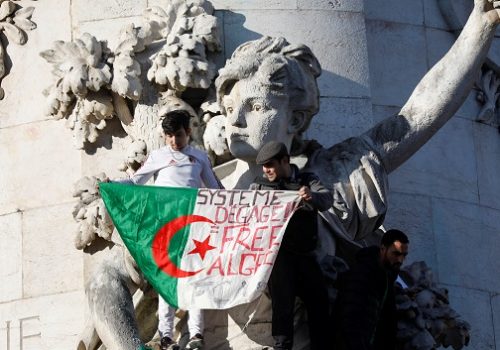
The recent demonstrations in Algeria are the latest indicators of a shifting tide. The majority of the population has become disenchanted with the elite—or the “pouvoir.” In addition to their commitment to old values and unfulfilled promises, they maintain a tight control over the government. Now, younger Algerians are taking to the streets to show their frustration.

North Africa

MENASource

Feb 27, 2019

Algerian demonstrations: What they mean for the future of the elite and the country

By Karim Mezran and Erin A. Neale

Algerian elites are missing a Leopardian moment. Giuseppe Tomasi Di Lampedusa’s masterpiece, the Leopard—which has become a staple of political science—, expresses the intrinsic idea that elites must change in order to remain elites.

North Africa

SyriaSource

Feb 26, 2019

Syrian refugees’ struggle with temporary status in Germany

By Hosam al-Jablawi

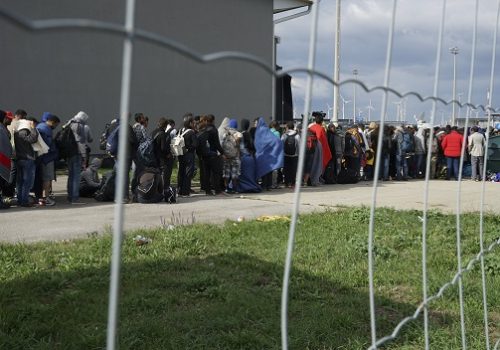
Just a few months separated the arrival of Syrian refugees Ahmad al-’Awda and his friend Mahmud al-Agha to Germany. Both of them fled from the war in their country that started in 2011. Al-’Awda arrived in Germany in January 2016 and al-Agha arrived in May 2015. This short eight month difference separating their arrivals was enough to guarantee that al-’Awda would not be able to apply to bring his family, who are still in Syria, because he did not get permanent residency in Germany. Rather, due to a series of laws, the German authorities have been granting only temporary residence papers to Syrian refugees.

Germany Syria

MENASource

Feb 25, 2019

Expert analysis on Jared Kushner’s trip to the Middle East

By MENASource

Jared Kushner, senior adviser to the US President Donald Trump, is on his way to six countries in the Gulf states to discuss and present part of his long awaited Israel-Palestine peace process plan in private meetings with foreign diplomats. He is expected to visit Oman, Bahrain, Saudi Arabia, Qatar, United Arab Emirates, and Turkey over the next few days. While the plan is still held tightly secret, experts are speculating on the selection of countries Kushner is to visit and what that implies for the plan.

Middle East

MENASource

Feb 22, 2019

General Haftar’s offensive in the Fezzan region and the Italian-French competition

By Karim Mezran

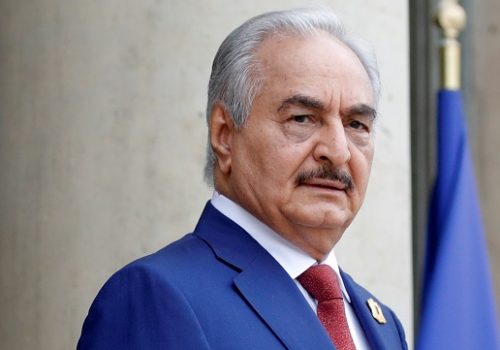
The military forces under the command of General Khalifa Haftar launched a large-scale attack on the Fezzan region in January, with the aim of taking control of the main areas of local oil production.

Libya