North Africa

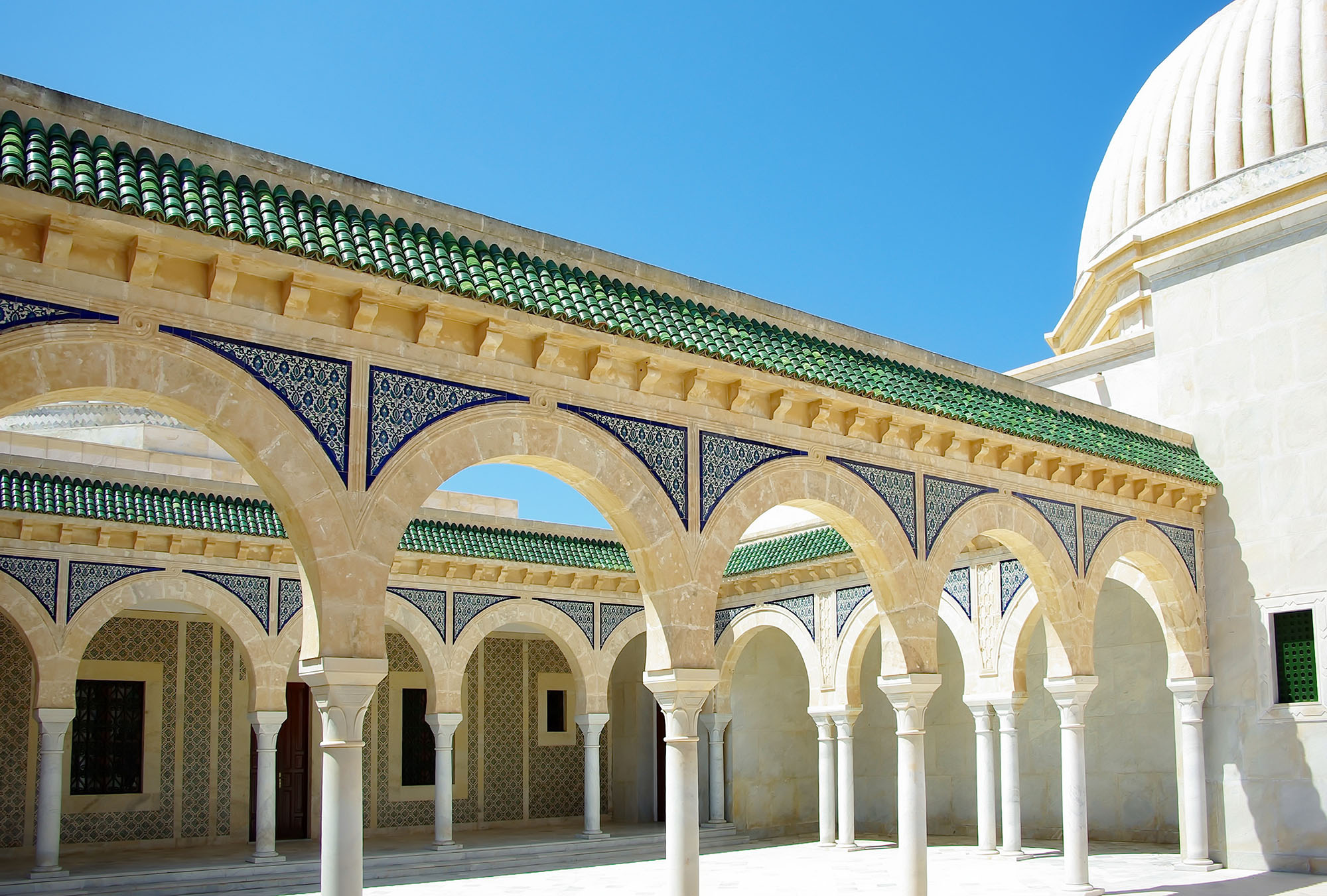
The North Africa region, sometimes called the Maghreb, holds strategic and political importance for the United States and Europe with its geographic crossroad between Europe, Africa, and the Middle East. Destabilized by the tumultuous uprisings of the Arab Spring, the developments in these countries are reasons for concern as well as hope, as different political, security, and economic conditions take shape in each country.

Programs

Middle East Programs

Working with our allies and partners in Europe and the wider Middle East to protect US interests, build peace and security, and unlock the human potential of the region.
Libya

Content

Transcript

Feb 15, 2023

Brett McGurk sets out the ‘Biden doctrine’ for the Middle East

By Atlantic Council

In a keynote speech at the Atlantic Council's Rafik Hariri Awards, the White House Coordinator for the Middle East and North Africa explains the Biden administration's strategy in the region.

Iran Iraq

Issue Brief

Feb 15, 2023

Full throttle in neutral: China’s new security architecture for the Middle East 

By Tuvia Gering

This report addresses two widely held beliefs about the nature of China’s engagement in the Middle East and North Africa (MENA) that ought to be revisited in light of notable developments. First, while it is widely assumed that Beijing’s interests in the region are limited to energy security and economic ties, this report will show how cooperation has […]

China Economy & Business

In the News

Feb 14, 2023

Alden interviewed by Il Messaggero on Italy’s status as a key US ally

By Atlantic Council

On January 28, Scowcroft Strategy Initiative nonresident senior fellow Alexander Alden spoke with Italian newspaper Il Messaggero on the United States’ view on the Meloni government in Libya and the Mediterranean and on its move away from Russian energy sources.

Civil Society Italian

MENASource

Feb 10, 2023

<strong>If well managed, Italy and Algeria could build a strong and viable geo-economic bridge between both shores of the Med</strong>

By Abdelkader Abderrahmane

Surfing on special ties and the war in Ukraine, Italy and Algeria have undoubtedly spotted an opportunity to further strengthen their economic and geopolitical relationship. 

Energy & Environment Europe & Eurasia

MENASource

Feb 2, 2023

<strong>Egypt just seized part of Libya’s maritime zone. What’s the story behind the Egyptian decree no one is talking about?</strong>

By Ali Bakir

On December 13, 2022, Egypt's President Abdel Fattah El-Sisi issued a presidential decree demarcating the country's maritime borders with Libya.

Libya Middle East

MENASource

Feb 1, 2023

<strong>Libya’s political impasse and the $6 billion question</strong>

By Alia Brahimi

On January 5, after months of talks brokered in Egypt, Libya’s rival legislative bodies finally agreed to begin discussions to develop the constitutional basis for elections.

Libya Middle East

MENASource

Jan 24, 2023

Rising inflation is hurting Egypt’s economy. Will the country’s powerful military cede economic power to salvage it?

By Shahira Amin

The prices of food and other basic commodities including housing and medical services have soared over the past few months as the country faces rising inflation.

Economy & Business Middle East

Event Recap

Dec 23, 2022

Governing the ungovernable. Consolidating the Libyan state amidst emerging criminal networks

By Nour Alhajjeh and Alissa Pavia

Libya has endured ten years of turmoil, lack of stability, foreign interference, and internal strife. The presence and proliferation of local armed groups have further eroded state-building processes. Read this event recap to know more about Libya's future.

Middle East North Africa

MENASource

Dec 23, 2022

2022: A year in the Middle East

By Nour Alhajjeh and Madeline Hart 

2022 was a year full of unprecedented protests, groundbreaking state visits, historical elections, and new challenges for the Middle East and North Africa.

Iran Iraq

MENASource

Dec 21, 2022

It’s time for Tunisia’s president to resign. Here’s why.

By Alissa Pavia

The sound of Tunisia’s silence was deafening after only 11.2 percent of Tunisians—one million out of nine million eligible voters—participated in the December 17 parliamentary elections.

Elections Middle East

Experts