Stay updated

Subscribe to our daily newsletter to receive the best expert intelligence on world-changing events

Explore our unique analysis

Content

New Atlanticist

Jan 8, 2020

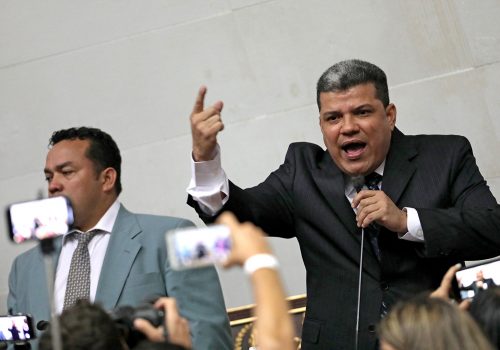
After Maduro’s latest ploy, what’s next for the Venezuelan opposition?

By Jasper Gilardi

"The images of Juan Guaidó and other democratically-elected members of the National Assembly being physically barred from entering the assembly building was visible proof of how far Nicolás Maduro is willing to go to deny any semblance of democracy in Venezuela," Jason Marczak says.

Civil Society
Corruption

New Atlanticist

Jan 8, 2020

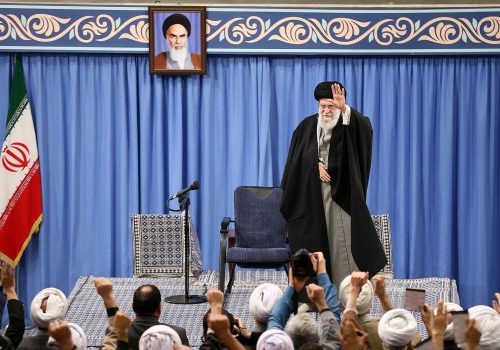
De-escalation still possible after Iran’s missile retaliation

By Atlantic Council

Iran avoided a central US red line, and "therefore, the Trump administration will have the opportunity to test Iranian claims that they truly do not seek any further escalation," Will Wechsler says.

Conflict
Iran

New Atlanticist

Jan 8, 2020

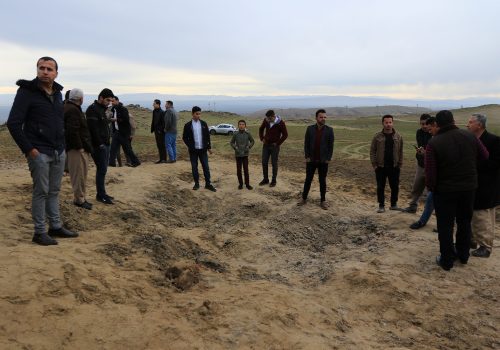
Iran’s missiles may have avoided the worst outcome

By Thomas S. Warrick

If there had been significant US casualties, the world would have awoken to the dawn of a regional war, because the Trump administration would have been compelled to attack the launch sites in Iran—and probably other targets in Iran, also. If the present news holds, the situation is slightly less dangerous, if still perilous.

Conflict
Geopolitics & Energy Security

New Atlanticist

Jan 8, 2020

Washington and Tehran can step back – if they want to

By William F. Wechsler

After the January 8 Iranian missile attacks on Iraq, a successful tactical de-escalation requires both that the Iranian leadership intends for its military actions not to be escalatory and that the Trump administration perceives those actions as they were intended. In the absence of direct communications between the United States and Iran, however, the potential for misunderstanding and thus the risk of miscalculation remains high.

Conflict
Geopolitics & Energy Security

New Atlanticist

Jan 7, 2020

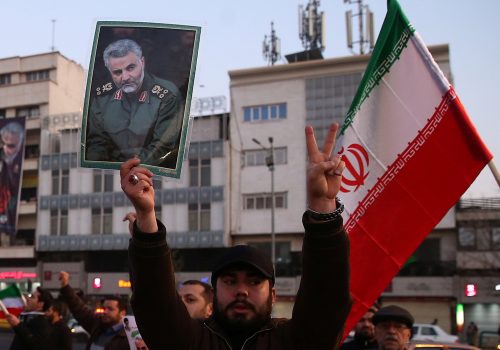
US-Iran in crisis: Strategic ambiguity and loud weapons in cyberspace

By Simon Handler, Katherine Wolff, Will Loomis

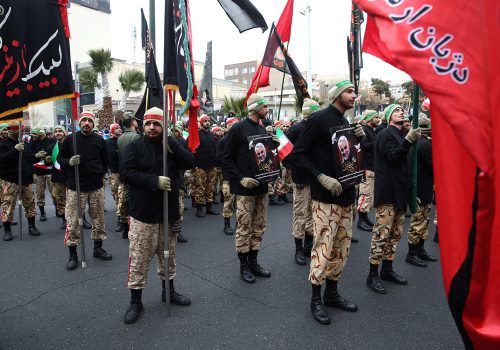
Iran’s government will feel the need to retaliate against the United States, but it does not wish to ignite a prolonged war with the United States. The regime’s near-term aim is to demonstrate to its domestic and regional constituencies that it has the capability and the resolve to avenge Soleimani’s killing and, more strategically, to drum up support for hardliners ahead of legislative elections next month. While Iran has a number of options available, its cyber toolkit not one to be overlooked.

Cybersecurity
Iran

New Atlanticist

Jan 7, 2020

With crisis over, Greek PM says Athens is ready “to punch above our weight”

By David A. Wemer

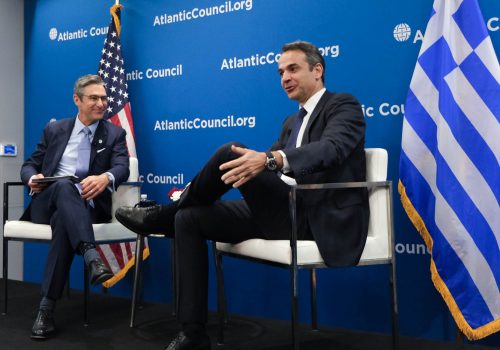
With its new robust regional and international role, Mitsotakis argued that Greece is a “very reliable and dependable partner” for the United States at a time of incredible global instability. With the dark days of economic crisis behind them, it is now time for Athens and Washington, he said “to set a new, more ambitious target in terms of what we can achieve.”

Greece
Macroeconomics

New Atlanticist

Jan 7, 2020

The 11th hour transit deal is a relief for European energy consumers and a pivotal opportunity for Ukraine’s future energy strategy

By Olga Khakova

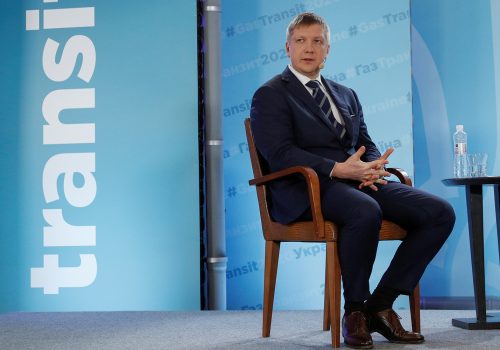
The Naftogaz agreement with Gazprom is a cautious win for Ukraine, the agreement buys time for the country to reform its energy sector, which will be critical for Ukraine’s energy security, regardless of future contracts with Gazprom.

Energy Markets & Governance
Geopolitics & Energy Security

New Atlanticist

Jan 6, 2020

Shaping the global future together: the Council’s “Top fifteen hits” of 2019

By Frederick Kempe

We look back at the Atlantic Council's top work of 2019 galvanizing US leadership alongside partners and allies to tackle the most pressing challenges confronting our nation and our world.

Africa
Americas

New Atlanticist

Jan 6, 2020

“The truth shall make you free”

By Daniel Fried

Dealing with the gaps, failures, and sins of the national past is what honest countries do. Living with a lie, including a lie about history, is like an untreated infection: it is unlikely to improve with time and will weaken the whole body.

Central Europe
Poland

New Atlanticist

Jan 6, 2020

Will Iraq become Syria 2.0?

By Daniel V. Speckhard

In a very short time, the United States is moving from a position of significant influence to one of weakness by its own bumbling. It has lost the support of its internal and external supporters with respect to Iraq and has opened the door for others to step into the vacuum to play the role of savior and mediator.

Conflict
Iraq